






 Share Story


AMMAN — As the 31st FIBA Asia Cup 2025 came to a close this week, it’s time for a review and revamp for Jordanian basketball.
After being on the medals table as runner-up and third spot previously, and having reached the FIBA World Cup thrice, Jordan only managed one win and failed to reach the quarterfinals to finish at a disappointing 11th spot among 16 competing nations.
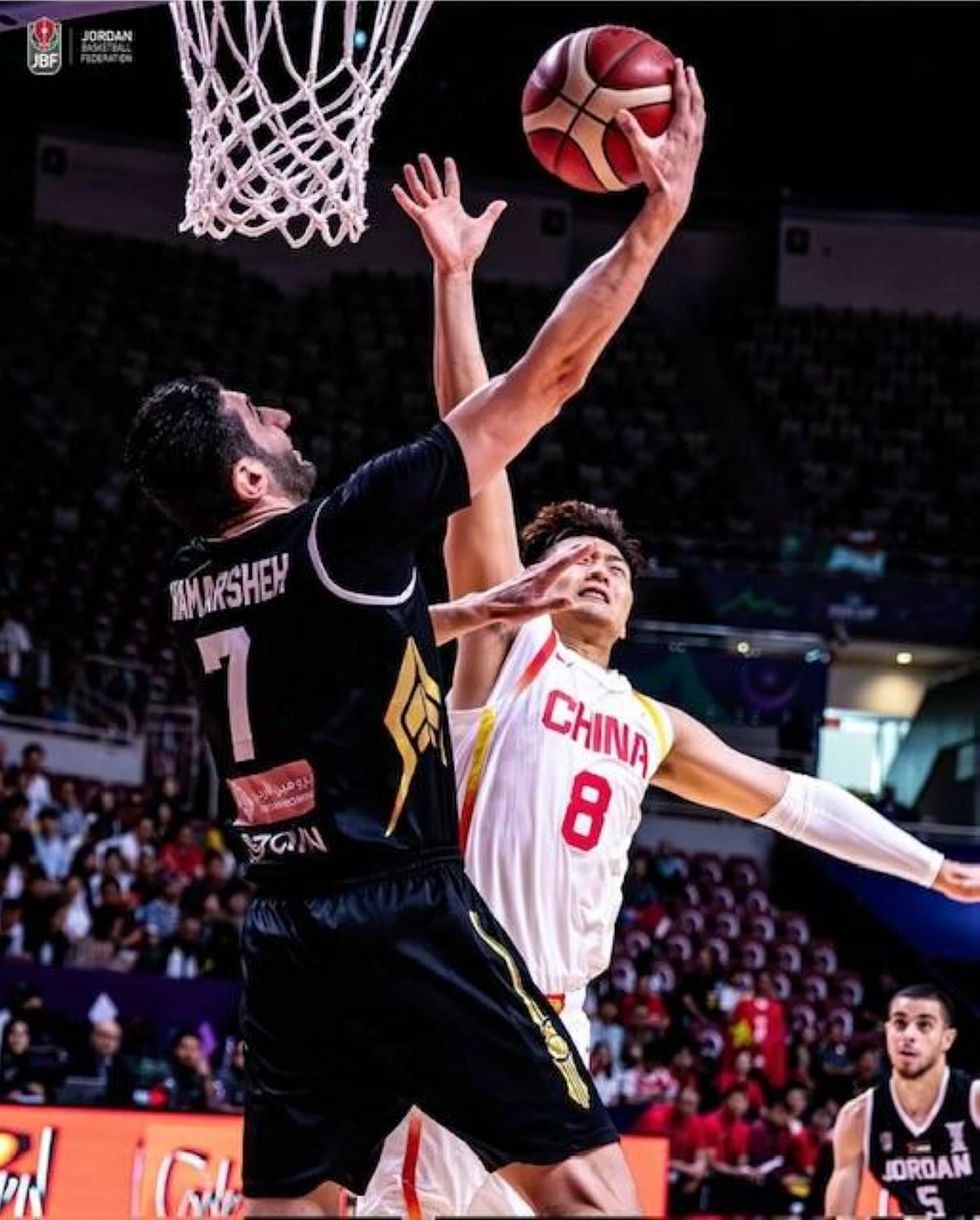
Jordan managed one win against India before it lost to Saudi Arabia and China in Round 1. They went on to lose to Chinese Taipei and in their quest for a spot in the quarters. They were trailed by Guam, Qatar, Iraq, India and Syria as Australia beat China by one point to win the title while Iran beat New Zealand to finish third.
However, when reviewing Jordan’s results, observers are calling for objectivity and carefully planning ahead. The circumstances surrounding the team’s journey were far from ideal. After much delays in handing over the team to incoming Canadian coach Roy Rana, challenges included grappling with a team revamp at a critical time with many players ageing, uncommitted or not being in top form, coupled with the short time to regroup and prepare.
To aggravate the situation, the JBF Chairman Ahmad Hanandeh submitted his resignation, to be followed by the vice chairman without any proper explanation by the sports’ governing body.
The roster had the pressure of trying to keep up Jordan’s impressive Asian record at the FIBA Asia Cup to which they advanced with an unbeaten record. However, the team was faced with many key absences, led by Ahmad Duweiri and Ronday Jefferson, together with Amin Abu Hawas, Sami Bzai’ and the Najdawi brothers. As point guard Freddie Ibrahim’s performance seemed below par, Dar Tucker carried the team together with veteran Ahmad Hamarsheh, while being joined by the two sons of NBA legend Hakim Olajuwon, Abdullah and Abdulrahman combining with Hashem Abbas to aid the struggling lineup.
“Jordan has in the past relied on 6-7 players. That might work sometimes. but it doesn’t work always,” Coach Rana told the post FIBA Asia Cup press conference in Amman. The Canadian coach took full responsibility for the team’s results noting the team had done well defensively, while acknowledged the shooting percentage needed to be addressed.
Rana emphasised the team lacked the depth, and a wider base of players was needed to be prepared. The coach added although Jordan did not win any matches at the U19 World Cup, but at least five players will join the national team for the future.
Looking back at team stats, the team’s free throw and three-point shot percentage was below par. The squad was 61 per cent in free throws, 50 per cent in two pointers, 32 per cent in three pointers. Tucker was the only player scoring an average of 20 points per game and helped carry the team surpassing 1000 points since he joined Jordan in 2016.
Tucker, in what might have been his last match for Jordan, noted: “Thank you Jordan and your amazing people for welcoming me as one of your own and supporting me throughout all these years.”
It was Jordan’s 17th time at the FIBA Asia Cup. Previously, Jordan was on the medals podium twice finishing runner-up in 2011 and 3rd in 2009. At the last 2022 edition Jordan finished 4th.
The event has been dominated by China who won the title 19 times, Philippines five, Iran and Australia three times, South Korea and Japan twice each. Jordan’s Zeid Alkhas and naturalised Rasheim Wright are on the list of highest scoring averages in the tournament while Lebanon’s Fadi Khatib and Iran’s Hamed Haddadi lead the all-time top scorers, with Wright 7th.
With the Asia Cup behind them, Jordan will shift focus to the Asian qualifiers for the FIBA World Cup where 16 teams will play in four groups in six windows from November 2025 to March 2027. Seven of the 16 Asian sides will advance to the 2027 World Cup slated for Doha, Qatar which will have 32 teams competing for the title.
Jordan was drawn in Group C alongside Iran, Syria and Iraq in Round 1 of qualifiers. Group A includes Australia, New Zealand, Philippines and Guam; Group B Japan China Korea and Chinese Taipei; Group D Lebanon Saudi Arabia, India and Qatar.
The Kingdom hopes to qualify to the World Cup for the third consecutive and fourth overall time after first qualifying in 2010.
Jordan, the 2023 Asian Games silver medalist and three-time qualifier to the World Cup, 2010, 2019 and 2023, is now 35th in FIBA rankings, 8th in Asia and the 2nd best Arab team.
