


Argentina, England renew iconic World Cup rivalry in semi-final showdown

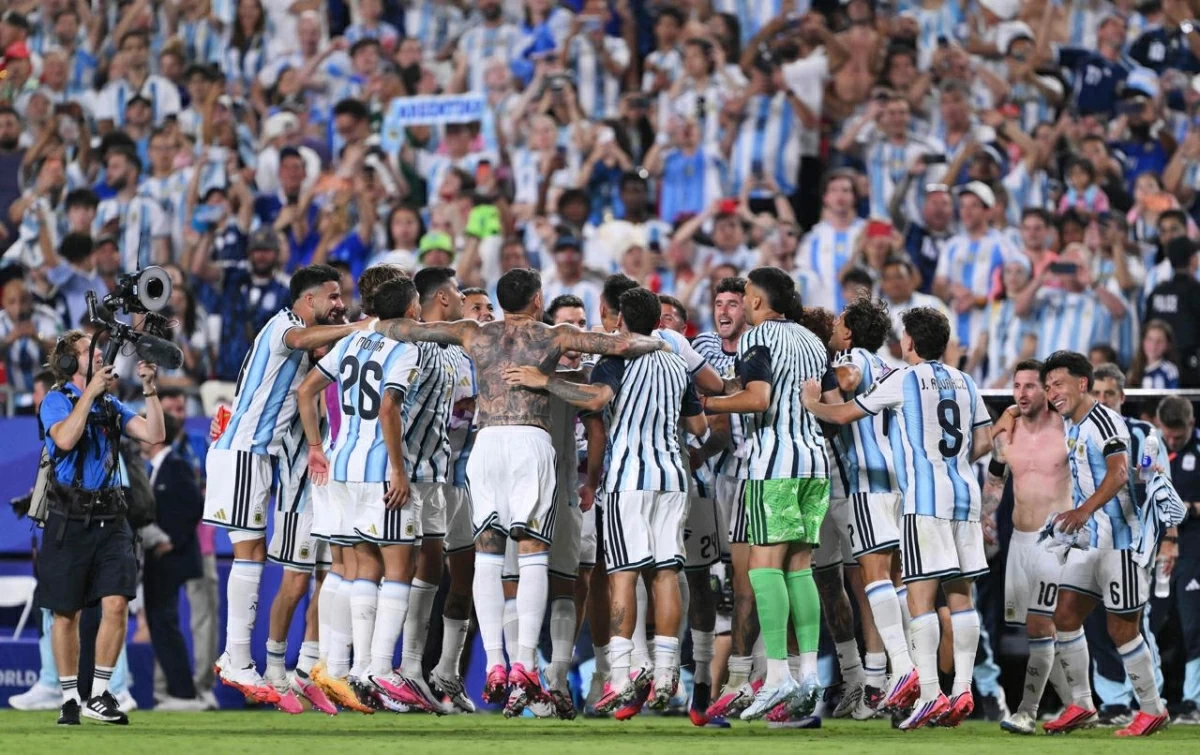
Argentinaplayers celebrate after the 3-1 victory during the FIFA World Cup 2026 Quarter Final match between Argentina and Switzerland at Kansas City Stadium on July 11in Kansas City, Missouri (AFP photo)

AMMAN — Argentina and England will renew one of football's most storied rivalries when they meet in the FIFA World Cup semi-finals at Atlanta Stadiumon Wednesday.

The clash marks the first time the two nations have faced each other in a World Cup semi-final, with defending champions Argentina, led by Lionel Messi, taking on an England side revitalised under head coach Thomas Tuchel.

Their latest encounter adds another chapter to a rivalry shaped by memorable matches, controversial moments and historical significance.

The two sides have previously met five times at the World Cup. England hold a slight advantage, having won three matches, while Argentina has one victory and one knockout triumph on penalties.

Their first World Cup meeting came during the group stage in Chile in 1962, when England secured a 3-1 victory. 

Four years later, England edged Argentina 1-0 in the quarter-finals on home soil in a fiercely contested encounter remembered for the dismissal of Argentina captain Antonio Rattin, a decision that remained a source of controversy in Argentina for decades.

The rivalry reached its defining moment at the 1986 World Cup in Mexico. Just four years after the Falklands War, Diego Maradona inspired Argentina to a 2-1 quarter-final victory with two of the most famous goals in football history.

The first, later dubbed the "Hand of God", saw Maradona punch the ball past England goalkeeper Peter Shilton. Minutes later, he produced what FIFA later described as the "Goal of the Century", weaving past several England players before scoring.

Reflecting on that match, Maradona said: "Each one who jumped on the pitch thought about the kids who died in the Malvinas... We played the game with boots and rifles."

He also famously described the opening goal as being scored "a little with the head of Maradona and a little with the hand of God."

The rivalry continued to produce dramatic encounters. Argentina defeated England on penalties after a 2-2 draw in the Round of 16 at the 1998 World Cup in France, a match remembered for Michael Owen's outstanding solo goal and David Beckham's sending-off following an incident involving Diego Simeone.

While the Falklands conflict gave the rivalry additional emotional significance, football has increasingly taken centre stage in recent decades. Ahead of Wednesday's match, the BBC described the fixture as "iconic, generational, classic", reflecting its enduring place in World Cup history.

Argentina arrives in the semi-finals as reigning world champions, with Messi continuing to lead a squad that also features Julian Alvarez and Lautaro Martínez, who played key roles in the Albiceleste's extra-time quarter-final victory over Switzerland.

England, meanwhile, are seeking their first World Cup title since 1966. Tuchel's side have impressed throughout the tournament, with Jude Bellingham scoring twice in the quarter-final victory over Norway, while captain Harry Kane remains their focal point in attack.

Speaking to ESPN, Messi described England as a "powerhouse" and said the semi-final would be "special".

With a place in the World Cup final at stake, Wednesday's encounter promises another compelling chapter in one of international football's greatest rivalries, combining tactical intrigue, world-class talent and the weight of history.

.col-lg-12.second .opinion-widget{border-top:1px solid #D0D0D0;} #widget_1623 .opinions-title {font-size:32px;} #widget_1623 .opinions-title a{font-size:32px;} .first-author{ background-color:#ecedef; } .first-opinion-author-name{ background-color:white; width:max-content; padding:5px; }
.epaper-separator{ height: 1px; width: 100%; background-color: #D0D0D0; margin: 15px 0; }

Today’s Paper

.related-articles .article-widget-sm .article-title{font-size:16px;-webkit-line-clamp:3;} .related-articles .layout-ratio{padding-bottom:55%;}
.alert-success { color :#A3656F ; } .alert-danger { color : red ; } .footer { font-family:Myriad Pro,Arial; } .newspaper-footer{ visibility:hidden; } .socialFixOuter { position: fixed; top: 50%; margin-top: 40px; right: 0; transition: .2s; z-index: 20; height: 217px; width: 40px; } .socialFix { height: 30px; width: 30px; display: block; position: relative; cursor: pointer; background-size: 18px 18px; transition: .2s; background-position: center; background-repeat: no-repeat; border-radius: 2px; margin-top: 1px; } .socialFix:hover { width: 40px; margin-left: -10px; } .app-badge-img { height: 36px; width: auto; } @media (max-width: 768px) { .app-badge-img { height: 32px; } .app-badges { justify-content: center !important; } }
document.addEventListener("DOMContentLoaded", function () { const socialFix = document.querySelector(".socialFixOuter"); if (!socialFix) return; let firstInteraction = false; let hideTimeout = null; function checkMobileScreen() { if (window.innerWidth < 768) { socialFix.style.display = "none"; } else { socialFix.style.display = "block"; } } checkMobileScreen(); window.addEventListener("resize", checkMobileScreen); function handleFirstInteraction() { if (firstInteraction) return; if (window.innerWidth < 768) return; firstInteraction = true; socialFix.style.right = "-25px"; } socialFix.addEventListener("mouseenter", function () { if (window.innerWidth < 768) return; if (hideTimeout) clearTimeout(hideTimeout); socialFix.style.right = "0"; }); socialFix.addEventListener("mouseleave", function () { if (window.innerWidth < 768) return; if (hideTimeout) clearTimeout(hideTimeout); hideTimeout = setTimeout(() => { socialFix.style.right = "-25px"; }, 500); }); ["click", "touchstart"].forEach((evt) => { socialFix.addEventListener(evt, handleFirstInteraction); }); }); function validateEmail(email) { if (email.length > 255) return false; const emailRegex = /^[a-zA-Z0-9._%+-]+@[a-zA-Z0-9.-]+\.[a-zA-Z]{2,}$/; if (!emailRegex.test(email)) return false; if (email.includes('..') || email.startsWith('.') || email.endsWith('.')) return false; return true; } function sanitizeInput(input) { input = input.replace(/<[^>]*>/g, ''); input = input.replace(/javascript:/gi, ''); input = input.replace(/on\w+\s*=/gi, ''); input = input.replace(/[<>"'&(){}[\]]/g, ''); return input.trim(); } document.addEventListener('DOMContentLoaded', function () { function showModal(message, type) { const messageContainer = document.getElementById("messageContainerFooter"); messageContainer.textContent = message; messageContainer.className = `alert alert-${type} mt-3`; messageContainer.classList.remove("d-none"); setTimeout(() => { messageContainer.classList.add("d-none"); }, 5000); } document.getElementById("emailFormFooter").addEventListener("submit", function(event) { event.preventDefault(); const emailInput = document.getElementById("emailFooter"); const email = sanitizeInput(emailInput.value.trim()); if (!validateEmail(email)) { showModal('Invalid email format', 'danger'); return; } const formData = new FormData(); formData.append('email', email); fetch('/subscribeNewsletter', { method: "POST", body: formData, headers: { "Accept": "application/json", "X-Requested-With": "XMLHttpRequest" } }) .then(response => { if (!response.ok) { showModal("Error submitting email. Try again.", 'danger'); } return response.json(); }) .then(data => { showModal(data.message, 'success'); }) .catch(error => { showModal("Error submitting email. Try again.", 'danger'); }); }); });