


UNICEF scaling up learning in Gaza in one of the world’s largest emergency education efforts 

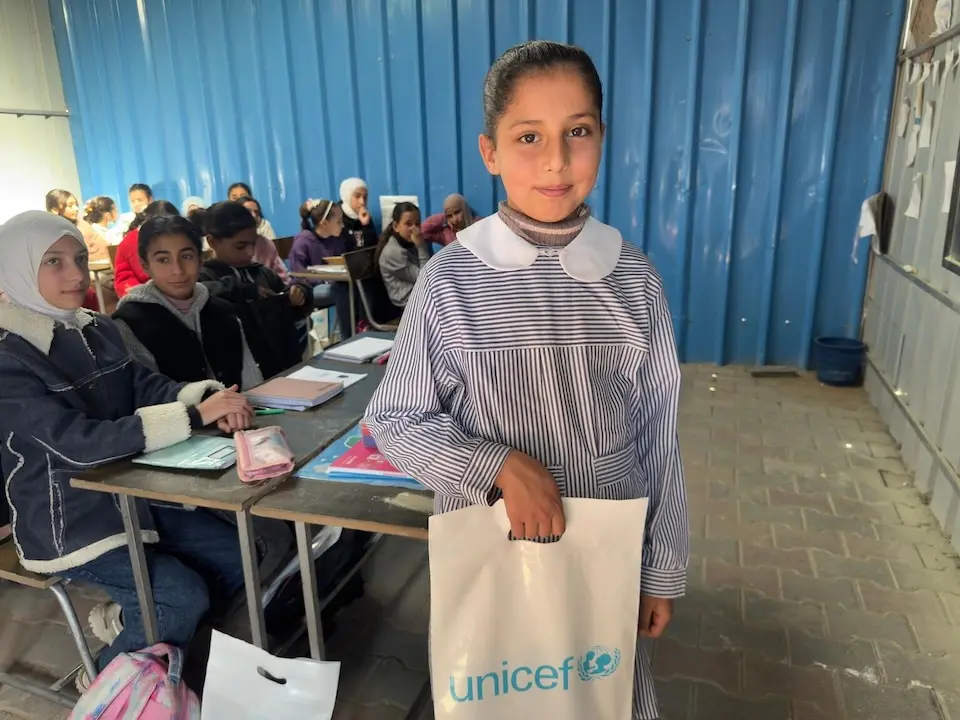
AMMAN — In a warehouse in Deir al-Balah, about 10 miles south of Gaza City, 13-year-old Masa fills a small bag with something she's been wanting for a very long time: school supplies. She's one of 700,000 students in Gaza whose education was disrupted by the war, and she's excited to be a student again.

For two years, all education materials have been blocked from entry into Gaza. If students could find any for sale in markets, they were prohibitively expensive. “I received a notebook, pen, eraser, ruler, geometry set, pencils and coloring pens,” Masa says. “These supplies will really help me study. I feel relieved because I won’t have to buy them at such high prices. When I grow up, I want to be an engineer.”

After months of waiting, UNICEF was finally allowed to bring in hundreds of School-in-a-Box kits containing education supplies, along with thousands of recreational kits filled with toys, balls and other playthings to help children get back to the business of being kids. More are expected to arrive in the coming weeks.

These supplies are an integral part of UNICEF's plan to restore access to education for every child in Gaza. UNICEF's Back to Learning program aims to get 336,000 children back into the classroom by the end of 2026, and to get all Gaza's school-age children back to in-person learning in 2027.

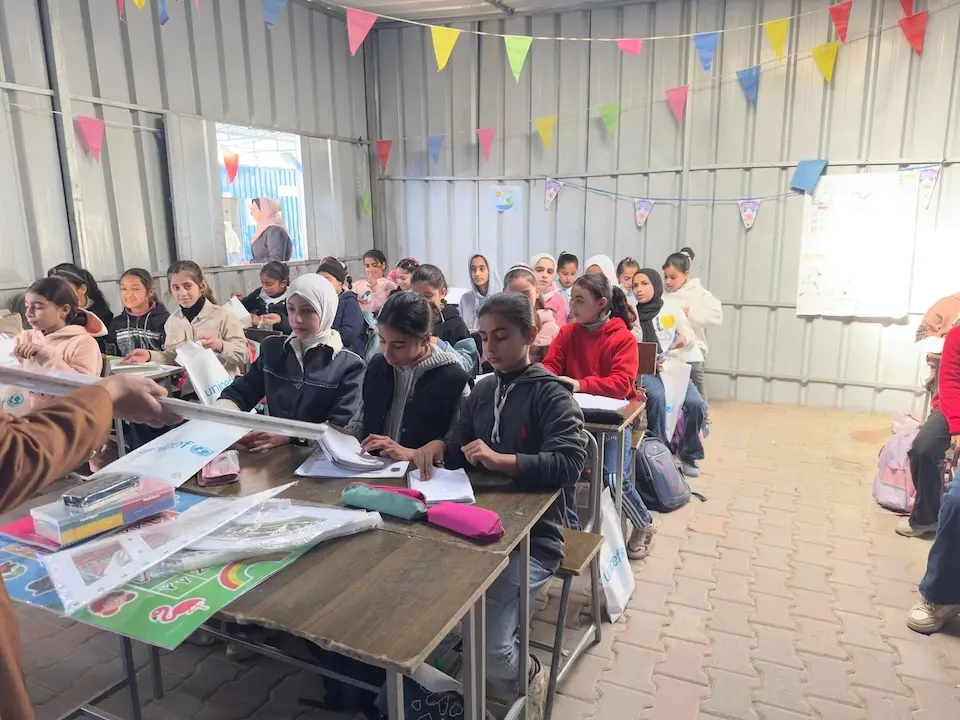
More than 90 per cent of Gaza's schools were destroyed or sustained damage over the past two and a half years. Until they can be repaired, most education must take place in tents.

UNICEF currently supports 135,400 children at more than 100 multi-service learning spaces across Gaza. The centers "give children a place to read, write and build basic maths skills, but just as importantly, a place to play, breathe and feel human again, with activities and mental health support woven in," says UNICEF Global Spokesperson James Elder, who has traveled to Gaza six times since the start of the war in October 2023.

Getting one child into a UNICEF learning center costs about $280 for a year, including mental health support. To reach 336,000 school-age children for the rest of this year, UNICEF urgently needs $86 million.

For children in Gaza, education is "not a 'nice to have.' It is an emergency," Elder says. "Almost two and a half years of attacks on Gaza’s schooling have left an entire generation at risk. Sixty percent of school-aged children in Gaza currently have no access to in-person learning ... And more than 335,000 children under 5 are now at risk of severe developmental delays because early childhood services have collapsed."

Before the war, Palestinians in Gaza had some of the highest literacy rates in the world. "Education was a source of pride, resilience and progress for generations," Elder says. "Today, that legacy is under attack: schools, universities and libraries have been destroyed, and years of progress erased.

"This is not just physical destruction, it’s an assault on the future itself, because every child denied learning is a future engineer, doctor, teacher or thinker taken from us before they’ve had a chance to shape their world. In the aftermath of this brutal war, rebuilding Gaza’s schools, educational facilities and universities must sit at the top of Gaza’s recovery agenda. Restoring education restores possibility."

This feature was first published in UNICEF website

.col-lg-12.second .opinion-widget{border-top:1px solid #D0D0D0;} #widget_1623 .opinions-title {font-size:32px;} #widget_1623 .opinions-title a{font-size:32px;} .first-author{ background-color:#ecedef; } .first-opinion-author-name{ background-color:white; width:max-content; padding:5px; }
.epaper-separator{ height: 1px; width: 100%; background-color: #D0D0D0; margin: 15px 0; }

Today’s Paper

.related-articles .article-widget-sm .article-title{font-size:16px;-webkit-line-clamp:3;} .related-articles .layout-ratio{padding-bottom:55%;}
.alert-success { color :#A3656F ; } .alert-danger { color : red ; } .footer { font-family:Myriad Pro,Arial; } .newspaper-footer{ visibility:hidden; } .socialFixOuter { position: fixed; top: 50%; margin-top: 40px; right: 0; transition: .2s; z-index: 20; height: 217px; width: 40px; } .socialFix { height: 30px; width: 30px; display: block; position: relative; cursor: pointer; background-size: 18px 18px; transition: .2s; background-position: center; background-repeat: no-repeat; border-radius: 2px; margin-top: 1px; } .socialFix:hover { width: 40px; margin-left: -10px; } .app-badge-img { height: 36px; width: auto; } @media (max-width: 768px) { .app-badge-img { height: 32px; } .app-badges { justify-content: center !important; } }
document.addEventListener("DOMContentLoaded", function () { const socialFix = document.querySelector(".socialFixOuter"); if (!socialFix) return; let firstInteraction = false; let hideTimeout = null; function checkMobileScreen() { if (window.innerWidth < 768) { socialFix.style.display = "none"; } else { socialFix.style.display = "block"; } } checkMobileScreen(); window.addEventListener("resize", checkMobileScreen); function handleFirstInteraction() { if (firstInteraction) return; if (window.innerWidth < 768) return; firstInteraction = true; socialFix.style.right = "-25px"; } socialFix.addEventListener("mouseenter", function () { if (window.innerWidth < 768) return; if (hideTimeout) clearTimeout(hideTimeout); socialFix.style.right = "0"; }); socialFix.addEventListener("mouseleave", function () { if (window.innerWidth < 768) return; if (hideTimeout) clearTimeout(hideTimeout); hideTimeout = setTimeout(() => { socialFix.style.right = "-25px"; }, 500); }); ["click", "touchstart"].forEach((evt) => { socialFix.addEventListener(evt, handleFirstInteraction); }); }); function validateEmail(email) { if (email.length > 255) return false; const emailRegex = /^[a-zA-Z0-9._%+-]+@[a-zA-Z0-9.-]+\.[a-zA-Z]{2,}$/; if (!emailRegex.test(email)) return false; if (email.includes('..') || email.startsWith('.') || email.endsWith('.')) return false; return true; } function sanitizeInput(input) { input = input.replace(/<[^>]*>/g, ''); input = input.replace(/javascript:/gi, ''); input = input.replace(/on\w+\s*=/gi, ''); input = input.replace(/[<>"'&(){}[\]]/g, ''); return input.trim(); } document.addEventListener('DOMContentLoaded', function () { function showModal(message, type) { const messageContainer = document.getElementById("messageContainerFooter"); messageContainer.textContent = message; messageContainer.className = `alert alert-${type} mt-3`; messageContainer.classList.remove("d-none"); setTimeout(() => { messageContainer.classList.add("d-none"); }, 5000); } document.getElementById("emailFormFooter").addEventListener("submit", function(event) { event.preventDefault(); const emailInput = document.getElementById("emailFooter"); const email = sanitizeInput(emailInput.value.trim()); if (!validateEmail(email)) { showModal('Invalid email format', 'danger'); return; } const formData = new FormData(); formData.append('email', email); fetch('/subscribeNewsletter', { method: "POST", body: formData, headers: { "Accept": "application/json", "X-Requested-With": "XMLHttpRequest" } }) .then(response => { if (!response.ok) { showModal("Error submitting email. Try again.", 'danger'); } return response.json(); }) .then(data => { showModal(data.message, 'success'); }) .catch(error => { showModal("Error submitting email. Try again.", 'danger'); }); }); });