


Jerusalem Governorate condemns Israeli heritage center project at former airport

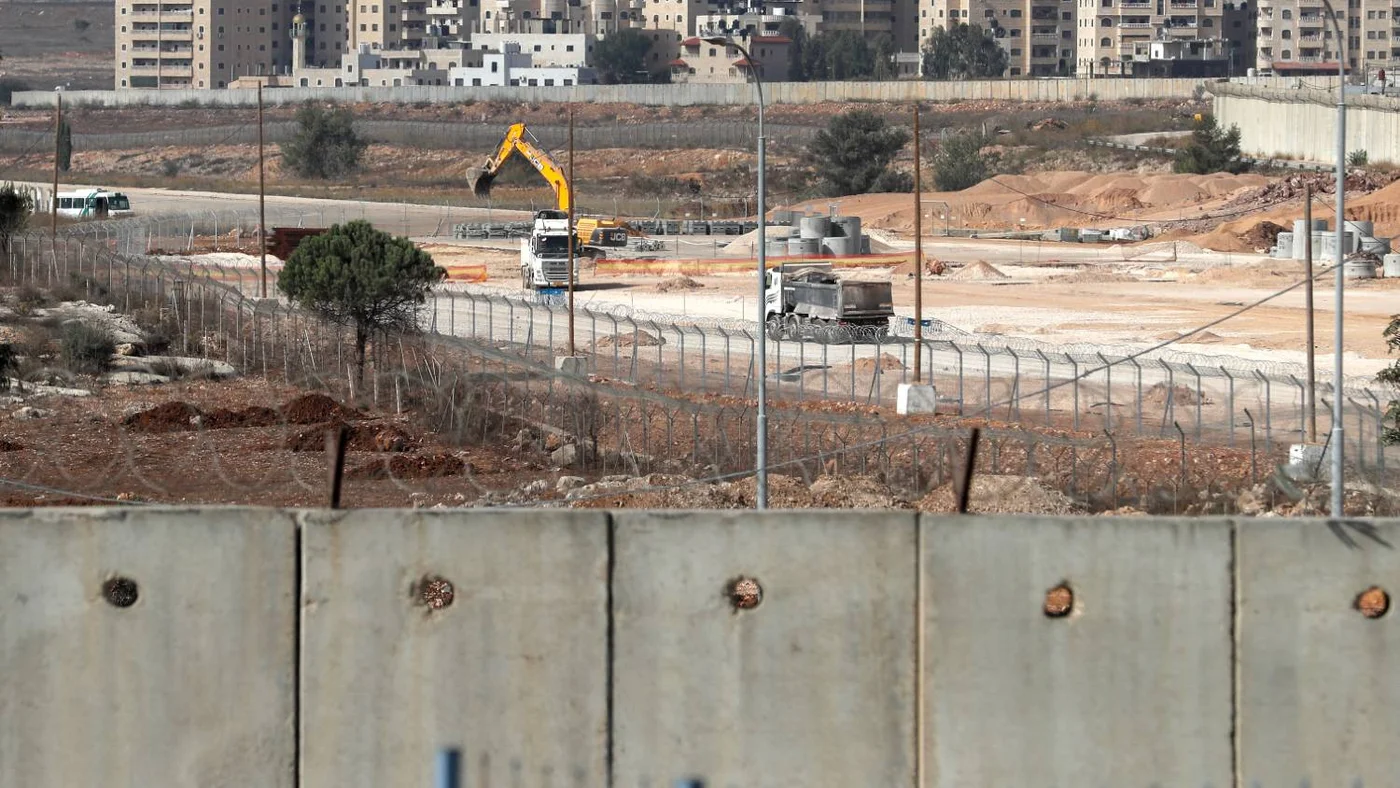
Section of Israel's separation wall and machinery working on the tarmac of the former Atarot airport near the village of Qalandia in occupied East Jerusalem, 25 November 2021 
(AFP photo)
Section of Israel's separation wall and machinery working on the tarmac of the former Atarot airport near the village of Qalandia in occupied East Jerusalem, 25 November 2021 (AFP photo)

AMMAN — The Jerusalem Governorate on Sunday condemned Israeli prime minister Benjamin Netanyahu's laying of the cornerstone for a "heritage center" at the site of the historic Jerusalem International Airport in Qalandiya, north of occupied Jerusalem.

In a statement, cited by Al Mamlaka, the governorate described the move as a “significant escalation in Israeli settlement activity in the occupied city.”

According to Israeli media, Netanyahu and other officials on Sunday participated in the cornerstone-laying ceremony for the heritage center.

The Jerusalem Governorate said that the move constitutes a serious violation of international law, citing UN Security Council Resolution 2334, which declares Israeli settlements in the occupied Palestinian territories, including East Jerusalem, to be illegal and calls for a halt to settlement expansion.

The governorate said that the project is part of a wider Israeli scheme to create “irreversible” realities on the ground.

It argued that the initiative is part of a broader policy to reshape Jerusalem's geographical and historical identity by taking control of a key symbol of future Palestinian sovereignty and repurposing it to promote the Israeli narrative.

According to the statement, the project is part of a package of measures approved by the Israeli government on May 17 during what Israel marks as Jerusalem Day. Those measures, it said, are intended to expand settlement activity in the city and alter its political and demographic landscape.

Among these measures is the conversion of the former Jerusalem International Airport building into a cultural and ideological settlement center designed to reinterpret the site's history through the Israeli narrative.

The governorate said that the plan extends beyond repurposing the airport building to rewriting the site's historical identity by highlighting the "history of settlement" and associating the location with Israeli military and political figures through commemorative exhibits.

It said the project is intended to replace the Palestinian and Arab historical memory attached to the site.

The statement said that the project coincides with a broader expansion of settlement-related projects in northern Jerusalem, including plans for a waste treatment facility on land in Qalandiya that it said could result in the confiscation of hundreds of dunams and the displacement or isolation of dozens of Palestinian families.

It also cited the proposed Atarot settlement neighborhood, which would add thousands of settler units and rank among the largest settlement expansion projects within Jerusalem.

The governorate said that the projects are part of an integrated strategy to create territorial continuity between Israeli settlement blocs while fragmenting Palestinian geographic contiguity, particularly in northern Jerusalem, and preventing connected Palestinian urban development.

It also argued that the policies seek to undermine Palestinian symbols of sovereignty, including Jerusalem International Airport, which is an “important symbol of a future Palestinian state” and replace them with infrastructure that reinforces Israeli control as part of a broader vision of "Greater Jerusalem."

The governorate also said that the measures are also intended to alter the city's demographic balance through settlement expansion, land confiscation, home demolitions and population redistribution, reducing the Palestinian presence while strengthening the settler population.

.col-lg-12.second .opinion-widget{border-top:1px solid #D0D0D0;} #widget_1623 .opinions-title {font-size:32px;} #widget_1623 .opinions-title a{font-size:32px;} .first-author{ background-color:#ecedef; } .first-opinion-author-name{ background-color:white; width:max-content; padding:5px; }
.epaper-separator{ height: 1px; width: 100%; background-color: #D0D0D0; margin: 15px 0; }

Today’s Paper

.related-articles .article-widget-sm .article-title{font-size:16px;-webkit-line-clamp:3;} .related-articles .layout-ratio{padding-bottom:55%;}
.alert-success { color :#A3656F ; } .alert-danger { color : red ; } .footer { font-family:Myriad Pro,Arial; } .newspaper-footer{ visibility:hidden; } .socialFixOuter { position: fixed; top: 50%; margin-top: 40px; right: 0; transition: .2s; z-index: 20; height: 217px; width: 40px; } .socialFix { height: 30px; width: 30px; display: block; position: relative; cursor: pointer; background-size: 18px 18px; transition: .2s; background-position: center; background-repeat: no-repeat; border-radius: 2px; margin-top: 1px; } .socialFix:hover { width: 40px; margin-left: -10px; } .app-badge-img { height: 36px; width: auto; } @media (max-width: 768px) { .app-badge-img { height: 32px; } .app-badges { justify-content: center !important; } }
document.addEventListener("DOMContentLoaded", function () { const socialFix = document.querySelector(".socialFixOuter"); if (!socialFix) return; let firstInteraction = false; let hideTimeout = null; function checkMobileScreen() { if (window.innerWidth < 768) { socialFix.style.display = "none"; } else { socialFix.style.display = "block"; } } checkMobileScreen(); window.addEventListener("resize", checkMobileScreen); function handleFirstInteraction() { if (firstInteraction) return; if (window.innerWidth < 768) return; firstInteraction = true; socialFix.style.right = "-25px"; } socialFix.addEventListener("mouseenter", function () { if (window.innerWidth < 768) return; if (hideTimeout) clearTimeout(hideTimeout); socialFix.style.right = "0"; }); socialFix.addEventListener("mouseleave", function () { if (window.innerWidth < 768) return; if (hideTimeout) clearTimeout(hideTimeout); hideTimeout = setTimeout(() => { socialFix.style.right = "-25px"; }, 500); }); ["click", "touchstart"].forEach((evt) => { socialFix.addEventListener(evt, handleFirstInteraction); }); }); function validateEmail(email) { if (email.length > 255) return false; const emailRegex = /^[a-zA-Z0-9._%+-]+@[a-zA-Z0-9.-]+\.[a-zA-Z]{2,}$/; if (!emailRegex.test(email)) return false; if (email.includes('..') || email.startsWith('.') || email.endsWith('.')) return false; return true; } function sanitizeInput(input) { input = input.replace(/<[^>]*>/g, ''); input = input.replace(/javascript:/gi, ''); input = input.replace(/on\w+\s*=/gi, ''); input = input.replace(/[<>"'&(){}[\]]/g, ''); return input.trim(); } document.addEventListener('DOMContentLoaded', function () { function showModal(message, type) { const messageContainer = document.getElementById("messageContainerFooter"); messageContainer.textContent = message; messageContainer.className = `alert alert-${type} mt-3`; messageContainer.classList.remove("d-none"); setTimeout(() => { messageContainer.classList.add("d-none"); }, 5000); } document.getElementById("emailFormFooter").addEventListener("submit", function(event) { event.preventDefault(); const emailInput = document.getElementById("emailFooter"); const email = sanitizeInput(emailInput.value.trim()); if (!validateEmail(email)) { showModal('Invalid email format', 'danger'); return; } const formData = new FormData(); formData.append('email', email); fetch('/subscribeNewsletter', { method: "POST", body: formData, headers: { "Accept": "application/json", "X-Requested-With": "XMLHttpRequest" } }) .then(response => { if (!response.ok) { showModal("Error submitting email. Try again.", 'danger'); } return response.json(); }) .then(data => { showModal(data.message, 'success'); }) .catch(error => { showModal("Error submitting email. Try again.", 'danger'); }); }); });