


Israel reports incoming Iranian missiles in first since Mideast war ceasefire

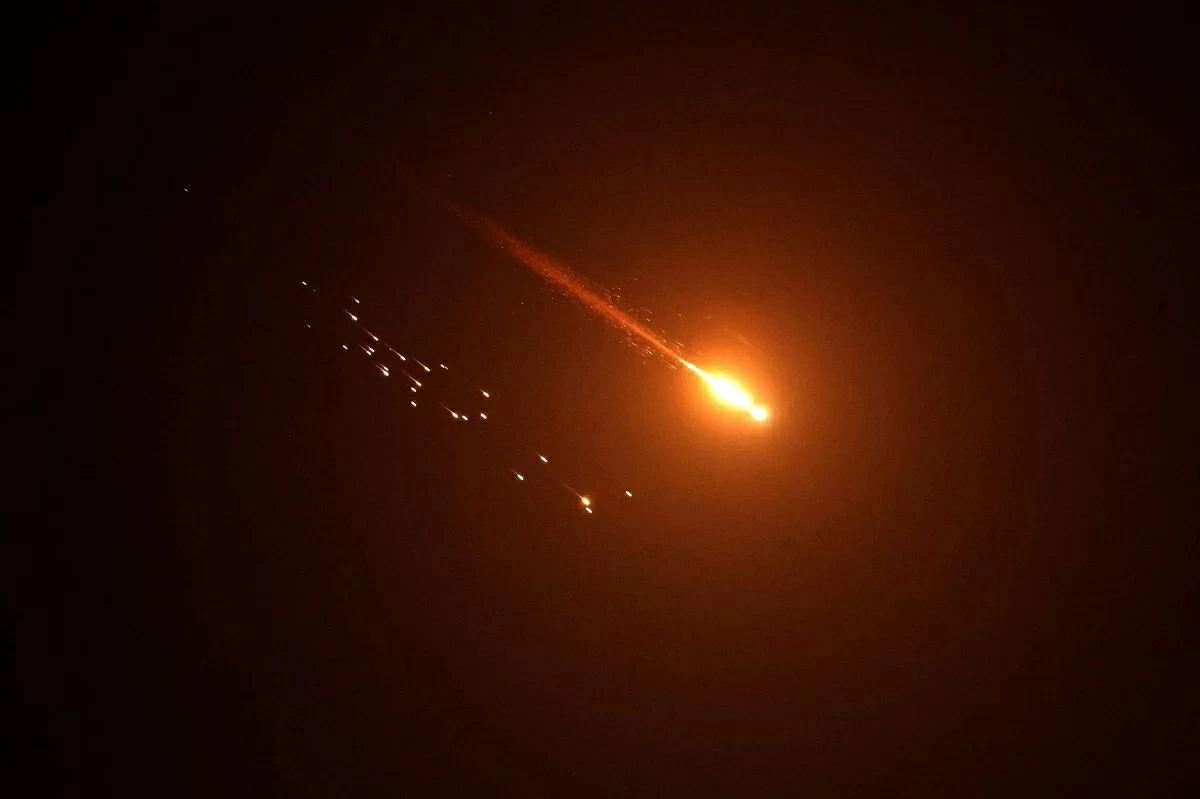
Rocket trails are seen in the sky above the Israeli coastal city of Netanya, amid a fresh barrage of Iranian missile attacks on March 27, 2026 (AFP photo)

Iran says Israel's Beirut strike 'crossed all red lines'


OCCUPIED JERUSALEM – Air raid sirens sounded in Israel on Sunday as its military worked to intercept barrages of incoming Iranian missiles for the first time since an April ceasefire took hold in the Middle East war.

The Israeli army reported the attack just hours after Tehran had threatened to retaliate for a new Israeli strike on Beirut.

An April 8 ceasefire had halted major hostilities between Iran, Israel and the US, but efforts to turn the truce into a settlement have repeatedly stalled, and Sunday's launches were sure to further dampen hopes for a lasting peace, as the Middle East war reached its 100th day.

Tehran has insisted any deal to permanently end the war must also halt the parallel conflict in Lebanon, where Israel is pursuing a campaign against the Iran-backed movement Hezbollah, and had warned that any new attacks on Beirut would trigger a "full-scale resumption" of hostilities.

Iran's military central command said Sunday that Israel's latest strike on the southern Beirut suburbs had "crossed all red lines", demanding a halt to its campaign in Lebanon.

"The Israeli army must stop its attacks on southern Lebanon and the suburbs, and if it expands its attacks to that region or responds to Iran's action, it will face more devastating and regrettable blows," said General Ali Abollahi, the head of the Khatam Al Anbiya command, without directly mentioning missile salvos that Israel said it was intercepting.

Israel's military struck Beirut's southern suburbs on Sunday, hitting apartments in two buildings after saying it had intercepted rockets launched by Hezbollah into Israeli territory.

The Lebanese health ministry said the attack in the capital killed two people and wounded 20 others, including four children and four women.

Iran threatened to retaliate against the United States and Israel for fresh strikes in Beirut on Sunday, further dampening hopes for a lasting peace as the Middle East war reached its 100th day.

Efforts to turn a ceasefire into a settlement have repeatedly stalled, while the war has rattled global markets and increased domestic pressure on US President Donald Trump ahead of midterm elections.

Tehran has repeatedly insisted any deal to permanently end the war must also halt the parallel conflict in Lebanon, where Israel is pursuing a campaign against the Iran-backed movement Hezbollah.

Iran had warned in recent days that any new attacks on Beirut would trigger a "full-scale resumption" of hostilities.

'Gone numb'

The threats of escalation on the war's 100th day came as Iranians were already feeling the strain of weeks of uncertainty.

Mohsen Rezaei, military adviser to Iranian supreme leader Ayatollah Mojtaba Khamenei, had told CNN negotiations with the US "are at a deadlock, and Trump must break this deadlock", calling for the release of some $24 billion in frozen Iranian assets.

But Trump said in the same interview that he would not unfreeze Iranian assets before reaching an agreement with Tehran.

"[That] comes after. If they behave, if they do a good job, we start talking," he said.

Meanwhile, US Central Command (CENTCOM) said overnight that it destroyed two Iranian drones "that threatened international maritime traffic in the Strait of Hormuz".

.col-lg-12.second .opinion-widget{border-top:1px solid #D0D0D0;} #widget_1623 .opinions-title {font-size:32px;} #widget_1623 .opinions-title a{font-size:32px;} .first-author{ background-color:#ecedef; } .first-opinion-author-name{ background-color:white; width:max-content; padding:5px; }
.epaper-separator{ height: 1px; width: 100%; background-color: #D0D0D0; margin: 15px 0; }

Today’s Paper

.related-articles .article-widget-sm .article-title{font-size:16px;-webkit-line-clamp:3;} .related-articles .layout-ratio{padding-bottom:55%;}
.alert-success { color :#A3656F ; } .alert-danger { color : red ; } .footer { font-family:Myriad Pro,Arial; } .newspaper-footer{ visibility:hidden; } .socialFixOuter { position: fixed; top: 50%; margin-top: 40px; right: 0; transition: .2s; z-index: 20; height: 217px; width: 40px; } .socialFix { height: 30px; width: 30px; display: block; position: relative; cursor: pointer; background-size: 18px 18px; transition: .2s; background-position: center; background-repeat: no-repeat; border-radius: 2px; margin-top: 1px; } .socialFix:hover { width: 40px; margin-left: -10px; } .app-badge-img { height: 36px; width: auto; } @media (max-width: 768px) { .app-badge-img { height: 32px; } .app-badges { justify-content: center !important; } }
document.addEventListener("DOMContentLoaded", function () { const socialFix = document.querySelector(".socialFixOuter"); if (!socialFix) return; let firstInteraction = false; let hideTimeout = null; function checkMobileScreen() { if (window.innerWidth < 768) { socialFix.style.display = "none"; } else { socialFix.style.display = "block"; } } checkMobileScreen(); window.addEventListener("resize", checkMobileScreen); function handleFirstInteraction() { if (firstInteraction) return; if (window.innerWidth < 768) return; firstInteraction = true; socialFix.style.right = "-25px"; } socialFix.addEventListener("mouseenter", function () { if (window.innerWidth < 768) return; if (hideTimeout) clearTimeout(hideTimeout); socialFix.style.right = "0"; }); socialFix.addEventListener("mouseleave", function () { if (window.innerWidth < 768) return; if (hideTimeout) clearTimeout(hideTimeout); hideTimeout = setTimeout(() => { socialFix.style.right = "-25px"; }, 500); }); ["click", "touchstart"].forEach((evt) => { socialFix.addEventListener(evt, handleFirstInteraction); }); }); function validateEmail(email) { if (email.length > 255) return false; const emailRegex = /^[a-zA-Z0-9._%+-]+@[a-zA-Z0-9.-]+\.[a-zA-Z]{2,}$/; if (!emailRegex.test(email)) return false; if (email.includes('..') || email.startsWith('.') || email.endsWith('.')) return false; return true; } function sanitizeInput(input) { input = input.replace(/<[^>]*>/g, ''); input = input.replace(/javascript:/gi, ''); input = input.replace(/on\w+\s*=/gi, ''); input = input.replace(/[<>"'&(){}[\]]/g, ''); return input.trim(); } document.addEventListener('DOMContentLoaded', function () { function showModal(message, type) { const messageContainer = document.getElementById("messageContainerFooter"); messageContainer.textContent = message; messageContainer.className = `alert alert-${type} mt-3`; messageContainer.classList.remove("d-none"); setTimeout(() => { messageContainer.classList.add("d-none"); }, 5000); } document.getElementById("emailFormFooter").addEventListener("submit", function(event) { event.preventDefault(); const emailInput = document.getElementById("emailFooter"); const email = sanitizeInput(emailInput.value.trim()); if (!validateEmail(email)) { showModal('Invalid email format', 'danger'); return; } const formData = new FormData(); formData.append('email', email); fetch('/subscribeNewsletter', { method: "POST", body: formData, headers: { "Accept": "application/json", "X-Requested-With": "XMLHttpRequest" } }) .then(response => { if (!response.ok) { showModal("Error submitting email. Try again.", 'danger'); } return response.json(); }) .then(data => { showModal(data.message, 'success'); }) .catch(error => { showModal("Error submitting email. Try again.", 'danger'); }); }); });