


Iran avoids direct strike on Israel despite widening regional war

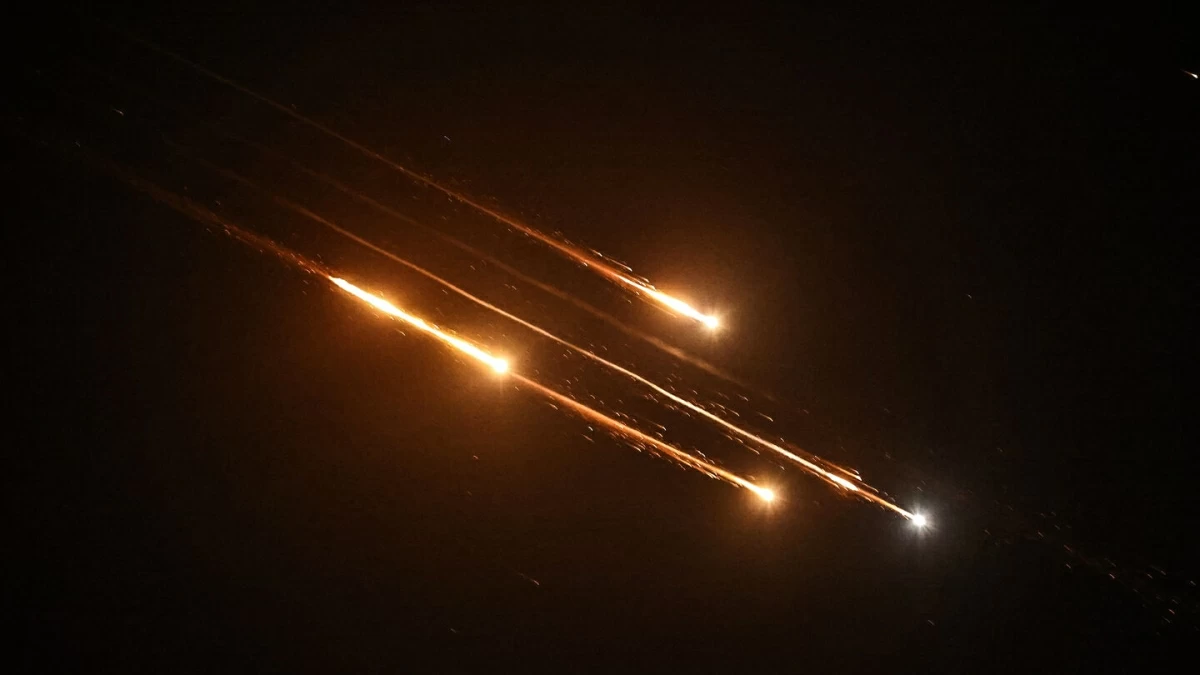
Debris of missiles fired from Iran toward Israel leave trails in the night sky over Nablus in the occupied West bank after being intercepted on June 13, 2025 (AFP photo)

Analysts say Tehran seeks to pressure Washington while avoiding direct conflict with Israel


AMMAN — The United States said it expanded its military campaign against Iran overnight, launching an eighth consecutive round of strikes. Tehran said it also stepped up attacks across the region while continuing to avoid another direct assault on Israel.

The latest operation targeted Iranian air defence systems, missile and drone facilities and naval assets. US Central Command (CENTCOM) said the strikes were launched in response to the deadly attack on a US military base in Jordan and were also intended to reduce Iran’s ability to threaten commercial shipping through the Strait of Hormuz.

The escalation followed Iranian attacks that killed two US service members in Jordan and targeted military facilities in Kuwait and Bahrain. Gulf states condemned the attacks, warning they threatened civilian infrastructure, regional security and global energy supplies.

Political analyst Amer Sabaileh said that Iran recognises that opening another direct front with Israel could fundamentally alter the conflict.

“Iran understands that any direct attack on Israel would trigger a response unlike previous rounds,” Sabaileh said.

“Iran knows another direct strike could provoke Israel’s largest military response yet,” he said.

“Tehran’s remaining leverage lies in increasing pressure on Washington rather than opening another front with Israel, he said. That strategy includes targeting US military interests while using the Strait of Hormuz to increase political and economic pressure.”

In remarks to The Jordan Times, Sabaileh said that such an approach allows Tehran to demonstrate its ability to challenge US interests without crossing what it considers Israel’s red lines, which could rapidly transform the confrontation into a much broader regional war.

Sabaileh added that Iran has traditionally preferred confronting Israel indirectly through allied groups in Gaza, Lebanon, Syria, the occupied West Bank and Yemen. “The current confrontation, however, is increasingly direct, making any new strike on Israel far more consequential.”

Political analyst Areej Jaber said that Tehran is deliberately managing the conflict to avoid a full-scale confrontation with the United States, Israel and their Western allies.

“The issue is not capability or intent, but timing and strategic calculations,” she said.

“Tehran wants to keep the confrontation centred on the United States because expanding the conflict with Israel could provide Washington with greater justification for a much broader military campaign.”

She added Iran is seeking to raise the military and political cost for Washington by targeting locations linked to US military operations and logistical support across the region while avoiding actions most likely to trigger a direct regional war with Israel.

.col-lg-12.second .opinion-widget{border-top:1px solid #D0D0D0;} #widget_1623 .opinions-title {font-size:32px;} #widget_1623 .opinions-title a{font-size:32px;} .first-author{ background-color:#ecedef; } .first-opinion-author-name{ background-color:white; width:max-content; padding:5px; }
.epaper-separator{ height: 1px; width: 100%; background-color: #D0D0D0; margin: 15px 0; }

Today’s Paper

.related-articles .article-widget-sm .article-title{font-size:16px;-webkit-line-clamp:3;} .related-articles .layout-ratio{padding-bottom:55%;}
.alert-success { color :#A3656F ; } .alert-danger { color : red ; } .footer { font-family:Myriad Pro,Arial; } .newspaper-footer{ visibility:hidden; } .socialFixOuter { position: fixed; top: 50%; margin-top: 40px; right: 0; transition: .2s; z-index: 20; height: 217px; width: 40px; } .socialFix { height: 30px; width: 30px; display: block; position: relative; cursor: pointer; background-size: 18px 18px; transition: .2s; background-position: center; background-repeat: no-repeat; border-radius: 2px; margin-top: 1px; } .socialFix:hover { width: 40px; margin-left: -10px; } .app-badge-img { height: 36px; width: auto; } @media (max-width: 768px) { .app-badge-img { height: 32px; } .app-badges { justify-content: center !important; } }
document.addEventListener("DOMContentLoaded", function () { const socialFix = document.querySelector(".socialFixOuter"); if (!socialFix) return; let firstInteraction = false; let hideTimeout = null; function checkMobileScreen() { if (window.innerWidth < 768) { socialFix.style.display = "none"; } else { socialFix.style.display = "block"; } } checkMobileScreen(); window.addEventListener("resize", checkMobileScreen); function handleFirstInteraction() { if (firstInteraction) return; if (window.innerWidth < 768) return; firstInteraction = true; socialFix.style.right = "-25px"; } socialFix.addEventListener("mouseenter", function () { if (window.innerWidth < 768) return; if (hideTimeout) clearTimeout(hideTimeout); socialFix.style.right = "0"; }); socialFix.addEventListener("mouseleave", function () { if (window.innerWidth < 768) return; if (hideTimeout) clearTimeout(hideTimeout); hideTimeout = setTimeout(() => { socialFix.style.right = "-25px"; }, 500); }); ["click", "touchstart"].forEach((evt) => { socialFix.addEventListener(evt, handleFirstInteraction); }); }); function validateEmail(email) { if (email.length > 255) return false; const emailRegex = /^[a-zA-Z0-9._%+-]+@[a-zA-Z0-9.-]+\.[a-zA-Z]{2,}$/; if (!emailRegex.test(email)) return false; if (email.includes('..') || email.startsWith('.') || email.endsWith('.')) return false; return true; } function sanitizeInput(input) { input = input.replace(/<[^>]*>/g, ''); input = input.replace(/javascript:/gi, ''); input = input.replace(/on\w+\s*=/gi, ''); input = input.replace(/[<>"'&(){}[\]]/g, ''); return input.trim(); } document.addEventListener('DOMContentLoaded', function () { function showModal(message, type) { const messageContainer = document.getElementById("messageContainerFooter"); messageContainer.textContent = message; messageContainer.className = `alert alert-${type} mt-3`; messageContainer.classList.remove("d-none"); setTimeout(() => { messageContainer.classList.add("d-none"); }, 5000); } document.getElementById("emailFormFooter").addEventListener("submit", function(event) { event.preventDefault(); const emailInput = document.getElementById("emailFooter"); const email = sanitizeInput(emailInput.value.trim()); if (!validateEmail(email)) { showModal('Invalid email format', 'danger'); return; } const formData = new FormData(); formData.append('email', email); fetch('/subscribeNewsletter', { method: "POST", body: formData, headers: { "Accept": "application/json", "X-Requested-With": "XMLHttpRequest" } }) .then(response => { if (!response.ok) { showModal("Error submitting email. Try again.", 'danger'); } return response.json(); }) .then(data => { showModal(data.message, 'success'); }) .catch(error => { showModal("Error submitting email. Try again.", 'danger'); }); }); });