






 Share Story


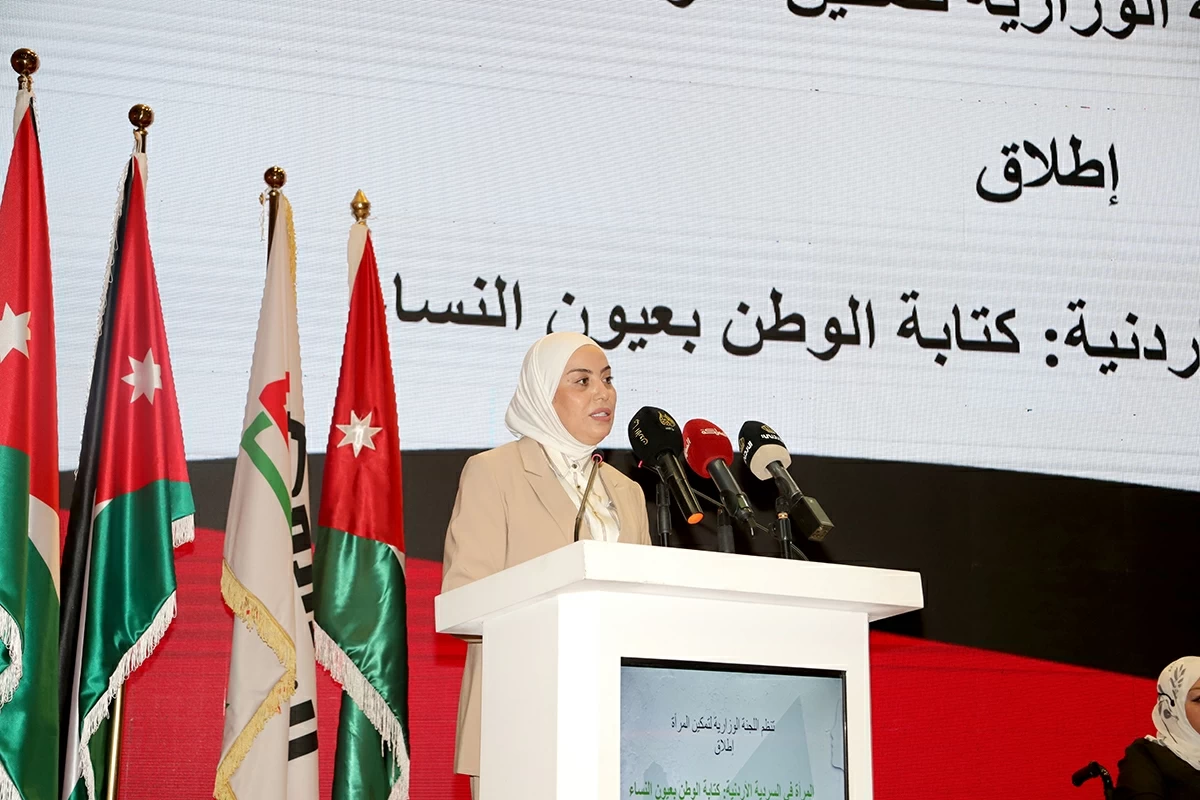
AMMAN — The Inter-Ministerial Committee for Women’s Empowerment (IMC) in cooperation with UN Women on Saturday launched the “Women in the Jordanian Narrative: Writing the Story of the Nation through Women’s Eyes” initiative.
Minister of Social Development and Chairperson of the IMC Wafa Bani Mustafa, said that Jordanian women have always been key partners in shaping national history and building the modern Jordanian state.
The launch ceremony was attended by Minister of Culture Mustafa Al Rawashdeh, members of Parliament and the Senate, as well as representatives of official and civil institutions, in addition to academic and cultural figures.
Bani Mustafa said the initiative aims to consolidate an inclusive national narrative that documents and highlights the contributions of Jordanian women across different stages of nation-building.
She highlighted the role of Her Majesty Queen Zein Al Sharaf and HRH Princess Basma Bint Talal in supporting state-building efforts.
She also underscored the pioneering role of Her Majesty Queen Rania, describing her as a global advocate for education, human rights, children and refugees, and a strong voice on international issues, including the Palestinian cause.
Bani Mustafa said Queen Rania’s contributions have focused on advancing education, empowering youth and women, and launching qualitative initiatives aimed at improving education standards in Jordan and across the Arab world.
She added that Her Majesty has played a key role in promoting dialogue between cultures and enhancing Jordan’s global image as a model for development, education and human rights.
The minister also referred to the contributions of pioneering Jordanian women in education, law, social work, health and politics, noting that women have historically broken barriers as lawyers, teachers, midwives and ministers, in addition to their roles in science, culture, diplomacy, sports and public service.
She said the Jordanian women’s movement emerged from national necessity and evolved through successive historical phases since the 1940s, reaching a stage of empowerment and leadership under the era of His Majesty King Abdullah, during which women’s participation expanded across political, economic, security and military fields, making them active partners in decision-making and development.
Minister of Culture Mustafa Al Rawashdeh said that the Jordanian Narrative Project goes beyond documenting historical events to encompass broader human and civilisational transformations witnessed on Jordanian soil, including the central role of women in culture, arts, education, development and national work.
He added that the Ministry of Culture has launched the “Stories from Jordan” platform to document stories, photographs and films related to the national narrative, preserving them for future generations using modern tools and technologies aligned with contemporary developments.
