






 Share Story


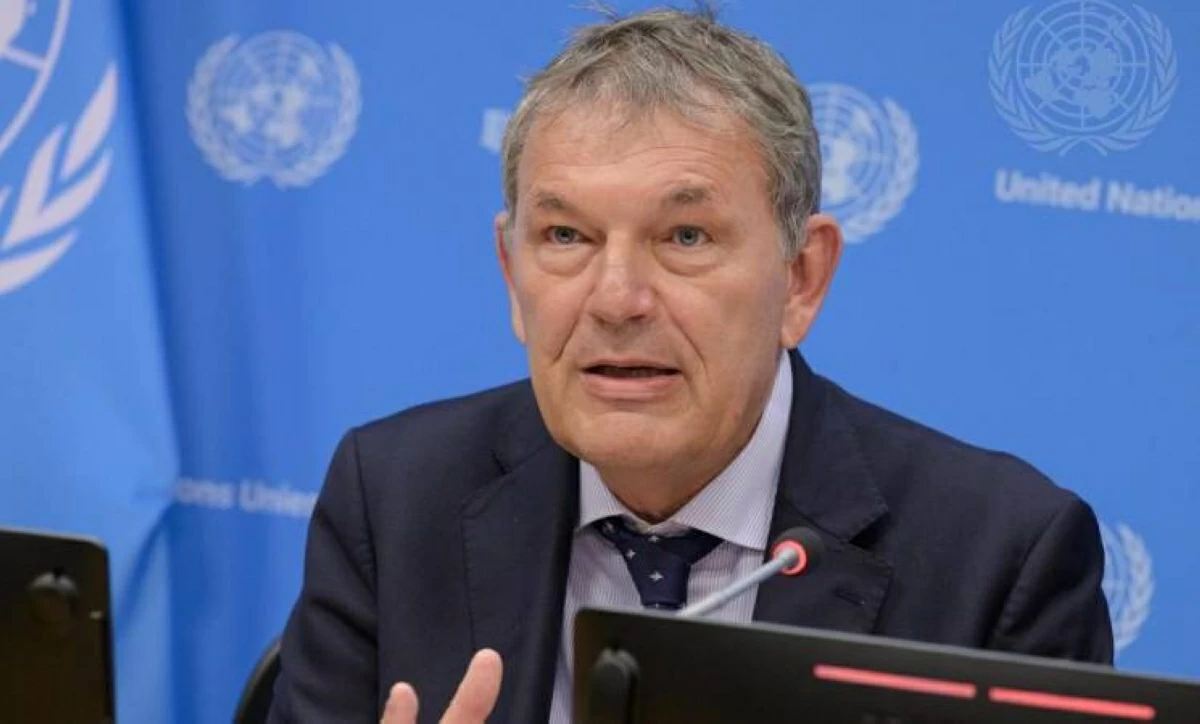
AMMAN — UNRWA Commissioner-General Philippe Lazzarini has warned that the Palestinian relief agency’s future and the survival of millions of Palestine refugees hangs in the balance amid political attacks, financial collapse, and a humanitarian disaster in Gaza.
During a meeting of UNRWA Advisory Commission on Wednesday, Lazzarini thanked Jordan, Egypt, Brazil, Belgium, Australia and Ireland for their leadership in a period he described as one of “great adversity and uncertainty,” according to an UNRWA statement.
“The world’s overwhelming solidarity with Palestine refugees must be reflected in this vote,” Lazzarini said, adding that mandate renewal alone “is not sufficient.”
The agency, he said, needs stable financing and clear political recognition of its role in any future plans for the occupied Palestinian territory.
The commissioner-general described conditions in Gaza as “precarious” despite a recent ceasefire and the Security Council’s adoption of Resolution 2803, which authorises an international stabilisation force.
“The population has reached the limits of human endurance,” he said, describing two years of bombardment, forced displacement, and siege that have led to widespread hunger, disease, and severe trauma. Winter rains are now worsening the situation.
“ UNRWA now delivers 40 per cent of all primary healthcare in Gaza, conducts 14,000 medical consultations daily, supports hundreds of thousands through water systems and waste management, and provides a mix of in-person and online education to more than 300,000 children.”
He said that psychosocial support is integrated into schooling to help prevent radicalisation and revive hope.
Lazzarini described UNRWA’s education programme as a regional model for tolerance, gender equality, and human rights, values the agency has upheld “despite strong opposition and intimidation by Hamas and other groups.”
Lazzarini warned that the situation in the West Bank is also deteriorating rapidly.
More than 32,000 residents of northern refugee camps have been forcibly displaced, the largest movement of Palestine refugees since 1967, he said.
Israeli settler violence reached unprecedented levels in October, with more than 500 incidents recorded.
He called the Israeli Knesset’s recent vote to annex the West Bank “an action that runs counter to international law,” adding that it signals the extent to which the occupation has been “sanitised, even legitimised,” in public discourse.
“UNRWA provides health, education, and social services to nearly one million refugees in the West Bank”, he said, adding that the loss of those services would sharply increase pressure on the Palestinian Authority and further destabilize the area.
Lazzarini accused Israeli authorities of systematically targeting the agency’s operations.
He cited 2024 legislation that expelled UNRWA’s international staff from the occupied Palestinian territory and restricted aid shipments to Gaza.
The commissioner said that a UN Commission of Inquiry found that these measures were designed to create “unliveable conditions of life” for Palestinians, acts he labelled genocidal.
He also referenced an October ruling by the International Court of Justice that obliges Israel to lift restrictions on UNRWA’s work and facilitate its humanitarian relief.
“Safeguarding UNRWA’s mandate is required under international law,” Lazzarini said. “It is essential to a political solution.”
He warned that a wave of “virulent disinformation” aimed at portraying the agency as complicit with Hamas has devastated its finances, despite a lack of evidence to support such allegations.
“UNRWA has zero tolerance for any proven breach of neutrality,” he said, noting progress on 50 recommendations from last year’s independent neutrality review.
Two major donor suspensions, including by the agency’s largest funder, have created a severe cash crunch. UNRWA has implemented $150 million in austerity measures for 2025, but still faces a $200 million shortfall between the end of 2025 and early 2026.
“In the absence of a significant influx of new funding, the delivery of critical services to millions of Palestine refugees across the region will be compromised.”
Lazzarini emphasised that UNRWA remains indispensable not just in Gaza and the West Bank, but across Lebanon, Syria, and Jordan.
He framed UNRWA’s work as central to implementing the New York Declaration and President Trump’s 20-Point Plan, and to strengthening the Palestinian Authority’s ability to govern.
But he cautioned that UNRWA “cannot survive the immense political and financial pressure it is under” without determined backing from Member States. He urged governments involved in stabilisation efforts and the new Board of Peace to protect UNRWA’s operational space in Gaza and reject efforts to marginalise the agency.
Lazzarini said that more than 380 UNRWA staff have been killed in Gaza, over 300 agency buildings have been damaged or destroyed, and numerous employees have been detained or tortured.
“The attacks on United Nations personnel and premises cannot go unanswered. We cannot allow impunity to further undermine the United Nations and the future of multilateral action.”
