






 Share Story


AMMAN —Jordan and Syria are stepping up efforts to manage shared water resources, with officials pointing to closer coordination and fresh political assurances on water sharing from the Yarmouk River Basin.
“The Joint Water Committee is continuing its work,” Ministry of Water and Irrigation spokesperson Omar Salameh told The Jordan Times on Monday.
His remarks follow a message from Syrian President Ahmad Al Sharaa, conveyed by Foreign Minister Asaad Al Shibani, affirming that Syria’s water resources will be shared with Jordan, according to a Syrian official.
Speaking to Al Mamlaka TV, Muhammad Al Ahmad, Director of the Arab and Regional Affairs Department at the Syrian Foreign Ministry , said that cooperation on the water file is progressing, adding that steps have been taken to stop random well drilling on both sides of the Yarmouk Basin.
Water cooperation topped the agenda during the second session of the Jordanian-Syrian Higher Coordination Council, held in Amman on Sunday.
The session was co-chaired by Deputy Prime Minister and Foreign Minister Ayman Safadi and his Syrian counterpart, Shibani.
The high-level meeting brought together ministers from both nations to strengthen coordination across the water, energy, and transport sectors.
Officials welcomed the reactivation of the Joint Water Committee, which has convened twice, most recently in Damascus in August 2025. They emphasized the necessity of implementing committee decisions to ensure the fair distribution of water.
Both sides agreed to convene further meetings this month to discuss sustaining water flow in the Yarmouk Basin following recent rainfall.
The roadmap includes activating the Jordanian-Syrian Joint Water Platform, expanding bilateral data sharing, and joint monitoring. The two nations also plan to advance basin development and explore projects such as cloud seeding.
These discussions build upon a July 2025 agreement reached at the Wihdeh Dam, in the first meeting of the Joint Water Committee, where technical teams signed a protocol outlining steps to safeguard the water rights of both nations.
Despite the current optimism, challenges remain persisting on the unresolved water issue between the two neigbours.
Former water minister Hazim El Naser told The Jordan Times previously that past agreements were repeatedly violated under Syria’s toppled regime of Bashar Al Assad.
He said that Syria built 49 dams along the Yarmouk River, far exceeding agreed limits, which reduced water flows to Jordan. He also pointed to excessive groundwater extraction, which led to the depletion of thousands of wells.
According to El Naser, Jordan loses between 180 and 200 million cubic metres (mcm) of water annually due to these practices, a volume comparable to the expected output of the Kingdom’s largest strategic water project.
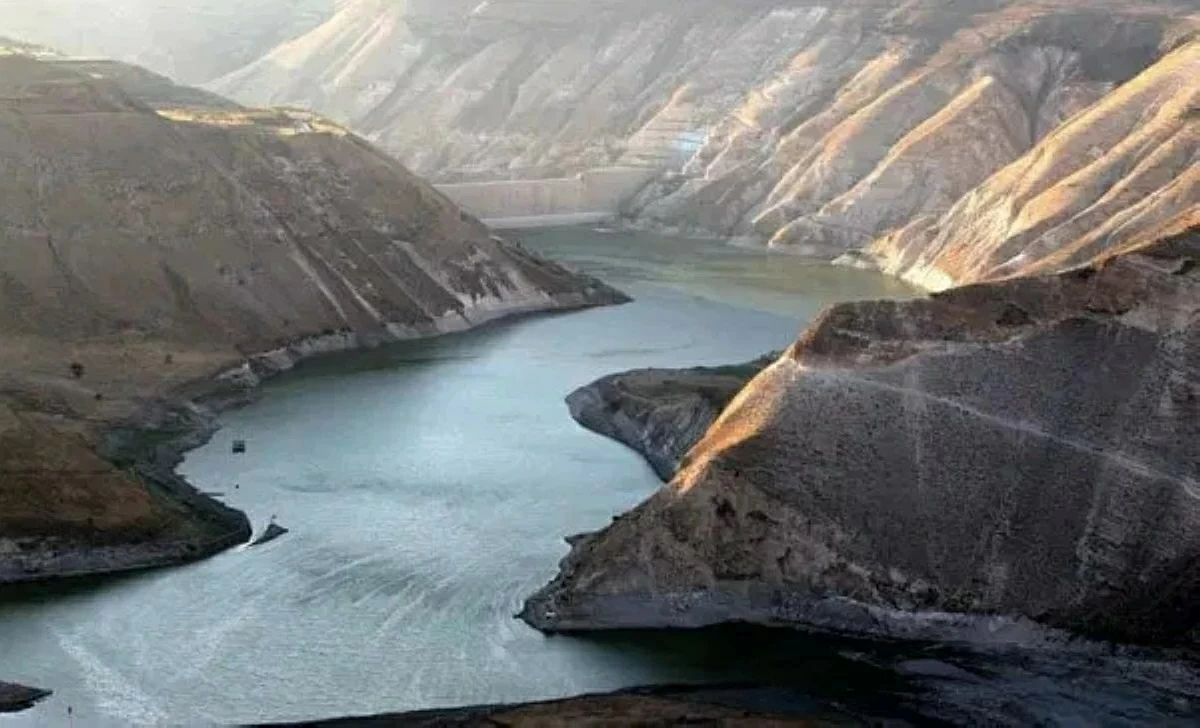
The Yarmouk River, the largest tributary of the Jordan River, is a vital source of water for the Kingdom, which according to El Naser “can cover a large part of Jordan’s needs.”
Jordan and Syria originally signed an agreement to manage the basin in 1953, which was later amended in 1987.
