






 Share
Share


AMMAN — Deputy Prime Minister and Foreign Minister Ayman Safadi on Thursday stressed the need to uphold the ceasefire between the United States and Iran and pursue diplomacy to address the root causes of regional tensions.
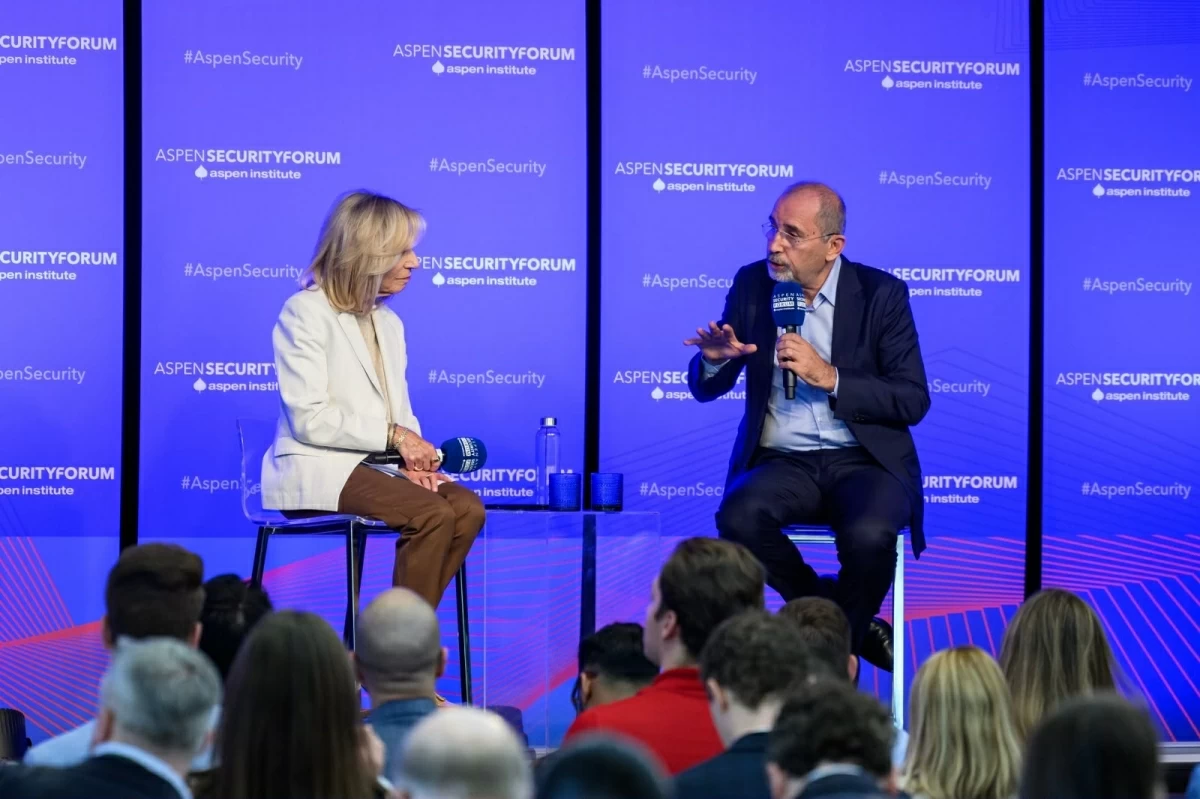
Speaking during a panel session, moderated by US journalist Andrea Mitchell on the sidelines of the Aspen Security Forum, Safadi reiterated Jordan's condemnation of Iranian attacks on the its territory and Gulf Cooperation Council (GCC) countries.
He said that there was no justification for Iran's attacks on Jordan or GCC states, rejecting as "baseless" Iranian claims that Jordan hosts US military bases, according to a Foteign Ministry statement.
Safadi said US forces stationed in Jordan are present under a bilateral defence cooperation agreement that fully respects Jordan's sovereignty and supports joint efforts to combat terrorism, adding that there are no US military bases in the Kingdom.
Jordan and other Arab countries are not parties to the conflict and have consistently sought good relations with Iran, Safadi said, noting that such relations require respect for the sovereignty of Arab states and non-interference in their internal affairs.
On Gaza, Safadi called for the implementation of US President Donald Trump's Gaza plan and renewed calls to end the humanitarian crisis in the Strip.
He also urged an end to Israel's illegal measures that undermine the two-state solution and the prospects for achieving a just and lasting peace.
Addressing developments in Lebanon, Safadi stressed the need to respect the country's sovereignty and called for Israel's withdrawal from occupied Lebanese territory.
Hr also voiced support for the Lebanese government's efforts to extend its authority across all Lebanese territory and ensure that arms remain exclusively under state control.
Safadi said that Arab countries have a clear vision for achieving a just peace through the two-state solution, which he described as “the only path to ensuring lasting peace and security in the region.”
He said that the Israeli government rejects the two-state solution without offering an alternative framework for peace, arguing that its policies fuel conflict and deprive the peoples of the region of the opportunity to live in peace.
The minister also discussed regional challenges and Jordan's efforts to promote security and stability.
