

Prince Hassan concludes Vatican, Rome visit focused on dialogue, cooperation

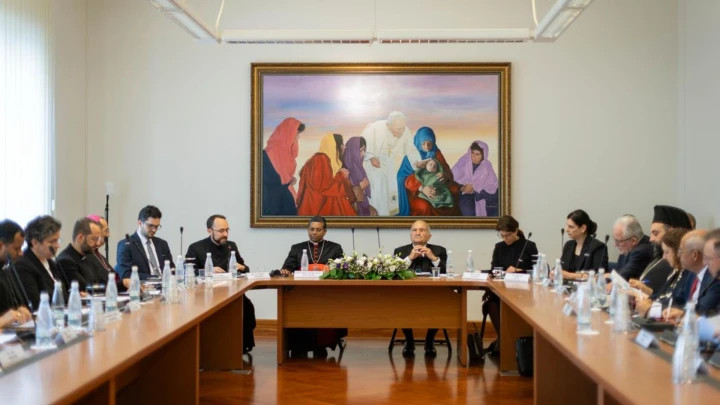
HRH Prince Hassan, accompanied by HRH Princess Sarvath El Hassan, concludes a visit to Rome and the Vatican City, during which he participated in a series of intellectual, religious, diplomatic and scientific meetings (Petra photo)

AMMAN — HRH Prince Hassan, accompanied by HRH Princess Sarvath El Hassan, concluded a visit to Rome and the Vatican City that lasted from Sunday to Thursday, during which Prince Hassan participated in a series of intellectual, religious, diplomatic and scientific meetings.

The meetings reflected Jordan’s active presence in international dialogue and reinforced Prince Hassan’s standing as one of the leading global voices advocating the protection of human dignity and the promotion of pluralism and understanding among peoples and religions, the Jordan News Agency, Petra, reported.

At the Vatican, Prince Hassan met with Pope Leo XIV in a meeting that reflected the “deep-rooted historical” ties between Jordan and the Holy See, as well as a shared belief in the importance of promoting compassion, justice and mutual respect amid escalating humanitarian conflicts and growing moral and cultural divisions worldwide.

The meeting took place on the sidelines of the Eighth Colloquium between the Vatican’s Dicastery for Interreligious Dialogue and the Royal Institute for Inter-Faith Studies, held under the theme “Human Compassion and Empathy in Modern Times,” with the participation of prominent religious, intellectual and academic figures from around the world.

During the colloquium, His Royal Highness stressed that priority in today’s world must be given to humanity, human dignity and the right to a safe and decent life, noting that any international order that loses its humanitarian compass also loses its ability to achieve justice and stability.

The meeting and seminar also reflected Prince Hassan’s long-standing efforts to advance Muslim-Christian dialogue and promote the concept of “shared humanity” as a foundation for cooperation among peoples and cultures, based on the conviction that religious and cultural diversity should serve as a space for integration, mutual understanding and shared human responsibility rather than conflict.

During his intellectual engagements, Prince Hassan stressed the urgent need to rebuild a more just and humane global moral framework based on compassion, justice and solidarity, restoring the value of the individual and the right to live in dignity, security and peace, particularly in light of the worsening humanitarian crises affecting the region and the world.

During the visit, Prince Hassan also participated in meetings at the Italian Institute of International Affairs (IAI), alongside the European Council on Foreign Relations (ECFR).

Discussions during these meetings focused on ongoing geopolitical transformations and the importance of developing new approaches to regional and international cooperation centred on humanity, culture and shared memory, in addition to economics and security.

As part of his scientific programme, Prince Hassan visited the European Space Agency Centre for Earth Observation, where he was briefed on the latest European technologies in remote sensing, geographic data analysis and smart mapping, and their role in supporting sustainable development, resource management, urban and environmental planning.

During the visit, the prince stressed the importance of boosting Jordanian-European cooperation in science, technology and geographic data, noting that maps are no longer merely technical tools, but have become instruments for understanding people, societies, resources and challenges, as well as essential tools in decision-making and public policymaking.

.col-lg-12.second .opinion-widget{border-top:1px solid #D0D0D0;} #widget_1623 .opinions-title {font-size:32px;} #widget_1623 .opinions-title a{font-size:32px;} .first-author{ background-color:#ecedef; } .first-opinion-author-name{ background-color:white; width:max-content; padding:5px; }
.epaper-separator{ height: 1px; width: 100%; background-color: #D0D0D0; margin: 15px 0; }

Today’s Paper

.related-articles .article-widget-sm .article-title{font-size:16px;-webkit-line-clamp:3;} .related-articles .layout-ratio{padding-bottom:55%;}
.alert-success { color :#A3656F ; } .alert-danger { color : red ; } .footer { font-family:Myriad Pro,Arial; } .newspaper-footer{ visibility:hidden; } .socialFixOuter { position: fixed; top: 50%; margin-top: 40px; right: 0; transition: .2s; z-index: 20; height: 217px; width: 40px; } .socialFix { height: 30px; width: 30px; display: block; position: relative; cursor: pointer; background-size: 18px 18px; transition: .2s; background-position: center; background-repeat: no-repeat; border-radius: 2px; margin-top: 1px; } .socialFix:hover { width: 40px; margin-left: -10px; } .app-badge-img { height: 36px; width: auto; } @media (max-width: 768px) { .app-badge-img { height: 32px; } .app-badges { justify-content: center !important; } }
document.addEventListener("DOMContentLoaded", function () { const socialFix = document.querySelector(".socialFixOuter"); if (!socialFix) return; let firstInteraction = false; let hideTimeout = null; function checkMobileScreen() { if (window.innerWidth < 768) { socialFix.style.display = "none"; } else { socialFix.style.display = "block"; } } checkMobileScreen(); window.addEventListener("resize", checkMobileScreen); function handleFirstInteraction() { if (firstInteraction) return; if (window.innerWidth < 768) return; firstInteraction = true; socialFix.style.right = "-25px"; } socialFix.addEventListener("mouseenter", function () { if (window.innerWidth < 768) return; if (hideTimeout) clearTimeout(hideTimeout); socialFix.style.right = "0"; }); socialFix.addEventListener("mouseleave", function () { if (window.innerWidth < 768) return; if (hideTimeout) clearTimeout(hideTimeout); hideTimeout = setTimeout(() => { socialFix.style.right = "-25px"; }, 500); }); ["click", "touchstart"].forEach((evt) => { socialFix.addEventListener(evt, handleFirstInteraction); }); }); function validateEmail(email) { if (email.length > 255) return false; const emailRegex = /^[a-zA-Z0-9._%+-]+@[a-zA-Z0-9.-]+\.[a-zA-Z]{2,}$/; if (!emailRegex.test(email)) return false; if (email.includes('..') || email.startsWith('.') || email.endsWith('.')) return false; return true; } function sanitizeInput(input) { input = input.replace(/<[^>]*>/g, ''); input = input.replace(/javascript:/gi, ''); input = input.replace(/on\w+\s*=/gi, ''); input = input.replace(/[<>"'&(){}[\]]/g, ''); return input.trim(); } document.addEventListener('DOMContentLoaded', function () { function showModal(message, type) { const messageContainer = document.getElementById("messageContainerFooter"); messageContainer.textContent = message; messageContainer.className = `alert alert-${type} mt-3`; messageContainer.classList.remove("d-none"); setTimeout(() => { messageContainer.classList.add("d-none"); }, 5000); } document.getElementById("emailFormFooter").addEventListener("submit", function(event) { event.preventDefault(); const emailInput = document.getElementById("emailFooter"); const email = sanitizeInput(emailInput.value.trim()); if (!validateEmail(email)) { showModal('Invalid email format', 'danger'); return; } const formData = new FormData(); formData.append('email', email); fetch('/subscribeNewsletter', { method: "POST", body: formData, headers: { "Accept": "application/json", "X-Requested-With": "XMLHttpRequest" } }) .then(response => { if (!response.ok) { showModal("Error submitting email. Try again.", 'danger'); } return response.json(); }) .then(data => { showModal(data.message, 'success'); }) .catch(error => { showModal("Error submitting email. Try again.", 'danger'); }); }); });