


Oxfam says Gaza reconstruction may cost $71b, calls for Palestinian-led recovery

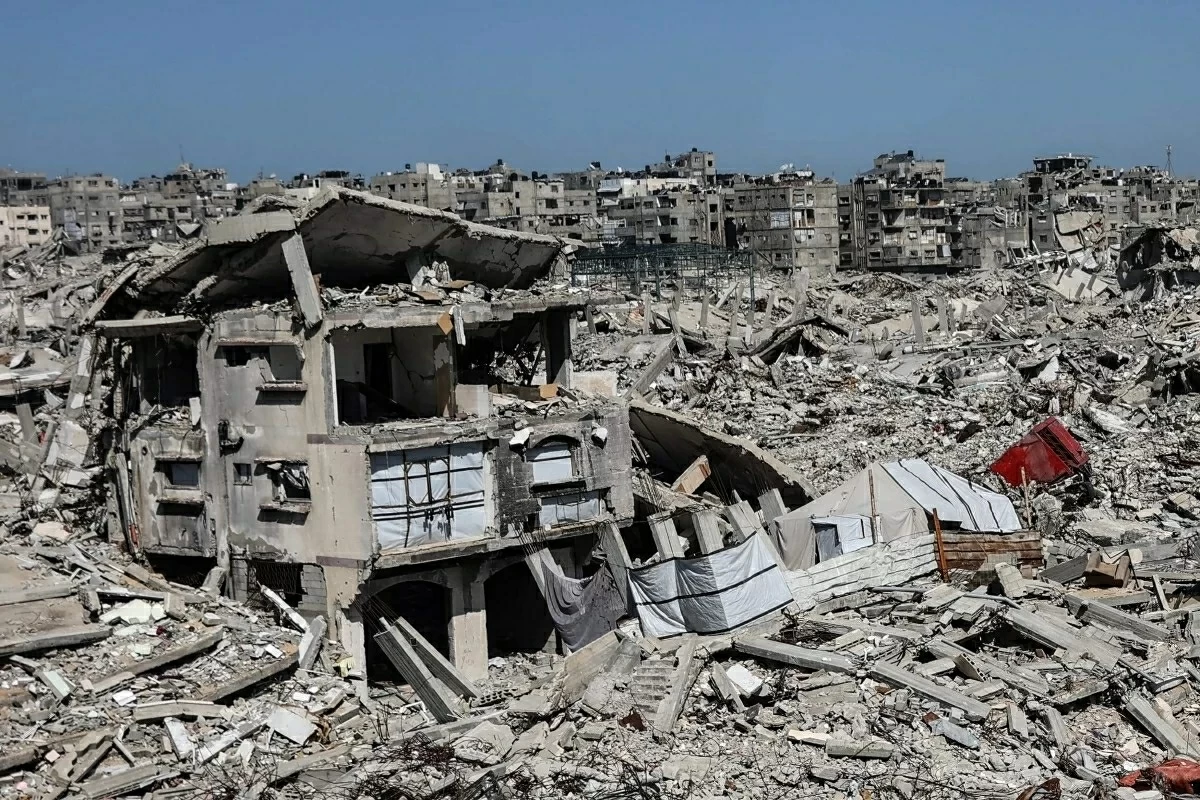
Tents housing displaced Palestinian families are erected between the rubble of homes and businesses destroyed by the Israeli military, in the Sheikh Radwan neighbourhood of Gaza City on February 20, 2026 (AFP photo)

AMMAN — Rebuilding Gaza will require an estimated $71.4 billion over the next decade, more than seven times the combined cost of reconstruction following previous major conflicts in the Strip, according to a new report released on Thursday jointly by Oxfam and two Palestinian institutions.

The report, titled Building Gaza Anew, was produced by Oxfam in partnership with the Palestine Economic Policy Research Institute (MAS) and the Palestine Trade Centre (PalTrade).

It argued that Gaza's recovery must be led by Palestinians and accompanied by accountability measures, warning that externally imposed reconstruction models have repeatedly failed.

According to the report, the latest estimate is based on the April 2026 Rapid Damage and Needs Assessment prepared by the UN, EU and World Bank, which put total damage and economic losses in Gaza at $57.9 billion and estimated recovery and reconstruction needs at $71.4 billion over the next 10 years.

The report noted that previous reconstruction efforts following the 2008-09, 2014 and 2021 conflicts required the equivalent of around $10 billion in today's prices.

However, those efforts were repeatedly undermined by restrictions on movement and access, funding shortages and renewed hostilities before reconstruction could be completed.

Beyond physical destruction, the report argued that the conflict has severely damaged Gaza's social and economic foundations.

Libraries, archives and cultural institutions have also been lost, affecting the preservation of Palestinian history and identity.

The report also highlighted the humanitarian impact on women and vulnerable groups, estimating that around 58,600 households are now headed by women, while female unemployment has reached 92 per cent.

Women reportedly spend between eight and 12 hours each day performing unpaid care work, including collecting water, preparing food under difficult conditions and caring for injured family members.

The report also added that around one in four injuries sustained during the conflict will have life-changing consequences, with more than 50,000 people requiring long-term rehabilitation.

Many people with disabilities have lost access to assistive devices, while overcrowded shelters and damaged sanitation infrastructure have increased public health risks, according to the report.

Environmental damage has also been extensive, the report said, citing the destruction of orchards, farmland and greenhouses, contamination of agricultural land, deterioration of groundwater resources and untreated sewage flowing into the Mediterranean Sea.

The report proposed a five-year framework for recovery centred on Palestinian leadership, calling for a unified national vision linking Gaza, the West Bank and East Jerusalem.

It rejected international trusteeship or externally imposed governance models and instead advocated coordination with regional and international partners within the framework of international law.

Ahead of upcoming donor discussions and the 81st session of the UN General Assembly, the report urged governments financing Gaza's recovery to transfer decision-making authority to Palestinians, remove restrictions that have hindered previous reconstruction efforts and support a political process aimed at ending the occupation and achieving Palestinian self-determination.

.col-lg-12.second .opinion-widget{border-top:1px solid #D0D0D0;} #widget_1623 .opinions-title {font-size:32px;} #widget_1623 .opinions-title a{font-size:32px;} .first-author{ background-color:#ecedef; } .first-opinion-author-name{ background-color:white; width:max-content; padding:5px; }
.epaper-separator{ height: 1px; width: 100%; background-color: #D0D0D0; margin: 15px 0; }

Today’s Paper

.related-articles .article-widget-sm .article-title{font-size:16px;-webkit-line-clamp:3;} .related-articles .layout-ratio{padding-bottom:55%;}
.alert-success { color :#A3656F ; } .alert-danger { color : red ; } .footer { font-family:Myriad Pro,Arial; } .newspaper-footer{ visibility:hidden; } .socialFixOuter { position: fixed; top: 50%; margin-top: 40px; right: 0; transition: .2s; z-index: 20; height: 217px; width: 40px; } .socialFix { height: 30px; width: 30px; display: block; position: relative; cursor: pointer; background-size: 18px 18px; transition: .2s; background-position: center; background-repeat: no-repeat; border-radius: 2px; margin-top: 1px; } .socialFix:hover { width: 40px; margin-left: -10px; } .app-badge-img { height: 36px; width: auto; } @media (max-width: 768px) { .app-badge-img { height: 32px; } .app-badges { justify-content: center !important; } }
document.addEventListener("DOMContentLoaded", function () { const socialFix = document.querySelector(".socialFixOuter"); if (!socialFix) return; let firstInteraction = false; let hideTimeout = null; function checkMobileScreen() { if (window.innerWidth < 768) { socialFix.style.display = "none"; } else { socialFix.style.display = "block"; } } checkMobileScreen(); window.addEventListener("resize", checkMobileScreen); function handleFirstInteraction() { if (firstInteraction) return; if (window.innerWidth < 768) return; firstInteraction = true; socialFix.style.right = "-25px"; } socialFix.addEventListener("mouseenter", function () { if (window.innerWidth < 768) return; if (hideTimeout) clearTimeout(hideTimeout); socialFix.style.right = "0"; }); socialFix.addEventListener("mouseleave", function () { if (window.innerWidth < 768) return; if (hideTimeout) clearTimeout(hideTimeout); hideTimeout = setTimeout(() => { socialFix.style.right = "-25px"; }, 500); }); ["click", "touchstart"].forEach((evt) => { socialFix.addEventListener(evt, handleFirstInteraction); }); }); function validateEmail(email) { if (email.length > 255) return false; const emailRegex = /^[a-zA-Z0-9._%+-]+@[a-zA-Z0-9.-]+\.[a-zA-Z]{2,}$/; if (!emailRegex.test(email)) return false; if (email.includes('..') || email.startsWith('.') || email.endsWith('.')) return false; return true; } function sanitizeInput(input) { input = input.replace(/<[^>]*>/g, ''); input = input.replace(/javascript:/gi, ''); input = input.replace(/on\w+\s*=/gi, ''); input = input.replace(/[<>"'&(){}[\]]/g, ''); return input.trim(); } document.addEventListener('DOMContentLoaded', function () { function showModal(message, type) { const messageContainer = document.getElementById("messageContainerFooter"); messageContainer.textContent = message; messageContainer.className = `alert alert-${type} mt-3`; messageContainer.classList.remove("d-none"); setTimeout(() => { messageContainer.classList.add("d-none"); }, 5000); } document.getElementById("emailFormFooter").addEventListener("submit", function(event) { event.preventDefault(); const emailInput = document.getElementById("emailFooter"); const email = sanitizeInput(emailInput.value.trim()); if (!validateEmail(email)) { showModal('Invalid email format', 'danger'); return; } const formData = new FormData(); formData.append('email', email); fetch('/subscribeNewsletter', { method: "POST", body: formData, headers: { "Accept": "application/json", "X-Requested-With": "XMLHttpRequest" } }) .then(response => { if (!response.ok) { showModal("Error submitting email. Try again.", 'danger'); } return response.json(); }) .then(data => { showModal(data.message, 'success'); }) .catch(error => { showModal("Error submitting email. Try again.", 'danger'); }); }); });