






 Share
Share


AMMAN — Micaela Sinibaldi is an assistant professor at the University of Warsaw, Polish Centre of Mediterranean Archaeology, and she is the principal investigator of a major research grant from the National Centre of Poland entitled: "Frankish Settlement in the Lordship of Transjordan: Society, Economy and Landscape in the Crusader Period".
The project builds on her earlier work carried out as a specialist of the Crusader and Islamic periods in Jordan, including a PhD thesis on the Crusader period in Jordan, and a preliminary study of the phasing of the structures of Karak Castle.
Trained in Italy in the discipline of Archaeology of Architecture, she has been part of the UNESCO-organised team for preparing the Master Plan for the World Heritage Site of Petra.
Last Thursday, she gave a lecture at the Department of Antiquities (DoA), summarising the results of this season of documentation and archaeological investigations at Karak Castle and town, which was carried out in April and May 2025 for four weeks, and presented the plans for the future seasons.
The lecture was introduced by the General Director of the DoA Fawzi Abudanah, who stressed the importance of cooperation of the DOA with international academic institutions.
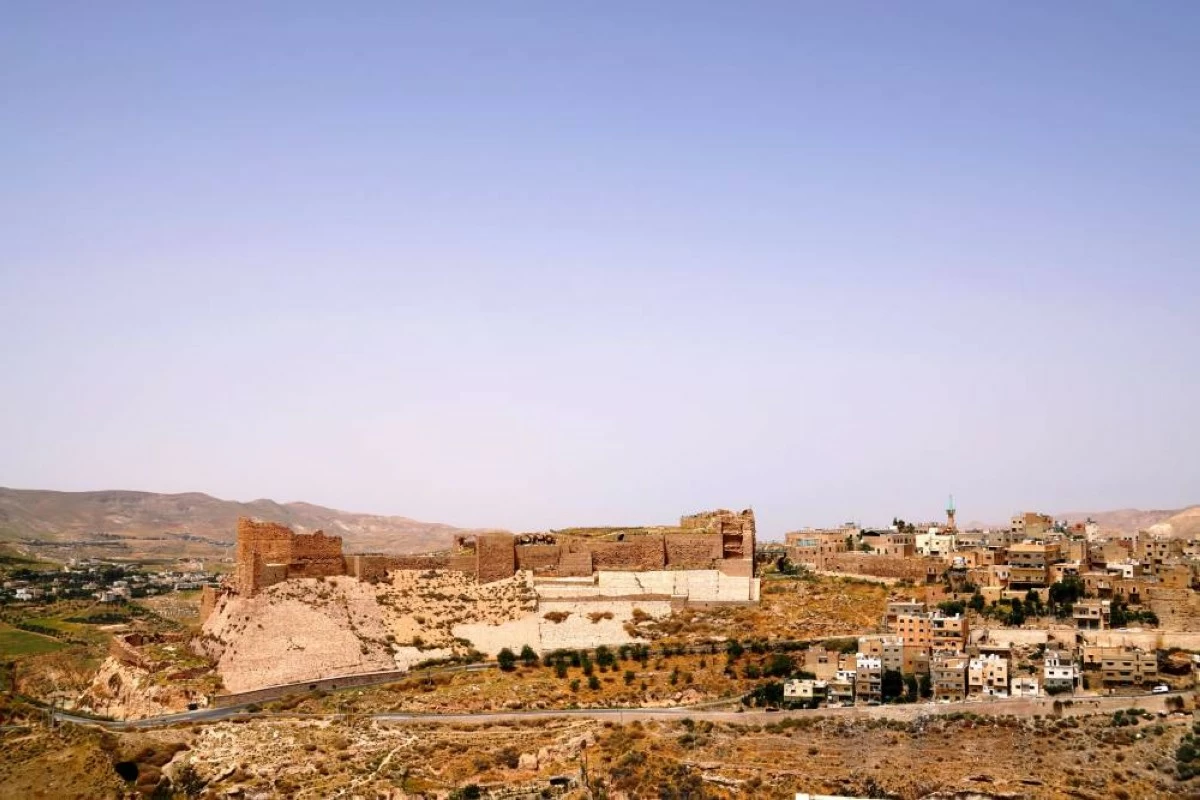
The study of Karak Castle, one of the most impressive and important castles of the Mediaeval Levant, has been very limited until this moment, Sinibaldi said.
The assistant professor added that this season of the project focused on the completion of documentation by photogrammetry of the Karak Castle and the historical parts of the town by drone and camera, in order to create a 3D model, sections of the castle and an updated plan of it.
The creation of an updated and corrected plan is a particularly important result, since the existing castle plan dates back to 1929, when not only the survey methods used were less precise than the ones used today, but also, a much less extended part of the castle was exposed compared to this moment.
In addition, Sinibaldi and her international team have also mapped and numbered all spaces of the castle, so that the new map can be used for all future activities.
“The second main result of this season was the creation of a damage assessment report, essential for the preparation of a conservation plan on behalf of the Jordanian authorities, which will involve structural engineers and conservators.”
All of this documentation will be submitted to the authorities and will be the basis for carrying out all the future activities: a detailed study of all existing structures, and the preparation of a comprehensive conservation plan for the entire site, for an improved experience by the public visiting the castle," Sinibaldi underlined.
An analysis of building techniques and phasing of the structures has been also carried out with the discipline of Archaeology of Architecture, in order to distinguish the several parts of the castle by general chronological phases, she continued.
Sinibaldi added that this recent investigation has mapped several pre-Crusader, Crusader, Ayyubid, Mamluk and Ottoman phases, with substantial parts of the castle belonging to the Crusader phase.
These results are the starting point for a more analytical study of the castle structures, for identifying the parts of the castle which can offer the highest quality of archaeological information for further analysis, and for planning conservation.
"The ultimate goal of the project is understanding at best the history of this magnificent monument which is a remarkable archive of archaeological information that, once unpacked, will allow casting light on the rich and beautiful history of Jordan," Sinibaldi said.
The assistant professor stressed that it is necessary to approach Karak Castle, a “jewel” of the Jordanian heritage, in a holistic and synergic manner, which is respectful of the great significance of the monument, including a use of all available sources, a complete mapping of the structures, a damage and risk assessment, followed by a careful and detailed documentation and interpretation in the context of specialist studies, and programmes of valorisation of the site and communication for sharing information with the broader public.
"A programme of training in photogrammetry has also been offered this season to the staff of the Department of Antiquities of Jordan, in the spirit of sharing the knowledge of the team," Sinibaldi said.
The lecture was followed by a lively discussion demonstrating a great interest in the project and its role in highlighting the important historical and archaeological value of Karak Castle.
Placed between the Hajj road to the east and the communication roads to the Dead Sea and Palestine to the west, the castle, largely built by the Franks, was also built in its later phases by the Ayyubid and Mamluk rulers, Sinibaldi underscored.
