


New excavations reveal ancient mesa settlements near Azraq

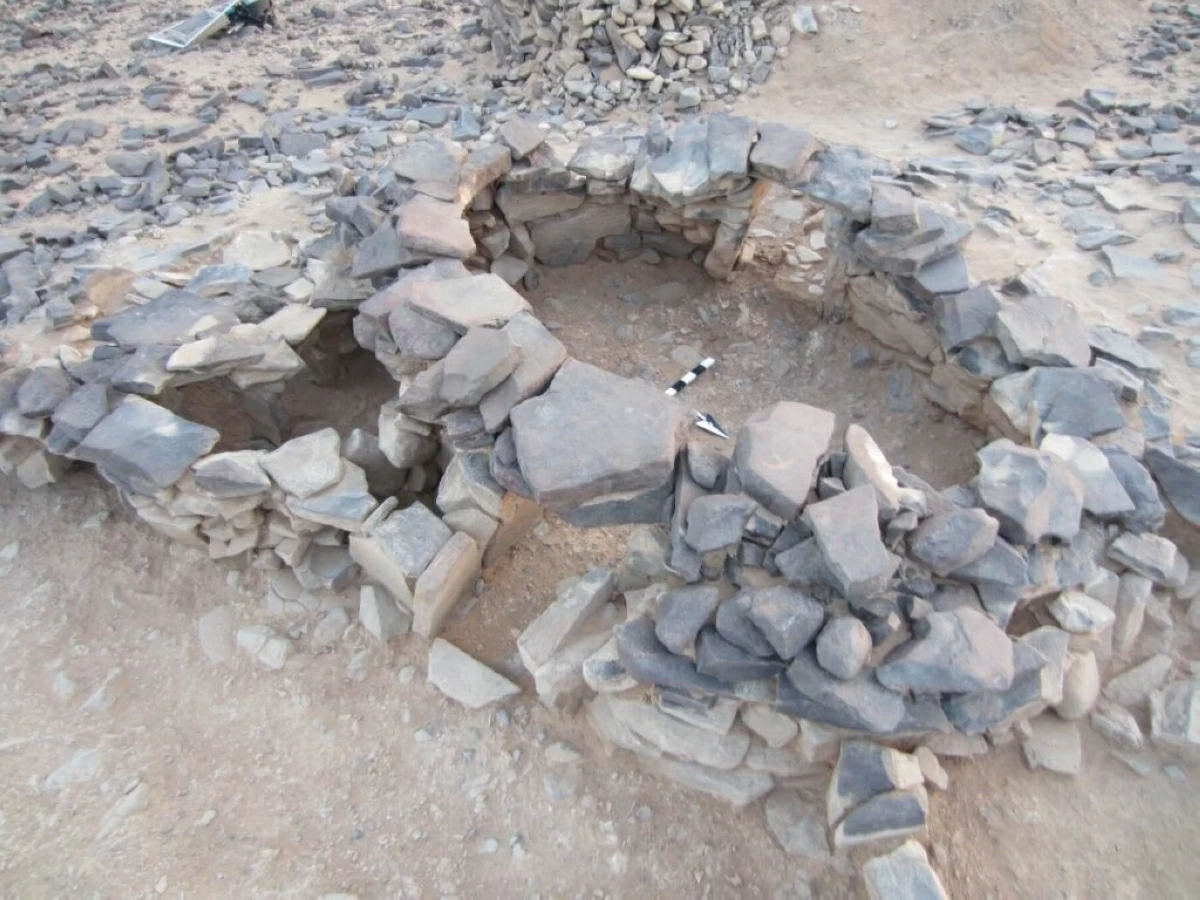
Neolithic house with two entrances and external storage area on the slope of Mesa 4 in Wadi Qattafi
(Photo by Y. M. Rowan)
Neolithic house with two entrances and external storage area on the slope of Mesa 4 in Wadi Qattafi (Photo by Y. M. Rowan)

AMMAN — Archaeologists working in Jordan’s eastern desert have investigated a series of mesa-based structures near Azraq, shedding new light on prehistoric settlement patterns and construction techniques in the region.

Thirty mesas are located near Wadi Qattafi, about 60 kilometres north of Azraq, while another chain of around 20 mesas lies some 5 kilometres to the south, on the eastern side of Wadi Umm Nukhayla.

The archaeological team excavated several structures to better understand their function and date.

“Our main focus was on buildings on the south-western slopes of the mesa. Many of the structures here were circular or oval, although the collapsed stonework made it difficult to determine their original shape in many cases. We had earlier suggested that they resembled nawamis, circular prehistoric megalithic tombs known from Sinai and Yemen,” said Alexander Wasse of Yeditepe University in Turkey.

One structure, South Slope 11 (SS-11), proved particularly intriguing. In its collapsed state, it preserved a west-south-west-facing doorway, a feature similar to nawamis, Wasse said, noting that the arrangement of roofing slabs indicated corbelled construction, again recalling Chalcolithic/Early Bronze Age tomb traditions in Sinai.

Because much of the fill consisted of large basalt slabs, initial clearance of SS-11 proceeded quickly.

“It soon became apparent that the structure was oval rather than circular, as is typical for nawamis. Another factor arguing against that identification was the discovery of a second doorway on the eastern side, opening onto a walled courtyard with domestic features, including a small hearth,” Wasse said.

Excavation showed that the building was constructed on a consolidated bedrock surface of indurated silt and basalt gravel, sloping gently to the south and south-west.

An intentional fill layer levelled the interior, and several phases of hearths were identified above the lowest occupation surface. Radiocarbon samples were collected from these contexts.

A distinctive feature of the structure was the use of large upright slabs in the northern, eastern and south-eastern walls, which helped elevate sections of the roof.

“In many cases, these upright slabs were stabilised with small basalt wedges at their bases, a technique previously documented in Late Neolithic structures at Burqu’. The western wall, however, differed, being built with horizontally stacked slabs rather than upright stones. This variation is difficult to explain,” Wasse noted.

Researchers suggest the western wall may represent a later modification, although no clear evidence of structural alteration during the building’s use was identified.

The dwelling itself was small, approximately 2 x 3 metres, and likely had a very low roof. While pillars are not structurally required in corbelled architecture, they can add stability.

A long, slender stone slab measuring 79 x 20 x 6 cm was recovered from the fill. Its deliberately shaped edges suggest it may have served as a roof support, Wasse said.

“The low roof would have required occupants to crouch when entering, which may seem impractical for a semi-permanent dwelling. However, given that it was likely used during the winter rainy season, when temperatures often hovered at or below freezing, the small interior volume would have helped retain heat and improve night-time comfort,” he added.

.col-lg-12.second .opinion-widget{border-top:1px solid #D0D0D0;} #widget_1623 .opinions-title {font-size:32px;} #widget_1623 .opinions-title a{font-size:32px;} .first-author{ background-color:#ecedef; } .first-opinion-author-name{ background-color:white; width:max-content; padding:5px; }
.epaper-separator{ height: 1px; width: 100%; background-color: #D0D0D0; margin: 15px 0; }

Today’s Paper

.related-articles .article-widget-sm .article-title{font-size:16px;-webkit-line-clamp:3;} .related-articles .layout-ratio{padding-bottom:55%;}
.alert-success { color :#A3656F ; } .alert-danger { color : red ; } .footer { font-family:Myriad Pro,Arial; } .newspaper-footer{ visibility:hidden; } .socialFixOuter { position: fixed; top: 50%; margin-top: 40px; right: 0; transition: .2s; z-index: 20; height: 217px; width: 40px; } .socialFix { height: 30px; width: 30px; display: block; position: relative; cursor: pointer; background-size: 18px 18px; transition: .2s; background-position: center; background-repeat: no-repeat; border-radius: 2px; margin-top: 1px; } .socialFix:hover { width: 40px; margin-left: -10px; } .app-badge-img { height: 36px; width: auto; } @media (max-width: 768px) { .app-badge-img { height: 32px; } .app-badges { justify-content: center !important; } }
document.addEventListener("DOMContentLoaded", function () { const socialFix = document.querySelector(".socialFixOuter"); if (!socialFix) return; let firstInteraction = false; let hideTimeout = null; function checkMobileScreen() { if (window.innerWidth < 768) { socialFix.style.display = "none"; } else { socialFix.style.display = "block"; } } checkMobileScreen(); window.addEventListener("resize", checkMobileScreen); function handleFirstInteraction() { if (firstInteraction) return; if (window.innerWidth < 768) return; firstInteraction = true; socialFix.style.right = "-25px"; } socialFix.addEventListener("mouseenter", function () { if (window.innerWidth < 768) return; if (hideTimeout) clearTimeout(hideTimeout); socialFix.style.right = "0"; }); socialFix.addEventListener("mouseleave", function () { if (window.innerWidth < 768) return; if (hideTimeout) clearTimeout(hideTimeout); hideTimeout = setTimeout(() => { socialFix.style.right = "-25px"; }, 500); }); ["click", "touchstart"].forEach((evt) => { socialFix.addEventListener(evt, handleFirstInteraction); }); }); function validateEmail(email) { if (email.length > 255) return false; const emailRegex = /^[a-zA-Z0-9._%+-]+@[a-zA-Z0-9.-]+\.[a-zA-Z]{2,}$/; if (!emailRegex.test(email)) return false; if (email.includes('..') || email.startsWith('.') || email.endsWith('.')) return false; return true; } function sanitizeInput(input) { input = input.replace(/<[^>]*>/g, ''); input = input.replace(/javascript:/gi, ''); input = input.replace(/on\w+\s*=/gi, ''); input = input.replace(/[<>"'&(){}[\]]/g, ''); return input.trim(); } document.addEventListener('DOMContentLoaded', function () { function showModal(message, type) { const messageContainer = document.getElementById("messageContainerFooter"); messageContainer.textContent = message; messageContainer.className = `alert alert-${type} mt-3`; messageContainer.classList.remove("d-none"); setTimeout(() => { messageContainer.classList.add("d-none"); }, 5000); } document.getElementById("emailFormFooter").addEventListener("submit", function(event) { event.preventDefault(); const emailInput = document.getElementById("emailFooter"); const email = sanitizeInput(emailInput.value.trim()); if (!validateEmail(email)) { showModal('Invalid email format', 'danger'); return; } const formData = new FormData(); formData.append('email', email); fetch('/subscribeNewsletter', { method: "POST", body: formData, headers: { "Accept": "application/json", "X-Requested-With": "XMLHttpRequest" } }) .then(response => { if (!response.ok) { showModal("Error submitting email. Try again.", 'danger'); } return response.json(); }) .then(data => { showModal(data.message, 'success'); }) .catch(error => { showModal("Error submitting email. Try again.", 'danger'); }); }); });