






 Share Story


- JD70m water projects to improve supply, wastewater treatment across governorate
- JD25m allocated for road maintenance, flood protection, street lighting
- Social support programmes receive JD7m for housing, emergency aid
- New mining agreement signed to develop gold, mineral resources in Abu Khashiba
JERASH — The Cabinet, chaired by Prime Minister Jafar Hassan, held its tenth field session on Tuesday in Jerash Governorate, continuing its ongoing series of provincial meetings aimed at advancing decentralised development and fostering direct engagement with local communities.
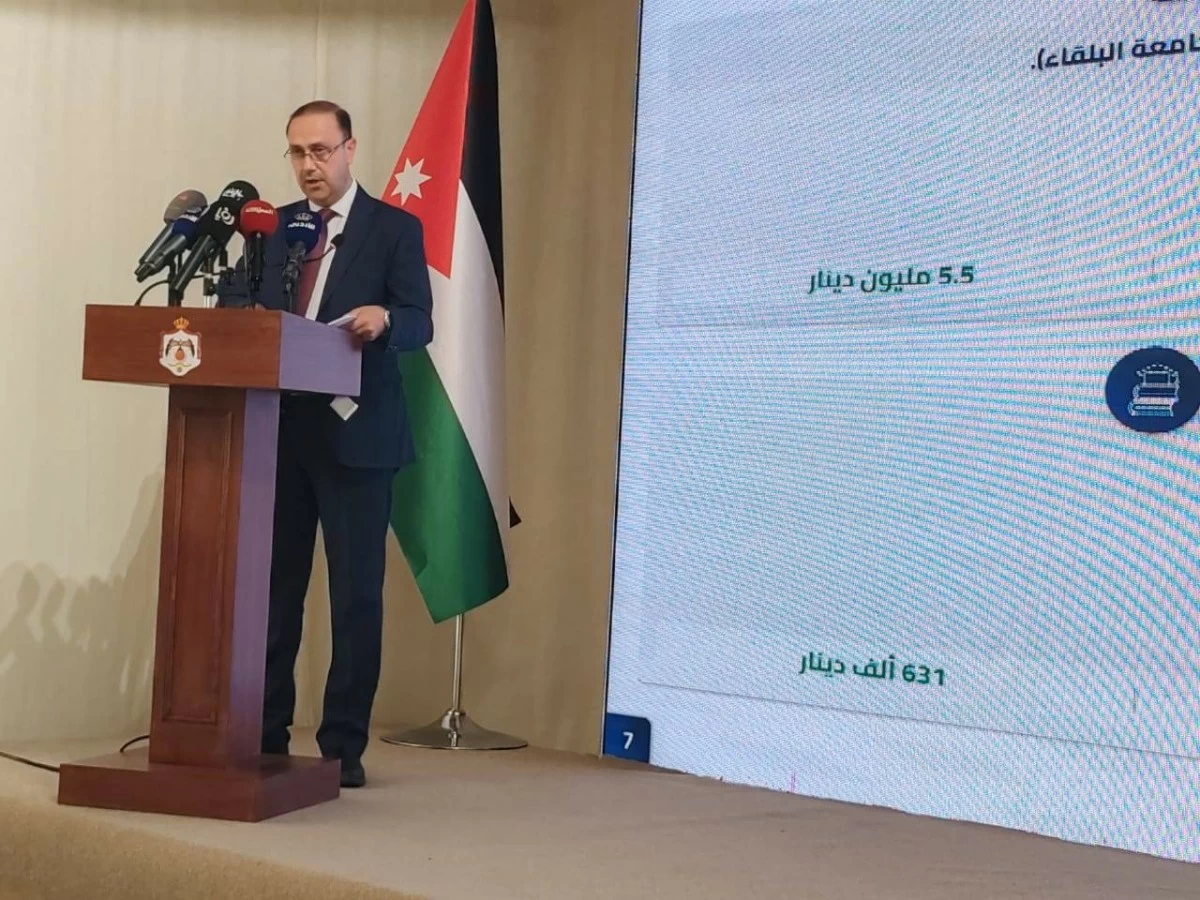
Minister of Government Communication Mohammad Momani announced the Cabinet’s decisions following the session, noting that the discussions centred on identifying priority projects across key sectors, including health, education, water, infrastructure, tourism, and transport.
Ministers presented sector-specific plans aligned with the Economic Modernisation Vision (EMV), with the Prime Minister reaffirming the government’s commitment to equitable development and enhanced public service deliveryhe added.
Momani also said that the prime minister also underscored the importance of empowering local administrations and municipalities, describing them as the cornerstone of inclusive development, adding that called for expediting municipal digital transformation to strengthen transparency, efficiency, and citizen satisfaction.
“One of the central issues raised was the longstanding demand to reduce the minimum plot size for land division from four dunums to two, a reform recently adopted in Ajloun,” Momani said. He added that Hassan instructed the finance minister to study the feasibility of implementing a similar change in Jerash to support urban expansion and housing development.
In a move to address urban challenges, the Cabinet discussed the need to regulate unlicensed craft shops in Jerash that impact the aesthetic appeal of tourist areas. " There was also a directive to improve road connectivity between Jerash city and its archaeological site."
The minister also commended the cultural and economic importance of the Jerash Festival for Culture and Arts, which provides seasonal employment for over 1,300 local residents. The Cabinet session took place just a day before the festival’s official opening.
In a move to revitalise underutilised areas, the Cabinet approved plans to convert a previously inactive industrial zone into an eco-tourism destination. The project would be managed by the Royal Society for the Conservation of Nature (RSCN) and is expected to attract over 3,000 annual visitors.
Water infrastructure was another major focus of the session. The government unveiled water projects worth more than JD70 million for implementation in 2025 and 2026. These include rehabilitation of water networks in Al Mastaba, Al Nasim, and across multiple districts such as Sakib, Rimoun, and Nahleh; expansion of pumping capacity from the Umm Al-Lulu station by 200 cubic metres per hour; construction of a new reservoir in Sakib; and the upgrade of wastewater networks and treatment plants in western Jerash.
A biogas-powered electricity generation system would also be developed as part of the wastewater treatment initiative, he said.
In the healthcare sector, the government pledged to complete maintenance at Jerash Government Hospital by early 2026 and to secure land for a new hospital.
Additionally, the Jerash Comprehensive Health Centre would be upgraded to alleviate pressure on the hospital, while new health centres and medical equipment purchases were approved, totalling over JD12 million.
In education, plans include the construction of four new schools and a technical college affiliated with Al Balqa Applied University at a cost of JD5.5 million. Additional classrooms will be added to existing schools, and 16 schools would undergo maintenance. The government also announced the opening of a new teachers’ club equipped with modern facilities. "Education sector allocations total around JD19.5 million."
Other key investments include JD25 million for road maintenance, flood protection infrastructure, and street lighting between 2026 and 2028. The Ministry of Local Administration would also construct multipurpose halls, cultural centres, and a sports complex. Jerash’s main road linking Amman and Irbid is set to be fully rehabilitated by the end of this year.
The Ministry of Social Development allocated JD7 million to support low-income families, including housing assistance, emergency aid, and financial grants for 39 community associations.
In the transport sector, the government highlighted the success of the fixed-route public bus system linking Jerash with Amman, Irbid, Salt, and Karak. "Operating from 6am to 10pm with electronic ticketing and GPS tracking, the service was hailed as a model for nationwide transport reform," he said.
Tourism projects include JD7 million for the development of a sustainable heritage destination in Jerash, renovations at the Jerash archaeological site to improve accessibility for people with disabilities, and the restoration of historic buildings, including the Ali Pasha Al-Kayed residence.
In agriculture and environment, the Cabinet approved water harvesting projects, reforestation initiatives, and a JD500,000 programme to electronically track wastewater tankers to prevent illegal dumping. The Ministry of Environment would also implement a permanent agriculture project at Jerash University, spanning five dunums.
In the energy sector, the government announced the second phase of replacing traditional streetlights with energy-efficient alternatives. It also announced that it would subsidise the installation of 100 solar panels and 100 solar water heaters in residential homes, covering up to 50 per cent of costs.
As part of its digital transformation drive, the Ministry of Digital Economy would launch a one-stop government service centre in Jerash in 2025 at a cost of JD400,000. The Ministry will also expand the “Khayr Al-Dar” e-commerce platform to market home-made food products and local crafts.
The Cabinet also approved an executive agreement between the Ministry of Energy and Mineral Resources and the Wadi Araba Mineral Company to evaluate, develop, and exploit gold and other mineral resources in the Abu Khashiba area. The agreement, which follows a similar copper deal signed earlier this year, aligns with the goals of the Economic Modernisation Vision to enhance local value-added production and stimulate sustainable investment.
The 30-year agreement mandates the preparation of a comprehensive development plan, an economic feasibility study, and obtaining necessary environmental and technical licenses before operations begin. A public shareholding company would be established, with 49 per cent of its shares offered to the public to ensure transparency and public participation in ownership.
The developer would also pay royalties based on international gold prices, with rates increasing automatically as prices rise. A windfall tax on extraordinary profits would also be applied if profit margins exceed set thresholds. The agreement obliges full compliance with Jordanian environmental laws, including an environmental impact assessment, an integrated environmental, health, and safety management system, and a rehabilitation plan for the site after mining ends.
In a decision aimed at strengthening youth engagement, the Cabinet approved the merger of “Future Stations” (formerly knowledge stations) with youth centres to optimise infrastructure and broaden access to digital and vocational services.
In a move to support business continuity, the Cabinet approved the settlement of 1,014 pending tax cases between taxpayers and the Income and Sales Tax Department, following the recommendations of a specialised committee. The initiative is part of ongoing efforts to help economic actors rectify tax violations and continue operating smoothly.
Interior Minister Mazen Faraya presented a quarterly update on the Kingdom’s citizenship-by-investment programme. Thirteen investors were granted Jordanian citizenship during Q2 2025: five Syrians, five Iraqis, two Lebanese, and one Pakistani. Their total investments exceeded $23 million, creating 642 jobs for Jordanians.
Additionally, three investors received residency permits during the same period through property purchases exceeding $1 million. Two held Palestinian citizenship, while one was Canadian. As of July 10, the total number of investors granted Jordanian citizenship under the programme stood at 561.
On the foreign policy front, Hassan reaffirmed Jordan’s unwavering support for regional stability, highlighting the Kingdom’s key role in stabilising southern Syria and Suwayda. He also reiterated that Syria’s unity, sovereignty, and internal recovery are vital to Jordan’s national interest and border security.
He also condemned the ongoing Israeli aggression in Gaza, stressing Jordan’s commitment to defending Palestinian rights through diplomatic, humanitarian, and military means. He noted that Jordan continues to deliver humanitarian aid to Gaza despite Israeli restrictions.
Momani emphasised the government’s resolve to implement all approved projects without delay, stressing the importance of these field sessions in fostering participatory development and strengthening public trust in state institutions.
