






 Share
Share


- Trump sees Israeli redeployment as key to shifting focus to Iran
- Lebanon demands Israeli withdrawal, Israel seeks ‘security guarantees’
- Rome talks aim to advance ceasefire framework despite Hizbollah opposition
AMMAN — Lebanon and Israel resumed US-sponsored negotiations in Rome on Tuesday as US President Donald Trump backed an Israeli redeployment from southern Lebanon, saying such a move would allow Israel to shift its focus to what he described as the “bigger issue” Iran.
The latest round of talks seeks to advance the framework agreement reached on June 26 after five rounds of negotiations in Washington. The agreement aims to end the fighting between Israel and Iran-backed Hizbollah and pave the way for a broader political settlement.
Lebanon and Israel reached a framework agreement on June 26, after five rounds of negotiations in Washington, aimed at ending the war between Israel and Iran-backed Hizbollah and paving the way for peace.
But Hezbollah rejects the agreement, which calls for the group's disarmament and whose implementation is set to begin with Israeli withdrawal from two "pilot zones" in southern Lebanon.
Speaking to Fox News, Trump said that “redeployment” was a more accurate description than withdrawal when asked whether he wanted Israeli ground forces to leave southern Lebanon.
He said that Washington was working well with both Lebanon and Israel, describing the level of coordination as unprecedented in recent years.
Trump said that an Israeli redeployment would enable Israel to focus on Iran. He also said Syrian President Ahmad Al Sharaa would deal with Hizbollah in Lebanon, but “in a different way” from Israel, without elaborating.
The Lebanese presidency said that its delegation to Rome had been instructed to demand the immediate withdrawal of Israeli forces from two pilot zones in southern Lebanon before any further discussions.
A Lebanese diplomatic source familiar with the negotiations was quoted in AFP as saying that the Lebanese army was prepared to gradually assume control of the areas from which Israeli forces would withdraw.
The US embassy in Beirut said that Lebanon and Israel had agreed to complete the framework governing the two pilot zones in southern Lebanon, signalling that implementation of the US-sponsored agreement continues despite unresolved political differences.
A US military delegation also began discussions with the Lebanese army on the process for an Israeli withdrawal from one of the pilot zones, reflecting ongoing coordination between Washington and Beirut, AFP said.
Israel has maintained that any withdrawal will depend on guarantees that Hizbollah will not return to areas vacated by Israeli forces and that the Lebanese army will be able to maintain control.
The negotiations are taking place against the backdrop of renewed regional tensions, with the United States carrying out fresh strikes on Iran ahead of the planned reimposition of its naval blockade on Iranian ports.
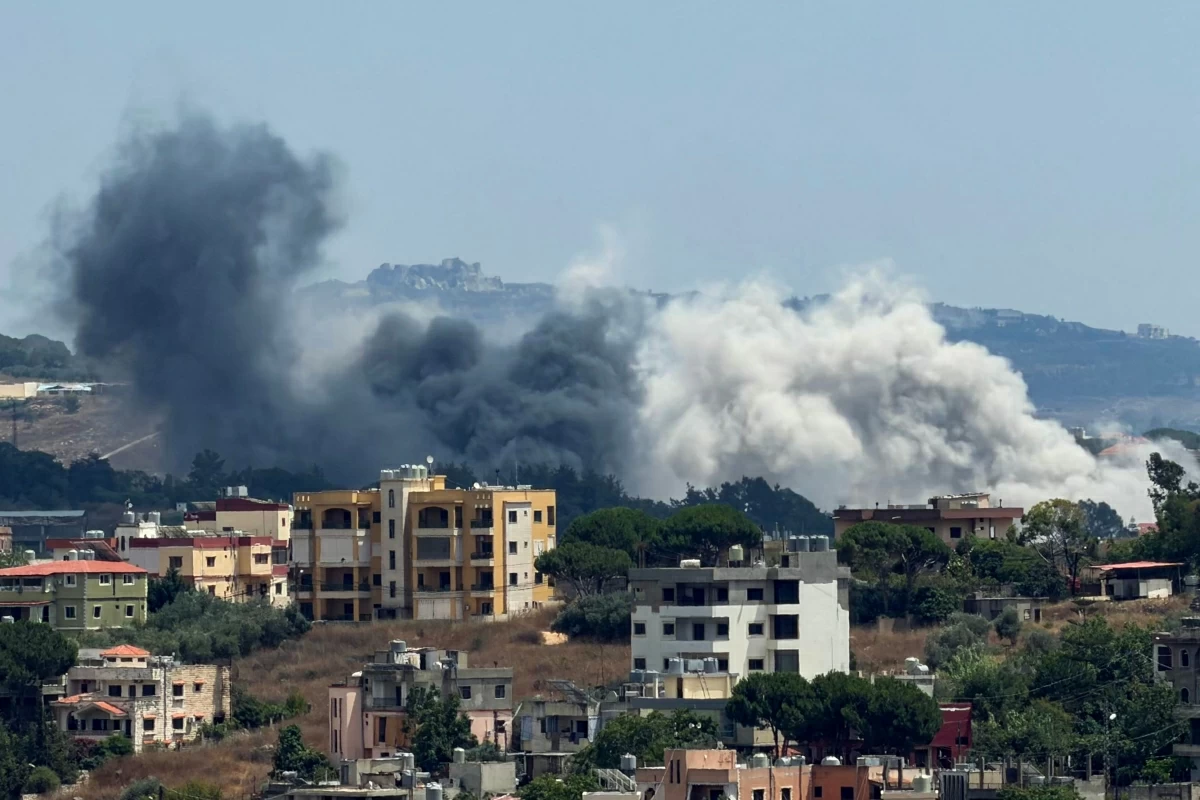
Israeli forces have continued limited strikes and demolition operations in southern Lebanon, according to Lebanese official media.
Political analyst Amer Sabaileh said that the negotiations reflect the complex reality facing all parties, but argued that Israel is unlikely to relinquish what it considers “essential security gains.”
He said that Israel does not want any other party filling the vacuum in southern Lebanon unless it is convinced that Hizbollah can no longer use the area as a future military threat.
“An Israeli withdrawal is unlikely without changes that ensure the geography can no longer be used as a future source of threat and that the link between Iran and Hizbollah is effectively severed,” Sabaileh said.
He added that reshaping the security geography along Israel’s northern border has become part of Israel’s security doctrine, making any redeployment dependent on long-term security considerations rather than political pressure alone.
