






 Share
Share


AMMAN — Jordan has receivedaround 110,000 tonnes of locally produced wheat and barley as the harvest season continues, with total deliveries expected to reach between 130,000 and 140,000 tonnes, the Jordan Silos and Supply General Company (JSSC) had said.
JSSC Director General Imad Tarawneh said that the current intake represents the Kingdom’s largest locally produced grain harvest in nearly 15 years.
Speaking to Al Mamlaka TV on Friday, Tarawneh attributed the strong yield to favorable rainfall during the agricultural season, expressing hope that similar weather conditions would continue in the coming years.
Jordan’s annual consumption of wheat and barley is estimated at about 2 million tonnes, including around 1.1 million tonnes of wheat and between 800,000 and 900,000 tonnes of barley, Tarawneh said.
He noted that domestic production accountsfor approximately 10 per cent of thecountry’s total grain needs, with this year’s expected harvest enough to cover national consumption for between 25 and 30 days.
Tarawneh stressed that increased local production would not affect grain imports, saying the Ministry of Industry, Trade and Supply continues to import wheat and barley to maintain and strengthen the Kingdom’s strategic reserves.
Jordan’s strategic reserves currently cover at least 10 months of wheat consumption and eight months of barley consumption, he said, adding that the local harvestwould further enhance these reserves.
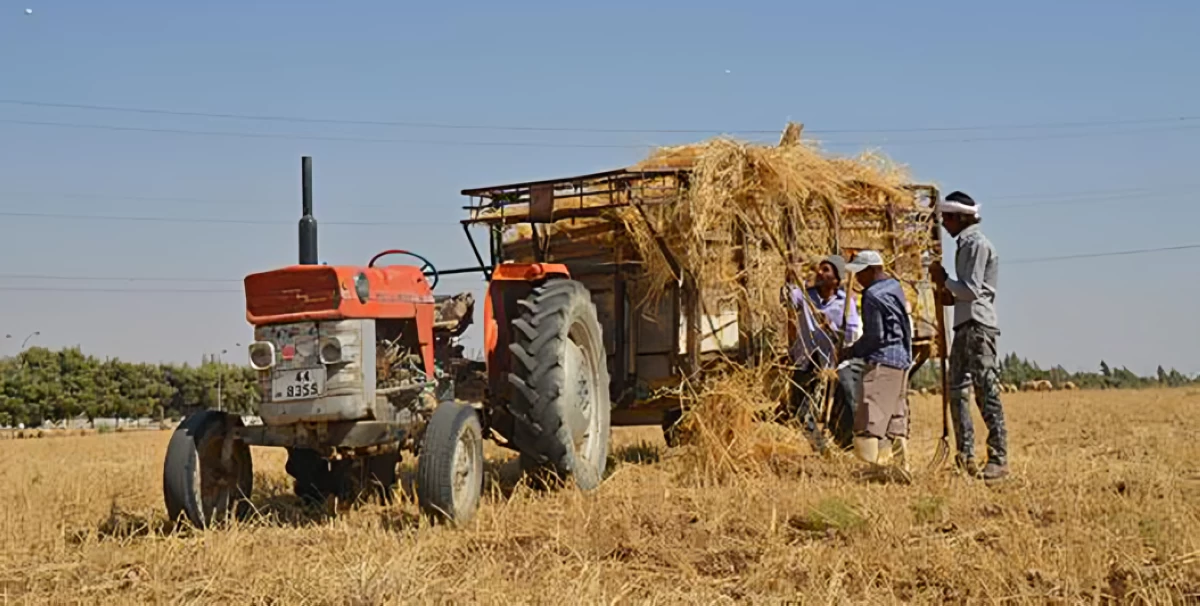
Addressing delays in receiving harvested crops, Tarawneh said the main challenge wasa shortage of combine harvesters comparedwith the size of cultivated areas, particularly in Karak and the southern governorates.
He added that many farmers still use traditional harvesting and bagging methods, which increases the time needed fordelivery and unloading.
“Unloading trucks carrying bagged grain takes between one and two hours pervehicle, while bulk grain can be unloaded in less than five minutes,” Tarawneh said.
He also said that delays in deliveries do not affect crop quality, noting that locally produced wheat remains of high quality and can maintain its condition under properstorage, whether stored in bags or in bulk.
Jordan’s silos have a total storage capacityof around 750,000 tonnes, while ground storage bunkers can hold approximately 1.25 million tonnes, bringing the Kingdom’s overall storage capacity to more than 1.8 million tonnes, according to Tarawneh.
Tarawneh said that the main operational challenge during the harvest season is managing the large volume of deliveries within a limited timeframe, as receiving committees must inspect grain quality to ensure it meets the standards required for government-subsidised purchases.
