


Jordan, UK agree measures to deepen trade, investment cooperation

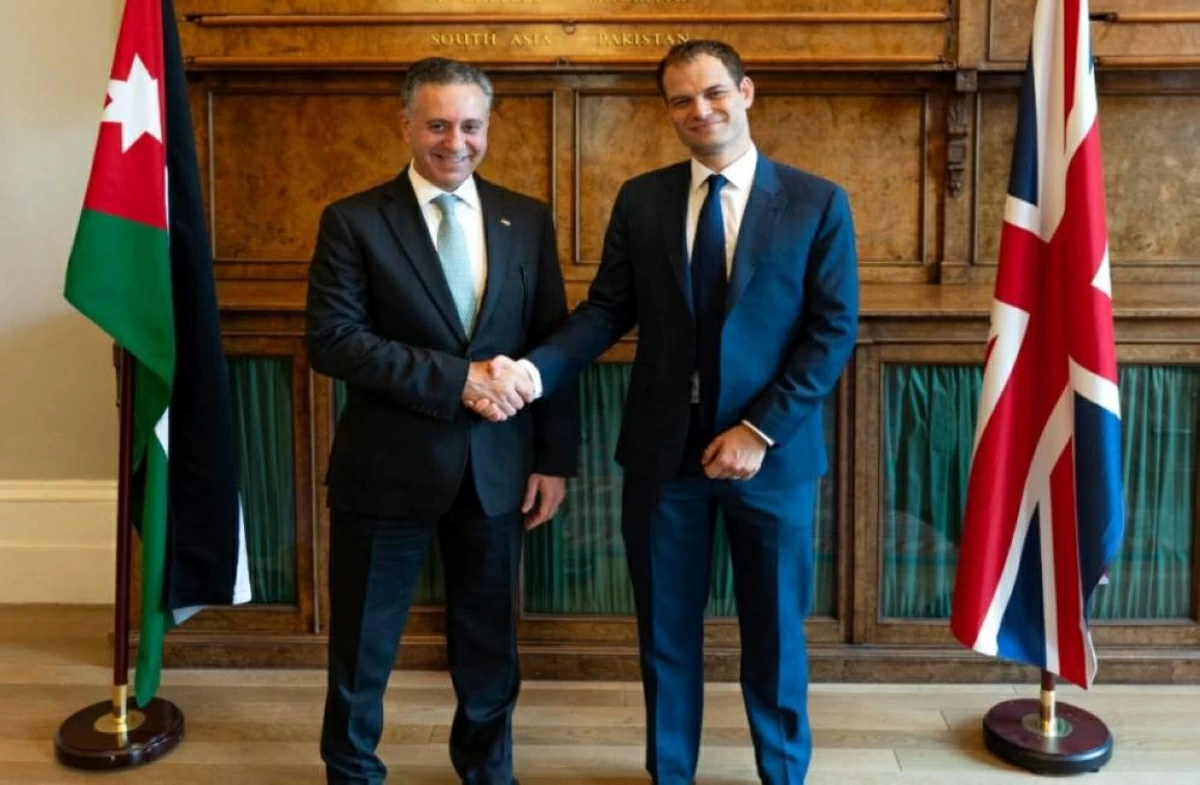
Minister of Industry, Trade and Supply Yarub Qudah (left) and the UK's Parliamentary Under-Secretary of State for the Middle East, Hamish Falconer (Photo Courtesy of Ministry of Industry, Trade and Supply)

AMMAN — Jordan and the United Kingdom reaffirmed their commitment to deepening trade and investment ties during the second Jordan-UK Partnership Council meeting in London, where the two sides reviewed progress under their bilateral partnership agreement and agreed on measures to boost economic cooperation.

The meeting was co-chaired by Minister of Industry, Trade and Supply Yarub Qudah and the UK's Parliamentary Under-Secretary of State for the Middle East, Hamish Falconer, and attended by senior officials, technical experts and diplomats from both countries.

The two sides underscored the longstanding strategic partnership between Jordan and the UK, noting that bilateral relations had entered their second century as a model of sustainable economic cooperation, according to a statement from the Minister of Industry, Trade and Supply.

Trade figures reviewed during the meeting showed that Jordan's exports to the UK surged by 88 per cent to $37.2 million during the first four months of 2026, compared with $19.8 million in the same period last year. Imports from the UK declined by 17 per cent to $115.2 million, narrowing Jordan's trade deficit with the UK to $78.1 million.

Qudah said the meeting reflected the strength of the economic partnership between the two countries and their shared commitment to expanding cooperation.

"Jordan is pressing ahead with the Economic Modernisation Vision and efforts to improve the investment environment," he said, adding that simplifying the rules of origin would help increase the utilisation of preferential trade arrangements, boost exports and attract high-value investments.

The minister also called for extending the simplified rules of origin arrangement for 15 years beyond 2030 and expanding its scope to cover all products manufactured in Jordan, as well as processed agricultural and food products.

The two countries agreed to establish a joint technical committee to develop practical proposals on the issue within three months.

The Partnership Council also approved restructuring the agreement's governance framework by replacing its four subcommittees with a single Partnership Committee aimed at streamlining implementation and accelerating decision-making.

Qudah commended UK support for a services trade development project implemented in cooperation with the International Trade Centre (ITC).

The Jordanian delegation also presented key initiatives under the Economic Modernisation Vision, including the industrial policy, the National Export Strategy and the Industry Support Fund. It also highlighted Jordan's potential to serve as a regional logistics and reconstruction hub through projects such as the planned Mafraq Free Zone and the Mafraq inland port.

The two sides cited exports by the Jordan Phosphate Mines Company and the Arab Potash Company to the UK market as successful examples of bilateral trade cooperation.

Falconer reaffirmed the UK's commitment to strengthening its economic partnership with Jordan and expanding cooperation in trade, investment and services. He said Britain would continue supporting initiatives that promote trade, strengthen institutional cooperation and facilitate knowledge exchange.

The meeting concluded with both sides agreeing to address obstacles affecting bilateral trade, reactivate the Jordanian-British Business Council, encourage greater private sector engagement and support the Jordanian-British Business Forum, which is scheduled to be held in London later this month.

.col-lg-12.second .opinion-widget{border-top:1px solid #D0D0D0;} #widget_1623 .opinions-title {font-size:32px;} #widget_1623 .opinions-title a{font-size:32px;} .first-author{ background-color:#ecedef; } .first-opinion-author-name{ background-color:white; width:max-content; padding:5px; }
.epaper-separator{ height: 1px; width: 100%; background-color: #D0D0D0; margin: 15px 0; }

Today’s Paper

.related-articles .article-widget-sm .article-title{font-size:16px;-webkit-line-clamp:3;} .related-articles .layout-ratio{padding-bottom:55%;}
.alert-success { color :#A3656F ; } .alert-danger { color : red ; } .footer { font-family:Myriad Pro,Arial; } .newspaper-footer{ visibility:hidden; } .socialFixOuter { position: fixed; top: 50%; margin-top: 40px; right: 0; transition: .2s; z-index: 20; height: 217px; width: 40px; } .socialFix { height: 30px; width: 30px; display: block; position: relative; cursor: pointer; background-size: 18px 18px; transition: .2s; background-position: center; background-repeat: no-repeat; border-radius: 2px; margin-top: 1px; } .socialFix:hover { width: 40px; margin-left: -10px; } .app-badge-img { height: 36px; width: auto; } @media (max-width: 768px) { .app-badge-img { height: 32px; } .app-badges { justify-content: center !important; } }
document.addEventListener("DOMContentLoaded", function () { const socialFix = document.querySelector(".socialFixOuter"); if (!socialFix) return; let firstInteraction = false; let hideTimeout = null; function checkMobileScreen() { if (window.innerWidth < 768) { socialFix.style.display = "none"; } else { socialFix.style.display = "block"; } } checkMobileScreen(); window.addEventListener("resize", checkMobileScreen); function handleFirstInteraction() { if (firstInteraction) return; if (window.innerWidth < 768) return; firstInteraction = true; socialFix.style.right = "-25px"; } socialFix.addEventListener("mouseenter", function () { if (window.innerWidth < 768) return; if (hideTimeout) clearTimeout(hideTimeout); socialFix.style.right = "0"; }); socialFix.addEventListener("mouseleave", function () { if (window.innerWidth < 768) return; if (hideTimeout) clearTimeout(hideTimeout); hideTimeout = setTimeout(() => { socialFix.style.right = "-25px"; }, 500); }); ["click", "touchstart"].forEach((evt) => { socialFix.addEventListener(evt, handleFirstInteraction); }); }); function validateEmail(email) { if (email.length > 255) return false; const emailRegex = /^[a-zA-Z0-9._%+-]+@[a-zA-Z0-9.-]+\.[a-zA-Z]{2,}$/; if (!emailRegex.test(email)) return false; if (email.includes('..') || email.startsWith('.') || email.endsWith('.')) return false; return true; } function sanitizeInput(input) { input = input.replace(/<[^>]*>/g, ''); input = input.replace(/javascript:/gi, ''); input = input.replace(/on\w+\s*=/gi, ''); input = input.replace(/[<>"'&(){}[\]]/g, ''); return input.trim(); } document.addEventListener('DOMContentLoaded', function () { function showModal(message, type) { const messageContainer = document.getElementById("messageContainerFooter"); messageContainer.textContent = message; messageContainer.className = `alert alert-${type} mt-3`; messageContainer.classList.remove("d-none"); setTimeout(() => { messageContainer.classList.add("d-none"); }, 5000); } document.getElementById("emailFormFooter").addEventListener("submit", function(event) { event.preventDefault(); const emailInput = document.getElementById("emailFooter"); const email = sanitizeInput(emailInput.value.trim()); if (!validateEmail(email)) { showModal('Invalid email format', 'danger'); return; } const formData = new FormData(); formData.append('email', email); fetch('/subscribeNewsletter', { method: "POST", body: formData, headers: { "Accept": "application/json", "X-Requested-With": "XMLHttpRequest" } }) .then(response => { if (!response.ok) { showModal("Error submitting email. Try again.", 'danger'); } return response.json(); }) .then(data => { showModal(data.message, 'success'); }) .catch(error => { showModal("Error submitting email. Try again.", 'danger'); }); }); });