






 Share Story


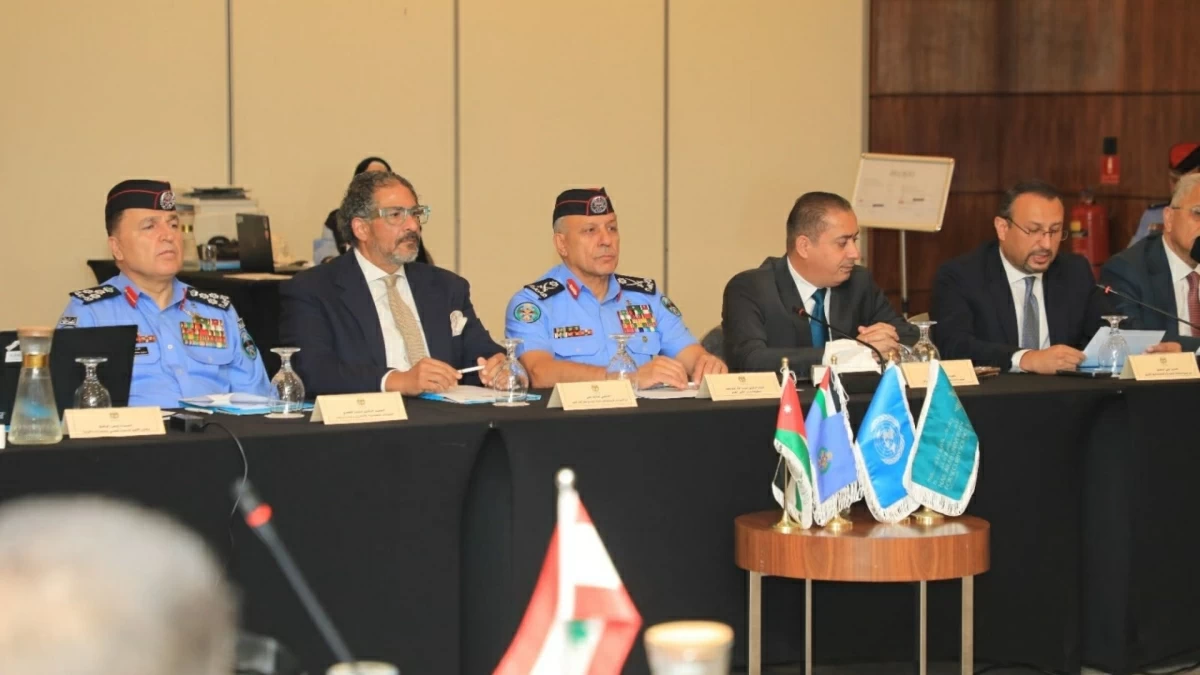
AMMAN — A regional meeting on combating synthetic drugs commenced in Amman on Monday, bringing together officials from Jordan and five Arab countries to enhance cooperation, information exchange and joint efforts against the growing threat of synthetic drug trafficking.
The three-day meeting is hosted by the Public Security Directorate (PSD) in cooperation with the United Nations Office on Drugs and Crime (UNODC) and Naif Arab University for Security Sciences(NAUSS), with participation from Jordan, Syria, Iraq, Egypt, Saudi Arabia and Lebanon, as well as experts from relevant regional and international organisations.
PSD Director General Maj. Gen. Obaidallah Maaytah attended the opening of the meeting, which aims to enhance regional and international coordination and develop mechanisms for exchanging expertise to improve security and judicial responses to cross-border drug threats, the Jordan News Agency, Petra, reported.
In remarks delivered on behalf of the PSD chief, Anti-Narcotics Department Director Brig. Gen. Hassan Qudah said that the meeting provides an “important” platform for enhancing partnerships among law enforcement agencies and relevant authorities, and exchanging the best practices in monitoring the production, trafficking and distribution of synthetic drugs.
He highlighted the need to continue developing early warning systems, enhancing security and intelligence analysis capabilities, and building integrated databases to support efforts to track drug sources and trafficking routes.
Director of International Organisations at the Ministry of Foreign Affairs Ali Bsoul stressed the importance of collective action and unified regional and international efforts to address drugs and transnational organised crime.
He reiterated Jordan's commitment to supporting and developing international partnerships based on shared responsibility and relevant international agreements.
UNODC Representative Hatem Ali said that the meeting follows the first gathering held in Riyadh last year and aims to continue collecting and analysing data, identifying gaps and challenges, and developing practical recommendations and action plans to support national and regional efforts against synthetic drug trafficking ahead of the launch of a regional research report in October.
Participants in the three-day event will be discussing trends in synthetic drug spread, emerging production, trafficking and distribution methods, security and judicial coordination mechanisms, and the development of monitoring and early warning systems based on risk analysis and field evidence, Petra added.
