


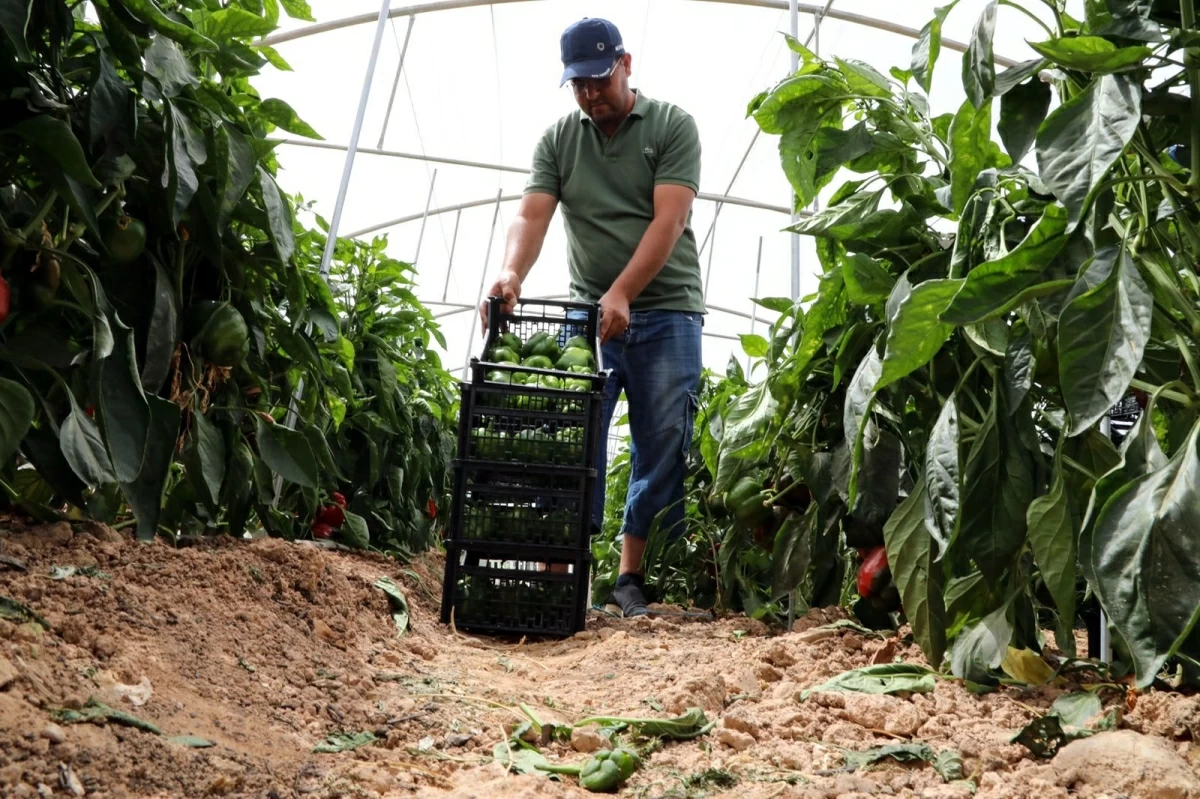
Indicators point to higher food self-sufficiency in Jordan — official

Supreme Council for Food Security Secretary Nada Fraihat says that the number of agricultural commodities meeting local market demand has increased, with expectations that the self-sufficiency rate will continue to improve in the coming period (Photo by Ahmad Khleifat)

AMMAN — Several indicators point to an increase in Jordan’s food self-sufficiency, according to Supreme Council for Food Security Secretary Nada Fraihat.

Speaking to AlMamlaka, Fraihat said the number of agricultural commodities meeting local market demand has increased, with expectations that the self-sufficiency rate will continue to improve in the coming period.

She also said that Jordan remains dependent on imports for several strategic commodities, including wheat, barley, sugar, rice and vegetable oils, according to the Department of Statistics (DoS).

Fraihat attributed the continued reliance on imports largely to structural constraints, most notably water scarcity, which limits the Kingdom’s ability to expand production of key crops such as wheat and rice.

On sugar, she said that a development project is currently underway aimed at increasing domestic self-sufficiency levels.

Regarding red meat, Fraihat said self-sufficiency currently stands at 36 per cent, describing it as a “satisfactory” level given the prevailing production conditions.

She noted that the challenge is not only related to production capacity, but also to economic feasibility and resource efficiency.

She added that high feed prices, labour and energy costs, and limited grazing resources make local production in some cases less competitive than imports from countries with larger agricultural bases.

Fraihat also highlighted food loss and waste as a key challenge affecting national food availability, stressing that improving efficiency in this area could enhance overall food supply without requiring additional production.

She said per capita food waste in Jordan stands at around 81 kilogrammes annually, describing the figure as high for a country with limited natural resources, particularly water, based on national studies conducted in late 2025.

A nationwide awareness campaign titled “No to Food Waste” is currently underway, she added, covering media outreach and public awareness activities. A national roadmap has also been prepared, with implementation expected to begin next month.

According to the DoS annual food balance sheet, Jordan’s overall food self-sufficiency rate rose to 61.4 per cent in 2024, up from 57.3 per cent in 2020, marking an increase of 4.1 percentage points over four years.

The improvement, the report said, was driven by higher domestic production and surplus output in several agricultural crops, particularly vegetables, although the Kingdom continues to rely heavily on imports for staple commodities.

Commenting on the broader outlook, Jordan Chamber of Industry representative for the food, catering, agriculture and livestock sector Mohammad Jitan said Jordan may be among the most food-secure countries in the region, with some neighbouring markets relying on it in certain food sectors.

He added that Jordan has achieved self-sufficiency, and in some cases surplus production, in selected food manufacturing industries, noting that a new report on food security and self-sufficiency is expected in the third quarter of the year.

.col-lg-12.second .opinion-widget{border-top:1px solid #D0D0D0;} #widget_1623 .opinions-title {font-size:32px;} #widget_1623 .opinions-title a{font-size:32px;} .first-author{ background-color:#ecedef; } .first-opinion-author-name{ background-color:white; width:max-content; padding:5px; }
.epaper-separator{ height: 1px; width: 100%; background-color: #D0D0D0; margin: 15px 0; }

Today’s Paper

.related-articles .article-widget-sm .article-title{font-size:16px;-webkit-line-clamp:3;} .related-articles .layout-ratio{padding-bottom:55%;}
.alert-success { color :#A3656F ; } .alert-danger { color : red ; } .footer { font-family:Myriad Pro,Arial; } .newspaper-footer{ visibility:hidden; } .socialFixOuter { position: fixed; top: 50%; margin-top: 40px; right: 0; transition: .2s; z-index: 20; height: 217px; width: 40px; } .socialFix { height: 30px; width: 30px; display: block; position: relative; cursor: pointer; background-size: 18px 18px; transition: .2s; background-position: center; background-repeat: no-repeat; border-radius: 2px; margin-top: 1px; } .socialFix:hover { width: 40px; margin-left: -10px; } .app-badge-img { height: 36px; width: auto; } @media (max-width: 768px) { .app-badge-img { height: 32px; } .app-badges { justify-content: center !important; } }
document.addEventListener("DOMContentLoaded", function () { const socialFix = document.querySelector(".socialFixOuter"); if (!socialFix) return; let firstInteraction = false; let hideTimeout = null; function checkMobileScreen() { if (window.innerWidth < 768) { socialFix.style.display = "none"; } else { socialFix.style.display = "block"; } } checkMobileScreen(); window.addEventListener("resize", checkMobileScreen); function handleFirstInteraction() { if (firstInteraction) return; if (window.innerWidth < 768) return; firstInteraction = true; socialFix.style.right = "-25px"; } socialFix.addEventListener("mouseenter", function () { if (window.innerWidth < 768) return; if (hideTimeout) clearTimeout(hideTimeout); socialFix.style.right = "0"; }); socialFix.addEventListener("mouseleave", function () { if (window.innerWidth < 768) return; if (hideTimeout) clearTimeout(hideTimeout); hideTimeout = setTimeout(() => { socialFix.style.right = "-25px"; }, 500); }); ["click", "touchstart"].forEach((evt) => { socialFix.addEventListener(evt, handleFirstInteraction); }); }); function validateEmail(email) { if (email.length > 255) return false; const emailRegex = /^[a-zA-Z0-9._%+-]+@[a-zA-Z0-9.-]+\.[a-zA-Z]{2,}$/; if (!emailRegex.test(email)) return false; if (email.includes('..') || email.startsWith('.') || email.endsWith('.')) return false; return true; } function sanitizeInput(input) { input = input.replace(/<[^>]*>/g, ''); input = input.replace(/javascript:/gi, ''); input = input.replace(/on\w+\s*=/gi, ''); input = input.replace(/[<>"'&(){}[\]]/g, ''); return input.trim(); } document.addEventListener('DOMContentLoaded', function () { function showModal(message, type) { const messageContainer = document.getElementById("messageContainerFooter"); messageContainer.textContent = message; messageContainer.className = `alert alert-${type} mt-3`; messageContainer.classList.remove("d-none"); setTimeout(() => { messageContainer.classList.add("d-none"); }, 5000); } document.getElementById("emailFormFooter").addEventListener("submit", function(event) { event.preventDefault(); const emailInput = document.getElementById("emailFooter"); const email = sanitizeInput(emailInput.value.trim()); if (!validateEmail(email)) { showModal('Invalid email format', 'danger'); return; } const formData = new FormData(); formData.append('email', email); fetch('/subscribeNewsletter', { method: "POST", body: formData, headers: { "Accept": "application/json", "X-Requested-With": "XMLHttpRequest" } }) .then(response => { if (!response.ok) { showModal("Error submitting email. Try again.", 'danger'); } return response.json(); }) .then(data => { showModal(data.message, 'success'); }) .catch(error => { showModal("Error submitting email. Try again.", 'danger'); }); }); });