






 Share
Share


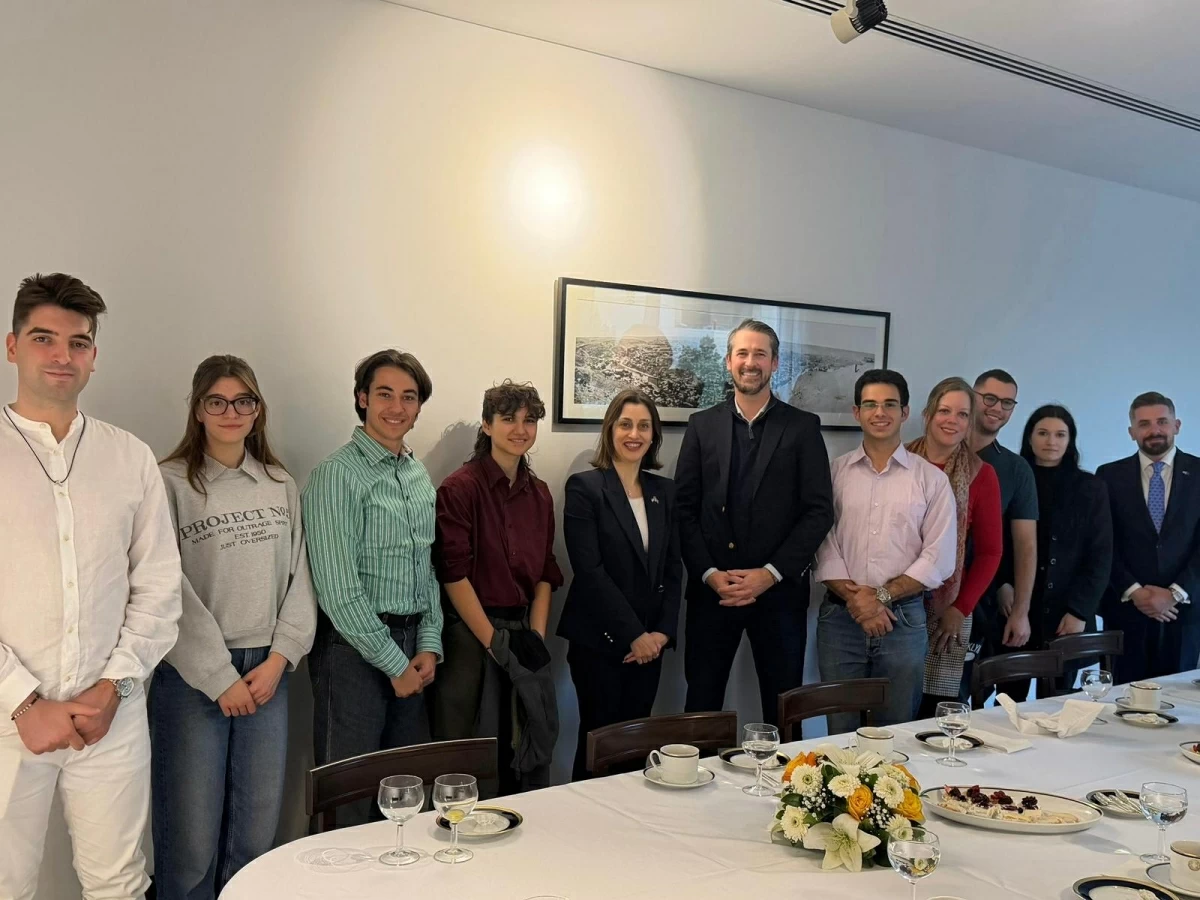
AMMAN — The recent visit of a student delegation from Hellenic American University marked an important moment in the steadily deepening relationship between Greece and the broader Levant, offering a fresh model of academic exchange and regional engagement.
Led by Cameron Bell, director of the university’s civic engagement programme, the four-day trip to Amman was the first Greek university-level programme of its kind to take place in Jordan, a development that Bell describes as both timely and symbolic.
In an interview with The Jordan Times, Bell noted that the initiative, part of a broader experiential learning project titled Beyond Borders, aims to move Greek higher education towards greater regional openness after years of inward focus.
Greece’s decade-long economic crisis, he noted, compelled the country to prioritise internal stability. But with the economy now experiencing a remarkable rebound, hailed by international institutions as a model of recovery, new “oxygen in the room” has allowed universities, civil society and cultural actors to look outwards once again.
“The business community has long operated across the Balkans, the EU and the Middle East,” Bell said. “But in areas like higher education and people-to-people ties, the links with the Levant have remained weak. And where there is a gap, there is an opportunity.”
That opportunity defined the Amman visit. Over an intensive long weekend, Greek students met with Jordanian media professionals, foundations, academics and archaeologists, engaging in what Bell called “immersive, in-situ learning” across sites that reflect millennia of shared Mediterranean history.
At Jordan’s archaeological landmarks, ancient Greek inscriptions and architectural influences offered students tangible evidence of historical connectivity. Contemporary encounters, meanwhile, highlighted what Bell described as “an unexpected brotherhood” between Greeks and Jordanians.
While Greece’s ties with Egypt and Turkey are widely recognised, its connections with Jordan are less well known, a fact that heightened the sense of discovery for visiting students, he said.
“There was an element of surprise,” Bell noted. “Many Jordanians told us how at home they feel in Greece. Greeks, on the other hand, know less of Jordan, even though Amman itself was once called Philadelphia. This trip revealed how close our societies really are.”
Meetings at The Jordan Times offered students insight into Jordan’s media landscape, which Bell described as both globally connected and grappling with universal challenges confronting journalism today.
Discussions ranged from security issues to the role of the monarchy, prompting students to rethink assumptions about governance in the region. Jordan’s constitutional monarchy, Bell observed, emerged as a “case study in stability,” a theme that resonates across Mediterranean politics.
The visit also underscored Jordan’s reputation as a regional model in areas such as refugee management, water governance, heritage preservation and support for religious and ethnic minorities.
Bell emphasised that Greece and the EU have much to learn from Jordan’s experience. “The conversation should not be hierarchical,” he said. “Every country carries lessons. Our goal here was to listen.”
For Jordan, the programme’s significance lies not only in regional visibility but in the promise of future cooperation. A generation of Jordanians studied in Greece in the 1970s and 1980s, creating enduring personal and professional ties.
Bell believes renewed educational exchanges could build on that legacy, strengthening networks of trust among future leaders in both countries.
Institutions are already stepping in: A simultaneous delegation from the Study in Greece initiative was in Amman promoting new academic pathways for Jordanian students.
Though challenges remain, including visa logistics and financial constraints, Bell noted that comparable economic structures in both countries make such mobility increasingly feasible.
Underlying the entire journey was a broader cultural dimension. Many sites in Jordan hold deep significance for Christian communities, including the Greek Orthodox faithful. Visiting places such as Madaba and Mount Nebo offered Greek students a familiar spiritual thread woven into a distinctly Jordanian landscape.
Looking ahead, Bell expects Beyond Borders to continue expanding, with future destinations likely elsewhere around the Mediterranean.
But Jordan, he stressed, will remain a touchstone. “For our students, this was not only an academic experience,” he said. “It was a lesson in how common our challenges are, and how much potential there is when we learn from each other.”
