






 Share
Share


AMMAN — The government has drawn up an alternative plan to replace a water purchase agreement with Israel that provided Jordan with 50 million cubic metres annually, an official source said.
The unnamed source, quoted by Al Mamlaka, said the plan was prepared in 2025 under the direction of the prime minister ahead of the agreement’s expiration to safeguard Jordan’s water security.
The deal expired three months ago and has not been renewed, according to Al Mamlaka. The source stressed that Jordan’s national interest will guide any future decisions, priorities and measures related to the matter.
The source added that the government is finalising the financial close of the National Water Carrier project in coordination with international and local institutions. The agreement is expected to be signed before the end of next month, paving the way for implementation later this year.
Also known as the Aqaba-Amman Water Desalination and Conveyance (AAWDC) project, the National Water Carrier will, upon completion, become Jordan’s first large-scale desalination plant, one of the largest globally, and the Kingdom’s largest infrastructure project to date.
The project is designed to supply 300 million cubic metres of water annually to much of the country, easing pressure on existing resources and helping replenish over-extracted aquifers.
The 1994 peace treaty between Jordan and Israel included a detailed water annex obligating Israel to supply Jordan with around 50 million cubic metres per year.
A Joint Water Committee was established to manage shared resources, monitor water quality and coordinate additional supplies.
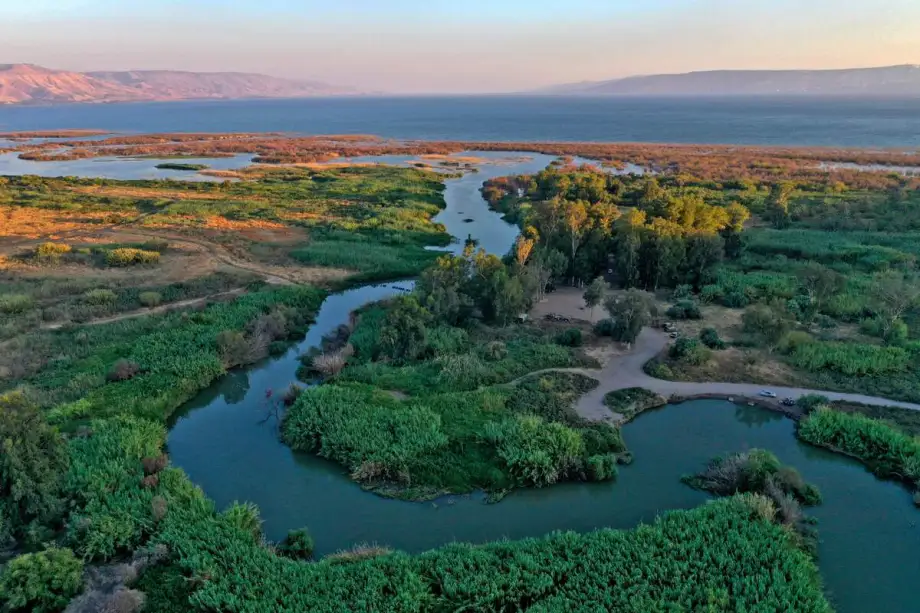
Under the arrangement, Israel delivered water from the Sea of Galilee, while Jordan granted Israel access to the Yarmouk River and purchased surplus water during wet years.
In October 2021, the two sides agreed to increase annual supplies to 50 million cubic metres beyond the quantities stipulated in the 1994 treaty.
In November 2022, Jordan and Israel signed a memorandum of understanding to advance a water-for-energy initiative. Under the proposed deal, Jordan would build 600 megawatts of solar power capacity for export to Israel in exchange for 200 million cubic metres of desalinated water annually.
Jordan later abandoned the agreement following the Israeli war on Gaza.
Jordan-Syria Water Cooperation
Jordan has also sought to revitalise water cooperation with Syria.
The two countries signed water agreements in 1953 and 1987, though both sides have said the accords were never fully implemented.
Jordan has long cited the construction of dams and the drilling of illegal wells on the Syrian side as factors contributing to declining flows from the Yarmouk River.
However, following the fall of the Assad regime in December 2024, the two neighbours reopened discussions on shared water resources.
High-level Syrian delegations have visited the Kingdom to discuss practical steps to address joint water challenges. In September 2025, the two countries launched the Jordanian-Syrian Joint Water Platform to enhance cooperation and information exchange.
At the time, Ministry of Water spokesperson Omar Salameh told The Jordan Times that Syria had expressed readiness to address the issue of illegally drilled wells in recent years.
He added that Jordan plans to present a study on cloud seeding in the Yarmouk Basin to help bolster regional water supplies.
Salameh also said the Syrian side showed interest in preserving Jordan’s allocated share at the Wihdeh Dam and in exploring the possibility of providing additional water during the summer months to ease seasonal shortages.
