






 Share Story


AMMAN — A project to support sustainable cultural heritage for the protection of the Abila archaeological site in Irbid was launched on Tuesday.
Funded by the European Union and implemented by the Italian Agency for Development Cooperation (AICS), in cooperation with the Ministry of Tourism and Antiquities and the Department of Antiquities, the initiative aims to restore the site’s monuments, improve its infrastructure and boost its role within Jordan’s national tourism trail.
Ministry of Tourism Secretary-General Yazan Khadir said that the project reflects Jordan’s commitment to preserving its cultural heritage as a cornerstone of national identity and sustainable development, the Jordan News Agency, Petra, reported.
He stressed that safeguarding heritage is an investment in the future, one that boosts cultural tourism and creates economic opportunities for local communities, especially women and youth.
The secretary-general highlighted that the project places the local community at the “heart of development” efforts through involvement in conservation, rehabilitation and tourism promotion, expressing appreciation for the continued support of the EU and AICS in protecting Jordan’s heritage and raising awareness of its value.
Head of Cooperation at the EU Delegation to Jordan Patrick Lambrechts said that the EU allocated 10 million euros to support cultural heritage across the Kingdom.
He said that the launch of projects at Abila and Mukawir demonstrates the “strength” of EU–Jordan cooperation in achieving sustainable local and tourism development.
Head of the Middle East Unit at the European Commission Ana Pires said that cultural heritage support remains a top EU priority in Jordan.
She underscored that working with local communities ensures that archaeological sites serve as sources of pride, identity and economic opportunity.
The ceremony featured a detailed presentation of the project’s objectives and components, which include excavation, conservation and tourism promotion at both local and international levels, in addition to training and awareness programmes connecting schools, universities and civil society with the value of Jordan’s heritage.
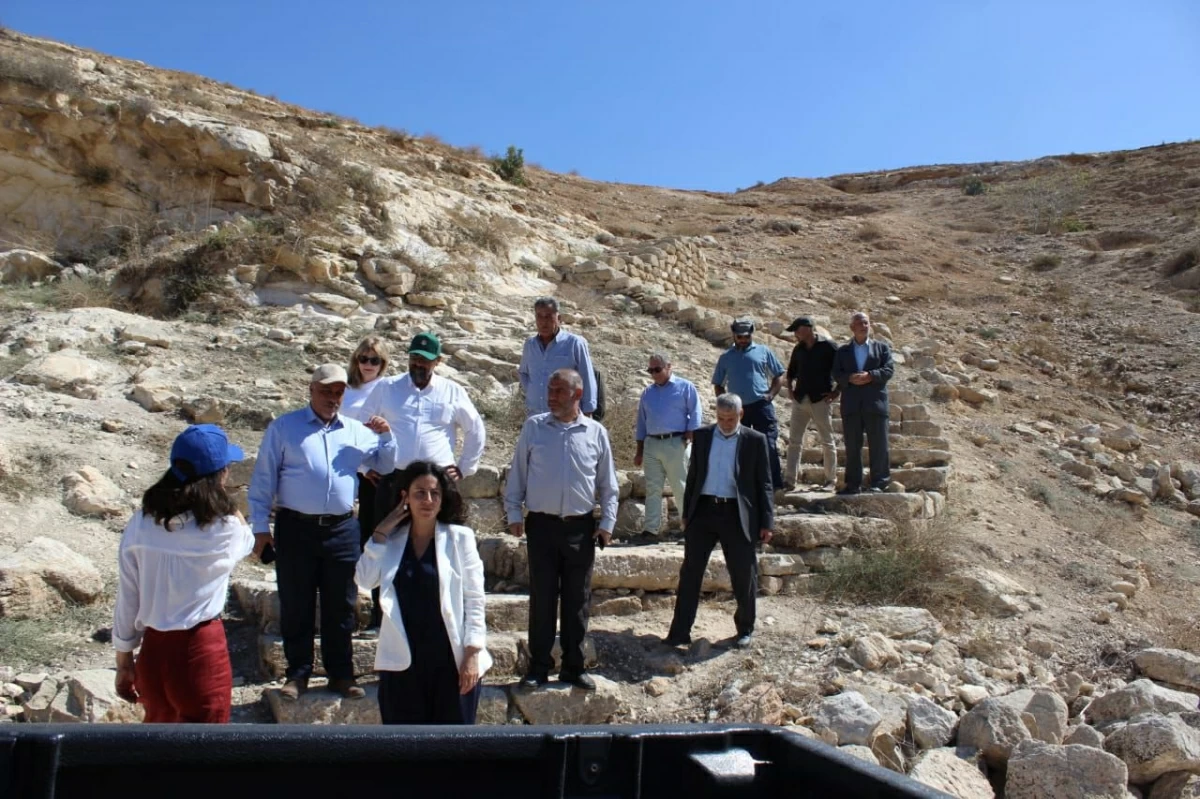
At the end of the event, participants toured the archaeological site and were briefed on its history and significance within Jordan’s rich archaeological landscape.
The Abila project is funded through an EU grant of 5 million euros, signed in June 2024, dedicated to conservation, tourism promotion and training activities at the site.
