






 Share Story


AMMAN — The main historical records about southern Levant come from local, Mesopotamian and Egyptian sources.
The first clear mentions of Palestinian cities are from the royal archives in Mari on the Euphrates from the 18th century BC.
These archives briefly mention Hazor and Laish. Before the first millennium, there are only vague references to Palestine and Syria (Amurru), the Sea of Amurru (the Mediterranean), the Lebanese mountains and perhaps Bashan (Aharoni).
Furthermore, different Mesopotamian states were aware of the geography an economics of the southern Levant and the Jordan Valley because of economic exchanges between Egypt and that region as well as political dominance of the Egyptian kings over the Levant.
Scholars found cuneiform tablets in Pella and Palestinian inscriptions from Deir ‘Alla.
"All the other inscriptions from Palestine are written by or for the Egyptians and included in the Egyptian epigraphic material reviewed. The Egyptian sources from the Late Bronze Age span the 18th and 19th dynasties of the New Kingdom, and they belong to a few genres of literature,” said James Schaaf.
“We can divide them into annals and expedition journals, bas reliefs, topographical lists, correspondence, private biographical statements, literary and administrative papyri," added Schaaf.
All but a few of the literary papyri such as the satirical letter of Papyrus Anastasi I are official administrative or propaganda texts. Although some of the administrative correspondence such as the Amarna letters can be direct and defensive, they still support Egyptian policy and uphold the Pharaoh as supreme, Schaaf underlined.
He added that even the private biographical texts from tomb inscriptions are glorifying the works of service for and by the Pharaoh.
• Annals and expedition journals:
These are yearly records of major events and data that were considered necessary for future generations.
Usually these are military campaigns preserved as official inscriptions carved on temple walls and/or stelae the annals recorded on pylon six and seven at the temple in Karnak provide several narrations of Thutmose III’s seventeen campaigns in the Levant.
• Bas Reliefs:
Egypt adorned many of its temples and monuments with sunken-relief sculptures. Many of these reliefs depict details of warfare and everyday life but are poor in topographical information. A few examples, such as those of Seti I and Ramesses II, portray many towns and fortresses in Canaan.
Topographical Lists:
Many Pharaohs of the New Kingdom complemented their annals with a list of captured people or towns, carved in oval rings containing the names of the towns inside and a partial figure of the local ruler.
These lists provide details of key military points in military campaigns. The foreign toponyms of captives and their cities were used as propaganda announcements of the Pharaohs’ victories.
There is much scholarly debate on whether the lists represent a specific marching order or simply convenient or familiar groupings3 (i.e. Seti I’s topographical list on his Karnak relief lists 17 cities visited by Seti I on his first campaign.
• Correspondences:
The epigraphic sources in this type of genre are primarily international diplomatic or administrative correspondence. The Taanach and Amarna tablets written in Akkadian are prime examples of this genre, indicating that Akkadian was the international and diplomatic language of the time.
• Private biographical statements:
Oftentimes high- ranking military leaders had personal records on their tomb inscriptions recounting the official’s or military officer’s exploits inscription of an Egyptian military officer named Ah-mose, the son of the woman Ebana located in tomb five at el-Kab gives his biography in the service of Pharaoh.
• Literary and administrative papyri:
From the time of the New Kingdom, there are a few administrative papyri giving details about grain shipments and rations or reports from military outposts.
Some of the literary papyri contain descriptions of Palestine that are sarcastic or have other literary genre details that provide insights different from official versions.
The account of Hori, a satirical scribe/charioteer challenging a young scribe’s knowledge and capability of navigating the Levant of Papyrus Anastasi I, is a prime example of this genre.
Moreover, approximately 25 Egyptian stelae, including those associated with Thutmose III, Seti I, Ramesses II, and Shoshenq I, have been found throughout the Levant, including Beisan—demonstrating Egypt’s recurring official presence in Levantine territories.
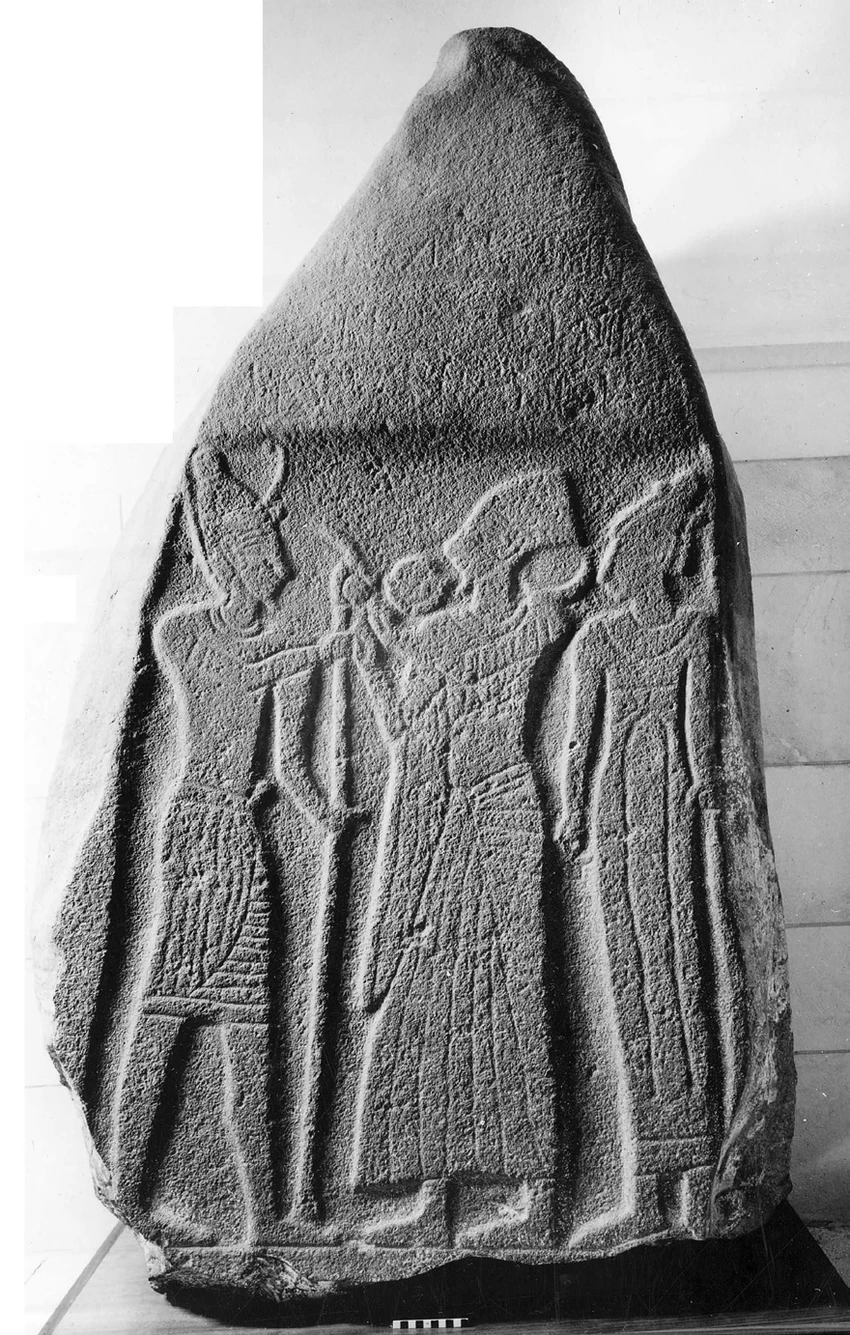
Balu’a Stele was discovered north of Karak. This basalt stele (1309–1151 BC) bears Egyptian hieroglyphs combined with Canaanite iconography—suggesting Egyptian ceremonial or political influence within eastern Jordan regions adjacent to the Valley.
The Karnak temple inscriptions from the 18th Dynasty (c. 1479–1425 BC) include a Levant itinerary naming places in Transjordan—Wadi Yarmuk, Wadi Zerqa, Wadi Mujib—indicating Egyptian knowledge of and interest in eastern routes across the Jordan Valley.
All these primary sources underline a vivid interest of ruling Egyptian elites into trade routes and political influence in the southern Levant from the Bronze Age until the Hellenistic period.
