






 Share
Share


— Government employees will be able to access unpaid leave after three years of service instead of five
— Private schools will be classified into six categories based on education quality, management, performance indicators
— New social protection and welfare fund framework to be established to strengthen support programmes, promote economic empowerment
AMMAN — The Cabinet on Monday approved amendments to the Human Resources Management bylaw in the Public Sector for 2026, aimed at making unpaid leave provisions more flexible for government employees while ensuring the continuity of public services.
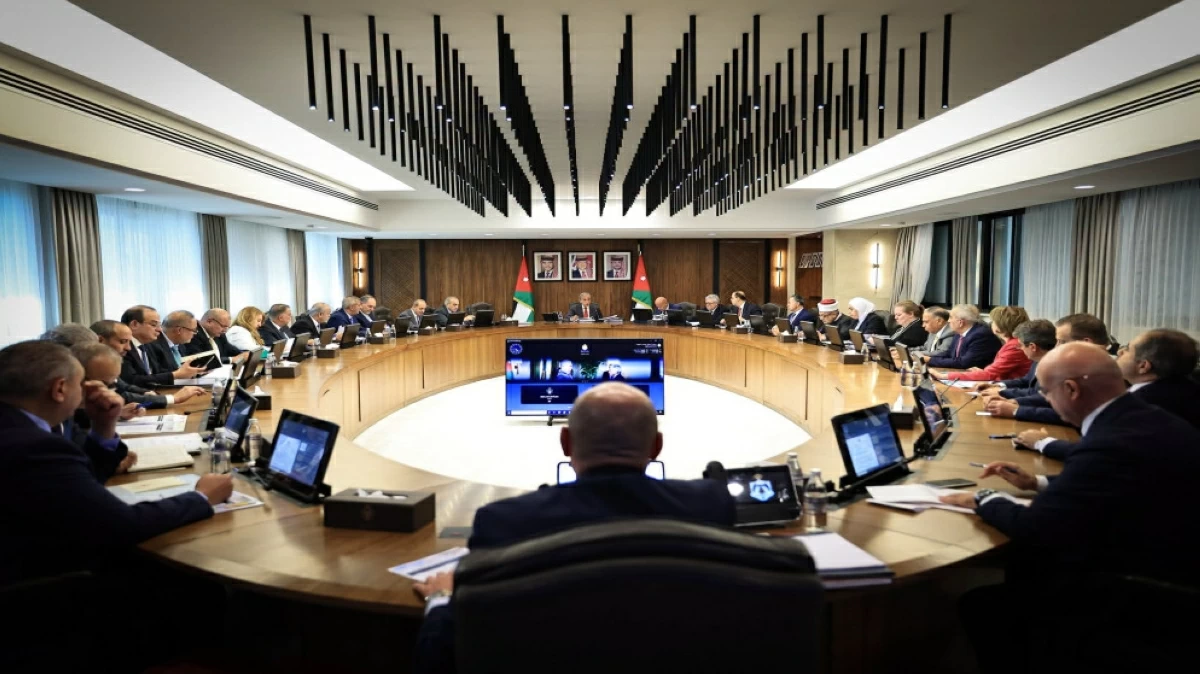
During a session, chaired by Prime Minister Jafar Hassan, the Cabinet approved the validating reasons for the proposed amendments and referred them to the Legislative and Opinion Bureau for legal procedures.
The draft bylaw was also granted an urgent status, according to a Prime Ministry statement.
The amendments seek to reorganise regulations governing unpaid leave after a review of the current system by relevant authorities, with the goal of improving workforce management and addressing the needs of employees and government institutions.
Under the proposed changes, the minimum service requirement for obtaining unpaid leave would be reduced from five years of actual service to three years.
The draft regulation would also remove the current limit on the duration of unpaid leave, allowing employees to remain on leave for an open-ended period rather than a fixed number of years.
It also eliminates the requirement for employees to return to work during the final five years of service in order to qualify for a retirement pension.
The statement said that the amendments would provide greater flexibility for employees working abroad, allowing them to continue their overseas employment or return to their government positions.
The draft bylaw also expands unpaid leave for study purposes, setting the duration at five years for both study inside and outside Jordan, compared with the current system, which allows two years for study inside the Kingdom and five years abroad.
Employees will also have the option to continue contributing to the Social Security system during their unpaid leave period.
The new provisions will apply to employees currently on unpaid leave under the existing regulation, as well as those who apply for leave after the amendments come into effect.
To ensure workforce planning and avoid disruptions to government services, public institutions will be able to fill vacancies created by employees on unpaid leave, the statement said.
The statement also said that the revised regulations would help public sector entities improve workforce planning, manage vacancies more effectively, and ensure the continued delivery of government services without affecting the quality of services provided to citizens.
The Cabinet also approved the draft bylaw for classifying private educational institutions, including private schools, as part of efforts to improve education quality, increase transparency, and encourage competition among schools.
The new amendments introduce a framework for evaluating and ranking private schools based on their performance levels and the quality of services they provide, the statement said.
Under the proposed system, private educational institutions will be classified into six categories based on their scores against a set of approved standards and indicators designed to measure educational performance and learning outcomes.
The evaluation framework will assess several areas, including the quality of education, school environment, human resources, innovation and creativity, leadership and management, and community engagement.
The statement said that the classification system is intended to encourage schools to pursue continuous improvement, with evaluations to be conducted every three years to track progress and allow institutions to improve their rankings.
The new system is also aimed at enhancing transparency by enabling students and parents to access information about schools’ performance levels and classifications.
Classification results will be published publicly, and schools will be required to display their classification certificates prominently and include them on official documents.
In a separate decision, the Cabinet approved the Social Protection and Welfare Fund bylaw for 2026.
The statement described the new amendments as a significant step towards strengthening the social protection framework.
The bylaw establishes a unified financial mechanism through a national institutional funding arm designed to support social protection and welfare programs provided by the Ministry of Social Development.
The new framework seeks to move beneficiaries towards greater empowerment and economic participation, shifting the focus from assistance alone to sustainable support that promotes productivity and self-reliance, the statement said.
