






 Share
Share


— Gov’t moves to standardise public sector jobs to improve efficiency, service delivery
— JD20m education tax fund allocated for school infrastructure, maintenance
— Social Development Ministry restructuring endorsed to strengthen oversight, digital systems, governance
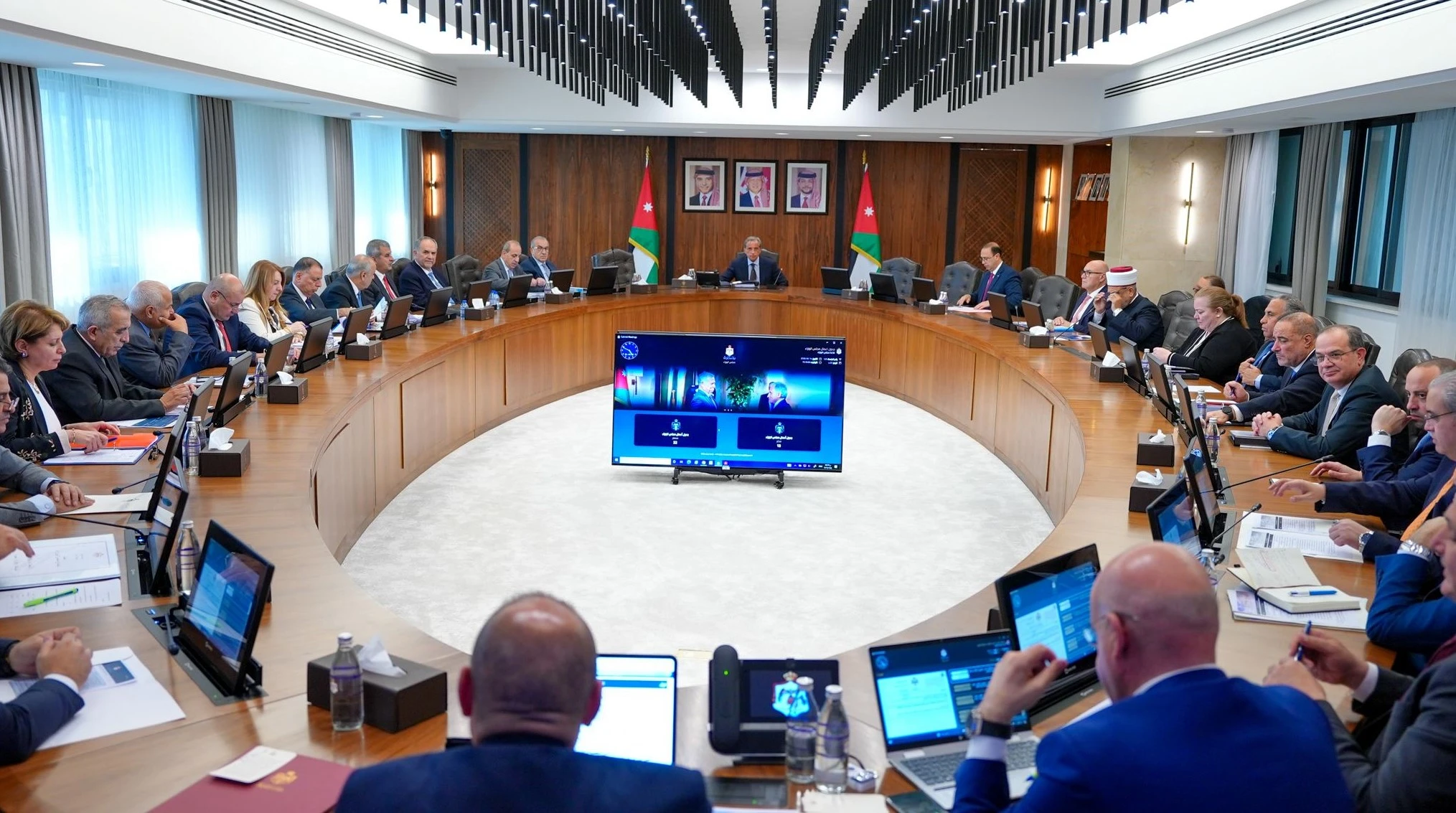
AMMAN — The Cabinet, during a session chaired by Prime Minister Jafar Hassan on Sunday, said it approved the first phase of technical competency frameworks related to public sector modernisation.
The frameworks cover a range of government domains, including human resources, digital transformation, information management and data analysis, cybersecurity, legal affairs, procurement, government inventory management, media and communication, service delivery, administrative affairs and financial management, according to a Prime Ministry statement.
The government said that the adoption of the frameworks marks a key institutional step towards enhancing public sector efficiency by establishing clear and standardised criteria, and unifying job requirements across government entities, thereby improving service delivery and strengthening public trust in public institutions.
The new approach shifts human resources management towards competency-based standards that focus on an employee’s ability to perform duties effectively, rather than job titles or traditional qualifications, according to the statement.
The Council of Ministers said that the framework, implemented for the first time, establishes a unified understanding of these functions, which account for 40 per cent of public sector jobs, by defining the knowledge, skills and behaviours required for recruitment, development and performance evaluation under clear and standardised criteria.
It is intended not only for recruitment and evaluation, but also as a comprehensive reference for professional development, performance management and training, enabling government institutions to utilise human resources more efficiently and effectively, the statement said.
The decision requires all government departments to adopt the framework across human resource management processes. The Civil Service and Public Administration Commission would oversee implementation, provide technical support to government entities, and update the frameworks as needed.
The next phase would include the development of assessment tools to measure competencies for recruitment, promotion and career development purposes. The framework would also be provided to the Jordanian Academy for Government Administration to develop cumulative training programmes aimed at building skills and capacities, linking training investment to career progression.
The Cabinet approved the mandating reasons for the draft 2026 organisational bylaw for the Petra Development and Tourism Region Authority (PDTRA) aimed at modernising institutional structures, paving the way for its referral to the Legislation and Opinion Bureau for completion of legal procedures.
The government said that the draft bylaw seeks to enhance the PDTRA’s organisational and administrative structure, improve institutional performance, and reinforce governance, transparency and accountability, while ensuring optimal use of human, financial and technological resources through a clearer distribution of responsibilities and powers.
It also aims to further develop Petra’s administrative framework to improve services, strengthen its position as a leading tourism destination and UNESCO World Heritage Site, and enhance its contribution to the national economy through increased investment and visitor flows, the statement said.
The bylaw is expected to improve coordination among the authority’s organisational units, raise institutional efficiency, and enhance service quality, strengthening Petra’s global competitiveness as a tourism destination.
The Cabinet also approved a draft amended organisational bylaw for the Ministry of Social Development for 2026, aligning its structure with the Social Development Law of 2024 and the public sector modernisation agenda.
The restructuring includes the establishment of specialised directorates for care, protection, institutional support, governorate affairs and development, as well as units to strengthen the sustainability and governance of associations.
It also introduces an inspection and compliance unit to ensure independent oversight of care homes and licensed entities, along with units for information management, data analysis and cybersecurity to support digital transformation and improve decision-making.
The bylaw will not result in additional financial burdens on the state budget, as staffing needs will be met through restructuring and reallocation of existing vacancies.
The Cabinet also approved an amended organisational bylaw for the Income and Sales Tax Department for 2026, aimed at aligning its structure with international best practices in planning, analysis and risk management in tax administration, and keeping pace with technological advancement and digital transformation.
