






 Share Story


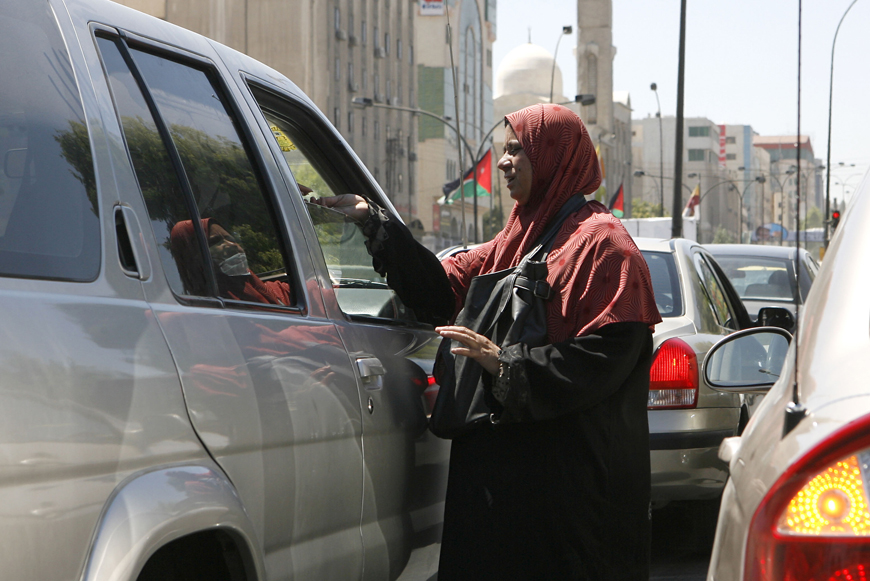
AMMAN — With the approach of the fasting month of Ramadan, the number of beggars in Zarqa is on the rise, the city’s mayor, Emad Momani, said on Thursday.
He noted the number of beggars, both Jordanians and Syrians, has been increasing because of the high unemployment rate in Zarqa, which houses many factories.
“I estimate that unemployment has increased by 20 per cent this year in the city, which provides 60 per cent of local production. I understand that factory owners already face financial hardships but the low wages they pay their employees force many to leave their jobs and turn to begging,” Momani told The Jordan Times over the phone.
Zakariya Hilou, a public sector employee who lives in Zarqa — some 22km east of Amman — disagreed.
Noting that most beggars are children and women, he said many men opt not to look for a job and instead send their family members out to beg.
But Momani said factory employees are paid between JD190 and JD200, including transportation fees, which is not enough to make ends meet.
“Small projects have to be launched for these people to encourage them to abandon begging and offer them a decent living; otherwise, they could fall prey to extremist ideologies,” he stressed.
The Department of Statistics’ latest estimates, which cover the year 2014, put the total population in Zarqa Governorate at 994,500.
Ashraf Habboub, another Zarqa resident, said he noticed that many charitable associations are working hard to help meet the needs of underprivileged families.
“I do not think that either Syrians or Jordanians lack support or assistance, but some people believe that this is the easiest way to earn money,” he added.
Habboub said most beggars target families and motorists driving expensive vehicles.
Thaer Akramawi, a gold store owner in Zarqa, said beggars make his working life difficult.
“They embarrass me and my customers every day. Even if I give them money, they turn to my customers,” he added.
Hilou said beggars also make his life difficult especially if he has to stop at a traffic light.
“Once five people surrounded my car and prevented me from moving until I gave them money,” he added.
Akramawi said beggars are adopting new tactics.
“Some say they have to travel and do not have the money or that one of their family members needs medical attention at hospital and they urgently need money for that,” he added.
Hilou said officials have to work harder to combat this trend.
“I notice that the situation in Amman is much better and even saw people chasing them, while in Zarqa there is nothing like that,” he noted.
Over 1,300 beggars were apprehended across Jordan last Ramadan, 129 of whom (10 per cent) were Syrians.
Adult beggars detained by authorities are referred to police stations and then to court in accordance with the Penal Code, while juveniles are referred to care centres affiliated with the ministry, where they are rehabilitated.
