






 Share
Share


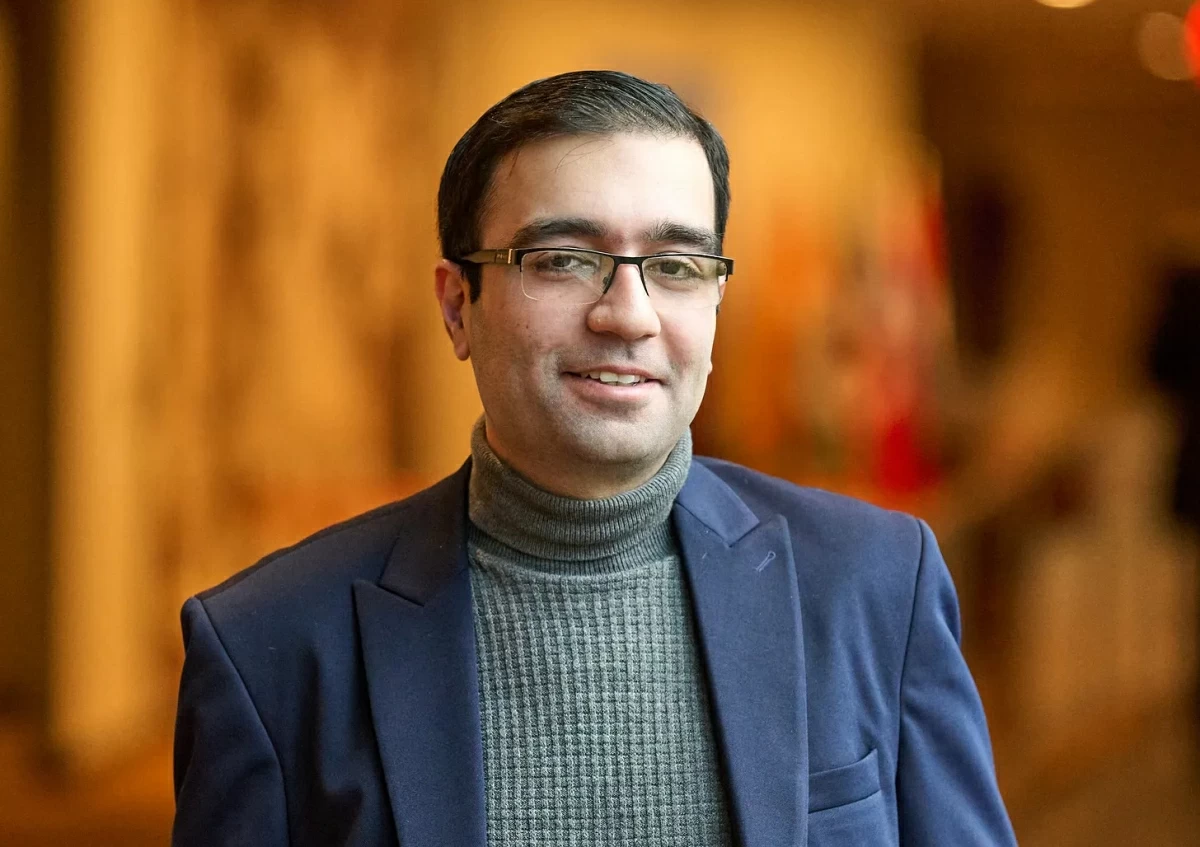
AMMAN — Late at night in Tehran, Kourosh Ziabari was a ghost in the corridors of academia. While Mahmoud Ahmadinejad’s second presidency tightened its grip on the streets, Ziabari navigated pitch-black university buildings, clutching keys borrowed from sympathetic professors to hijack a landline.
Between 2009 and 2014, Ziabari transformed Daneshmand, Iran’s oldest science magazine, into a portal. In a country where unsanctioned contact with the West was often prosecuted as espionage, he conducted nearly 30 interviews with Nobel Prize laureates, mostly from the United States.
Since the 1979 Revolution, the Iranian public had been systematically severed from the pulse of global research. Ziabari and his editor-in-chief realised that if the politicians refused to build a bridge, the journalists would have to.
“We decided that one way to approach that goal and objective was to talk to Nobel Prize laureates who had not ever interacted with Iran or who had not ever heard from Iranian journalists,” Ziabari told the Jordan Times.
The project began as a desperate scramble against failing infrastructure. In 2009, the state of Iranian telecommunications made a live call with Swiss-American chemist Kurt Wüthrich impossible. They settled for a written exchange, but the spark had caught. Soon, Ziabari was racking up staggering landline bills at his parents’ home, questioning the world’s greatest minds on ethics, failure, and the pursuit of truth.
To sustain the project, Ziabari turned to his lecturers and former professors; universities were among the few places where international calling equipment was available at a lower cost.
“They provided me with access to their offices overnight and to make up for the time difference between Iran and mostly the US East Coast and the Central Time zone,” Ziabari says. “And many of the conversations happened over e-mail, back and forth, exchange of questions and answers.”
The response from the public was electric. For a generation of Iranians raised behind a curtain of sanctions, these interviews were a lifeline. Readers reached out to express “their astonishment, sometimes their happiness, sometimes their nostalgia,” mourning their lack of access to the global stage.
One reader was so inspired he eventually joined the magazine as a freelancer. Under this momentum, Daneshmand evolved from a niche periodical into a broader platform incorporating commentary and reporting on new discoveries across scientific disciplines, both at home and abroad.
Yet, while laureates were often delighted to find such a “huge passion and interest for sciences” in Iran, the project frequently collided with the “machinery of mistrust”.
NASA prevented astrophysicist John C. Mather from even a written exchange, citing government restrictions. More surreal was the rejection from John Nash, the pioneer of “Game Theory.” In a move of “political correctness,” Nash declined because he feared a conversation with an Iranian would not “fit the prevailing geopolitical board.”
Where politics failed, personal connection occasionally broke through. Roald Hoffmann, a Holocaust survivor and chemist, shared archival photos and later became a vocal supporter of the Iran nuclear deal. Swiss physical chemist Richard Ernst used the platform to warn Iranian youth against the “unsustainable models” of global leadership.
Ziabari treated these scholars not as untouchable icons, but as peers. He would spend weeks deconstructing their research, from quantum fluctuations to climate modelling, ensuring the conversations were rigorous enough to command respect and accessible enough to inspire a student in Isfahan.
“I had not ever majored in sciences or I had not actually done sciences,” he recalled, “but I learned a lot about physics, astrophysics, and some aspects of chemistry.”
However, the rise of Ebrahim Raisi in 2021 signalled the end of the magazine’s role as a window to the world. The 2022 “Woman, Life, Freedom” protests provided the regime with the pretext it needed to finalise the country’s diplomatic isolation.
In the ensuing crackdown, Daneshmand—a pillar of Iranian intellectual life since the 1960s that had survived both revolution and upheaval—was effectively hollowed out and reduced to a state mouthpiece, swapping the elegant complexities of quantum physics for the cold, utilitarian schematics of ballistic missiles.
Ziabari eventually continued his work in the United States, interviewing Frances Arnold, who won the Nobel Prize in Chemistry in 2018, the fifth woman to achieve this. But the era of domestic scientific curiosity was over.
