






 Share Story


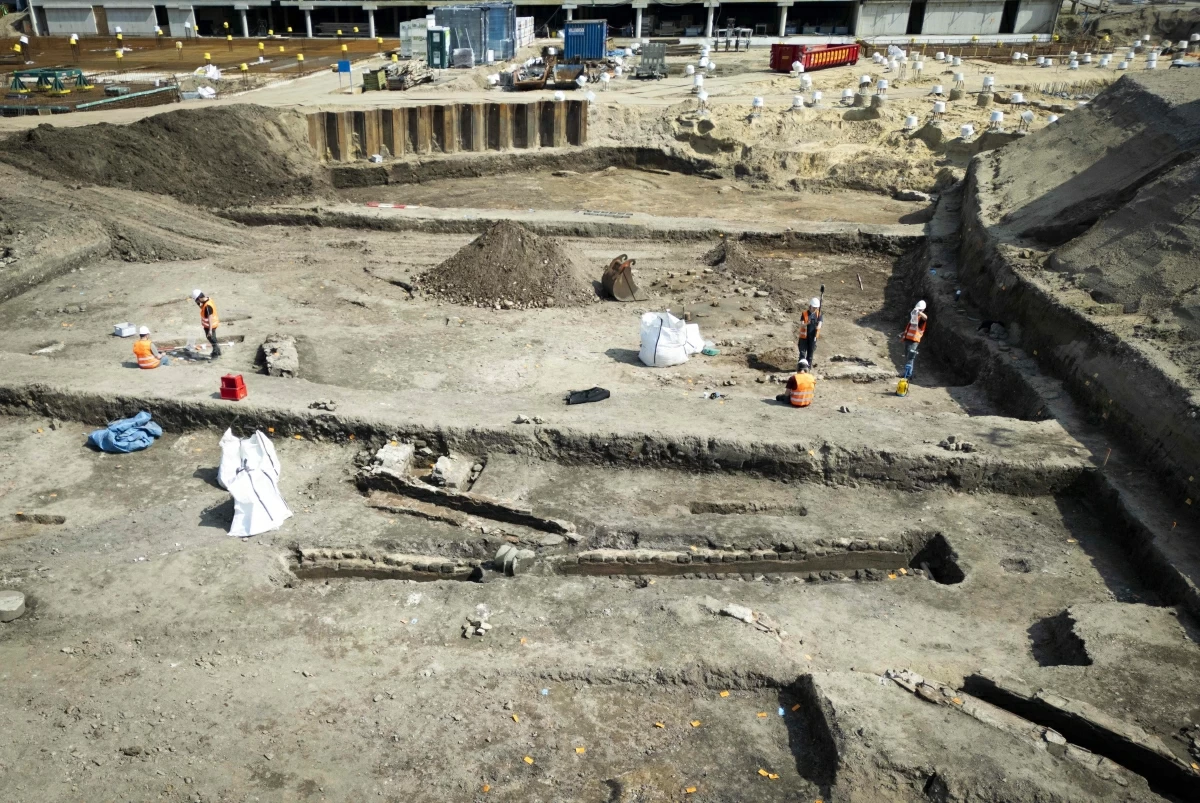
THE HAGUE — Dutch authorities said Tuesday they had excavated the biggest Roman bathhouse yet discovered in the country, complete with jewellery, hairpins, coins and a bronze bust of Bacchus, god of wine.
Archaeologists have uncovered "tens of thousands" of items, including bronze statues, signet rings and a necklace with a gold clasp, authorities in the eastern Dutch city of Nijmegen said. The discoveries "show that the inhabitants of this part of the city lived in luxury some 1,800-1,900 years ago", said the city authorities in a statement.
Of particular interest were hundreds of bone hairpins used to sculpt the "elaborate hairstyles" of wealthy Roman women. The bathing complex appeared to have been especially luxurious, with marble-clad walls and floors paved with black and white limestone tiles.
The Roman city of Ulpia Noviomagus, now Nijmegen, was one of the biggest settlements in the present-day Netherlands. "It is assumed that the Roman settlement... received city rights from Emperor Trajan around the year 100 AD," said the statement. The bathhouse was erected shortly afterwards, historians believe.
