


Darat Al Funun: A home for the arts and a landmark of Amman's history

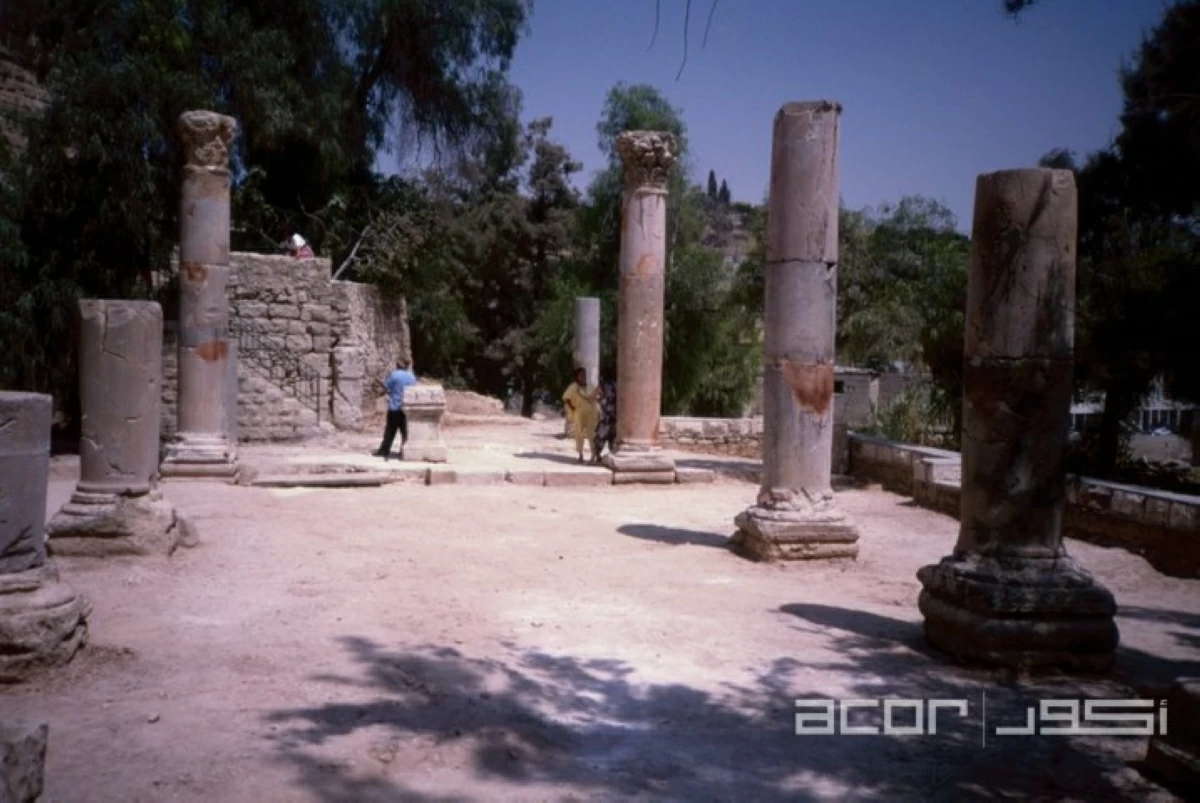
Two rows of three columns of the remains of the Byzantine Basilica which is now part of the artistic hub Darat Al Funun, overlooking Amman's downtown

(Photo courtesy of ACOR)
Two rows of three columns of the remains of the Byzantine Basilica which is now part of the artistic hub Darat Al Funun, overlooking Amman's downtown (Photo courtesy of ACOR)

AMMAN — In the heart of Jabal Luweibdeh lies Darat Al Funun, a space dedicated to supporting art and artists from Jordan and across the Arab world. Through its indoor and outdoor exhibitions, workshops, artist residencies, screenings and live performances, it has established itself as one of the Kingdom’s most important cultural hubs, fostering both creativity and critical expression.

The story of Darat Al Funun begins with Khalid Shoman, a former assistant general manager of the Arab Bank and a passionate patron of the arts. Together with his wife Suha Shoman, he built significant collections of contemporary Arab art for the Arab Bank, the Abdul Hameed Shoman Foundation, and their own private collection. In 1988, the Foundation launched an art gallery with exhibitions, workshops, and lectures - an initiative that would eventually evolve into Darat Al Funun, formally established in 1993 as a true “home for the arts.”

From its earliest days, the Dar welcomed exhibitions by artists uprooted by conflict: Palestinians during the First Intifada, Iraqis fleeing the Gulf War, and Lebanese displaced by civil war. It quickly became a gathering place where diverse artistic voices could meet, exchange, and find solidarity.

The institution’s Main Building, inaugurated in 1993, houses exhibition spaces, a specialised art library, workshops and performance venues. Soon after, the Blue House was restored, adding further galleries and a café nestled in its gardens. By 1997, Darat Al Funun had launched the region’s first website dedicated to contemporary Arab art, extending its reach into the digital sphere.

Beyond its role in nurturing contemporary art, Darat Al Funun itself is steeped in history.

The complex stretches across nearly four dunums of terraced gardens, encompassing three historic houses from the 1920s and the remains of a sixth-century Byzantine church built on top of a Roman temple.

The site was first identified in 1881 by British explorer Major C.R. Conder, who excavated parts of the church. In the early 20th century, Dominican scholar R. Savignac and M. Abdel uncovered two inscriptions among the ruins: one suggesting the church may have been dedicated to St. George, the other indicating it was built over or near a Roman temple dedicated to Herakles.

Further excavations were conducted in 1993 by Pierre Bikai, former director of the American Centre of Research. Restoration efforts reset the church’s column drums, placed a surviving Corinthian capital on the northeastern column, and revealed remnants of the mosaic floor. Artifacts recovered during the work are now displayed in the site’s library.

Once overlooking a Circassian village in Amman’s central valley, the three houses of Darat Al Funun are today located on the edge of the bustling downtown.

Between 1992 and 1995, Jordanian architect Ammar Khammash oversaw their renovation, preserving their character while adding a library to the top floor of the main building. In 2005, architect Sahel Al Hiyari redesigned the upper boundary walls and entrance.

The main building, influenced by Venetian and Mediterranean architecture popular in Beirut, Haifa and Jaffa during the 1920s, was begun in 1918 by the mayor of Salt.

In 1939, the house was leased to the Jordanian government, briefly serving as the prime minister’s office before being converted into a British officers’ club until 1956. It was then transformed into the Arab School for Girls, before falling into abandonment in 1978.

The Khalid Shoman Foundation later salvaged the property, with Khammash’s sensitive restoration beginning in 1992. Its limestone walls and ornamented tiled floors remain among the few surviving examples of traditional Jordanian architecture in the capital.

Another of the houses once belonged to Sheikh Fouad Al Khateeb, poet and adviser to Emir Abdullah. In the mid-1950s, Prime Minister Suleiman Nabulsi resided there briefly.

Today, Darat Al Funun stands not only as a vibrant cultural centre but also as a living testament to Amman’s layered past, where art and history continue to converge.

.col-lg-12.second .opinion-widget{border-top:1px solid #D0D0D0;} #widget_1623 .opinions-title {font-size:32px;} #widget_1623 .opinions-title a{font-size:32px;} .first-author{ background-color:#ecedef; } .first-opinion-author-name{ background-color:white; width:max-content; padding:5px; }
.epaper-separator{ height: 1px; width: 100%; background-color: #D0D0D0; margin: 15px 0; }

Today’s Paper

.related-articles .article-widget-sm .article-title{font-size:16px;-webkit-line-clamp:3;} .related-articles .layout-ratio{padding-bottom:55%;}
.alert-success { color :#A3656F ; } .alert-danger { color : red ; } .footer { font-family:Myriad Pro,Arial; } .newspaper-footer{ visibility:hidden; } .socialFixOuter { position: fixed; top: 50%; margin-top: 40px; right: 0; transition: .2s; z-index: 20; height: 217px; width: 40px; } .socialFix { height: 30px; width: 30px; display: block; position: relative; cursor: pointer; background-size: 18px 18px; transition: .2s; background-position: center; background-repeat: no-repeat; border-radius: 2px; margin-top: 1px; } .socialFix:hover { width: 40px; margin-left: -10px; } .app-badge-img { height: 36px; width: auto; } @media (max-width: 768px) { .app-badge-img { height: 32px; } .app-badges { justify-content: center !important; } }
document.addEventListener("DOMContentLoaded", function () { const socialFix = document.querySelector(".socialFixOuter"); if (!socialFix) return; let firstInteraction = false; let hideTimeout = null; function checkMobileScreen() { if (window.innerWidth < 768) { socialFix.style.display = "none"; } else { socialFix.style.display = "block"; } } checkMobileScreen(); window.addEventListener("resize", checkMobileScreen); function handleFirstInteraction() { if (firstInteraction) return; if (window.innerWidth < 768) return; firstInteraction = true; socialFix.style.right = "-25px"; } socialFix.addEventListener("mouseenter", function () { if (window.innerWidth < 768) return; if (hideTimeout) clearTimeout(hideTimeout); socialFix.style.right = "0"; }); socialFix.addEventListener("mouseleave", function () { if (window.innerWidth < 768) return; if (hideTimeout) clearTimeout(hideTimeout); hideTimeout = setTimeout(() => { socialFix.style.right = "-25px"; }, 500); }); ["click", "touchstart"].forEach((evt) => { socialFix.addEventListener(evt, handleFirstInteraction); }); }); function validateEmail(email) { if (email.length > 255) return false; const emailRegex = /^[a-zA-Z0-9._%+-]+@[a-zA-Z0-9.-]+\.[a-zA-Z]{2,}$/; if (!emailRegex.test(email)) return false; if (email.includes('..') || email.startsWith('.') || email.endsWith('.')) return false; return true; } function sanitizeInput(input) { input = input.replace(/<[^>]*>/g, ''); input = input.replace(/javascript:/gi, ''); input = input.replace(/on\w+\s*=/gi, ''); input = input.replace(/[<>"'&(){}[\]]/g, ''); return input.trim(); } document.addEventListener('DOMContentLoaded', function () { function showModal(message, type) { const messageContainer = document.getElementById("messageContainerFooter"); messageContainer.textContent = message; messageContainer.className = `alert alert-${type} mt-3`; messageContainer.classList.remove("d-none"); setTimeout(() => { messageContainer.classList.add("d-none"); }, 5000); } document.getElementById("emailFormFooter").addEventListener("submit", function(event) { event.preventDefault(); const emailInput = document.getElementById("emailFooter"); const email = sanitizeInput(emailInput.value.trim()); if (!validateEmail(email)) { showModal('Invalid email format', 'danger'); return; } const formData = new FormData(); formData.append('email', email); fetch('/subscribeNewsletter', { method: "POST", body: formData, headers: { "Accept": "application/json", "X-Requested-With": "XMLHttpRequest" } }) .then(response => { if (!response.ok) { showModal("Error submitting email. Try again.", 'danger'); } return response.json(); }) .then(data => { showModal(data.message, 'success'); }) .catch(error => { showModal("Error submitting email. Try again.", 'danger'); }); }); });