






 Share Story


LONDON — Stocks mostly rose while oil prices climbed on Monday after the United States and Iran exchanged fire over the weekend, underscoring the fragility of their tentative agreement to end the war.
While Washington said it had agreed with Iran to halt the attacks and continue talks, the strikes again disrupted shipping through the vital Strait of Hormuz over the weekend.
Oil prices, which last week fell to pre-war levels, rose modestly on Monday.
"The impact on oil prices remains relatively contained," said Ipek Ozkardeskaya, senior analyst at Swissquote.
"News that some key markets have even turned oversupplied thanks to the release of strategic reserves and oil tankers quietly making their way out of Hormuz has certainly helped investors react more moderately to the latest escalation," she added.
But Trade Nation analyst David Morrison noted that it appears that Tehran still wants to charge vessels a fee for transiting the Strait of Hormuz, which would be illegal under international law.
"This would be a step too far for the Trump administration," he noted, while the US president also appears to be increasingly desperate to end the war and reopen the strait as US midterm elections approach.
"The danger is that he may have to resume hostilities to have any chance of getting what he wants," Morrison said.
Wall Street opened higher, with the tech-heavy Nasdaq Composite adding 0.8 per cent as trading got underway in New York.
Briefing.com analyst Patrick O'Hare called it a "buy-the-dip effort" after last week's tech-driven losses.
In Europe, Paris dipped, London was trading flat and Frankfurt edged up in afternoon deals.
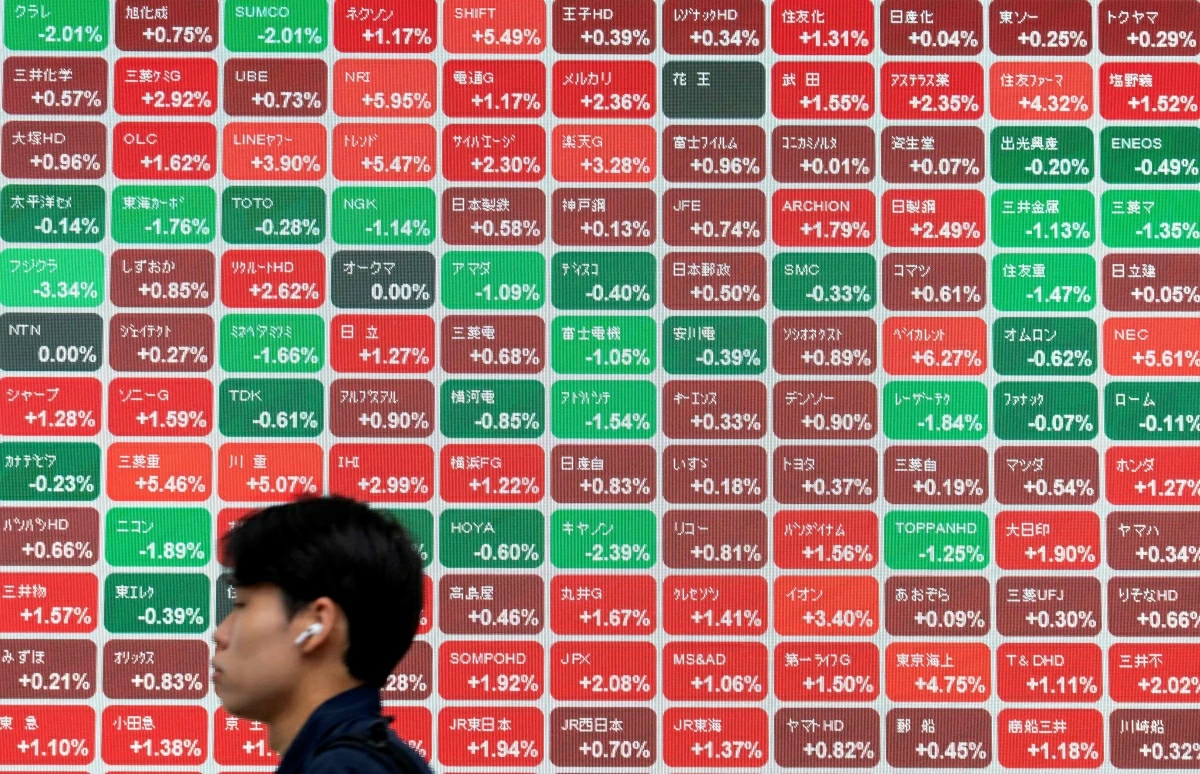
Asian stock markets fared better with Tokyo, Hong Kong and Shanghai all closing higher.
Investor confidence remained shaky, however, after last week saw markets whipsaw on growing concerns about a tech bubble fuelled by the AI boom.
Tech firms were again in the spotlight, with South Korean chip makers SK hynix and Samsung extending last week's selling and weighing on Seoul's Kospi index.
South Korea said Monday that it would invest nearly $1.2 trillion — equivalent to more than two-thirds of its GDP — in a new chip-building hub and AI data centres over several years.
Yet investors are increasingly questioning whether tech valuations have gone too far, and when firms will see a return on the trillions of dollars pumped into AI.
The tech rally this year has sent Seoul, Tokyo and Wall Street's three main indexes to record highs, with SK hynix soaring 300 per cent in the first six months of the year.
On the economic front, investors are looking ahead to the release of US jobs data this week, which could have a bearing on the Federal Reserve's monetary policy plans.
The bank has taken a more hawkish turn amid concerns over surging inflation caused by the Iran war.
"Key data releases like payrolls have grown even more significant since Kevin Warsh has become chair of the Federal Reserve," said Kathleen Brooks, research director at XTB trading group.
"He does not like forward guidance, so volatility around key economic releases could increase," she added.
Eyes will also be on the European Central Bank's annual forum held in Portugal this week, which Warsh is expected to attend.
