






 Share
Share


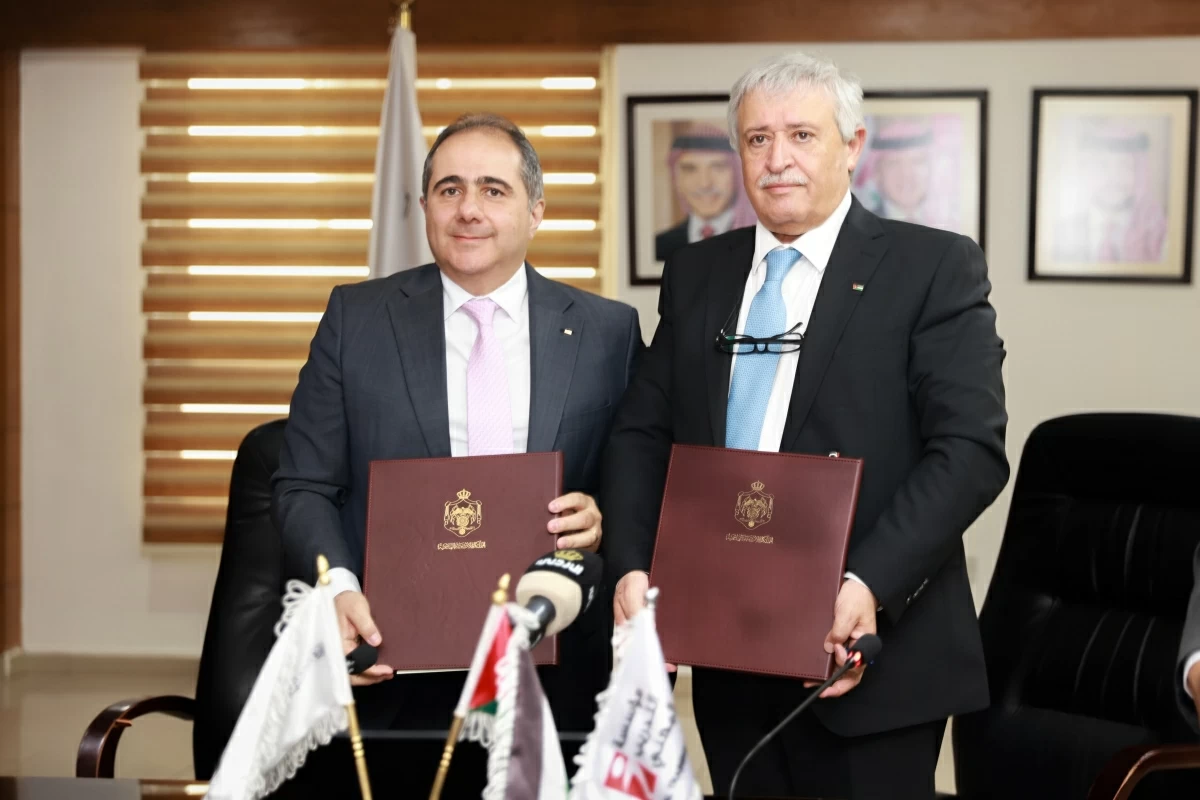
AMMAN — A memorandum of understanding (MoU) was signed on Monday between the Ministry of Investment and the Vocational Training Corporation (VTC), establishing a framework to link the manpower needs of investment projects with targeted training and employment programmes.
The agreement aims to develop and qualify Jordanian competencies, expanding job opportunities while supporting the growth, success and sustainability of investments across the Kingdom, according to a Ministry of Investment statement.
The MoU was signed by Minister of Labour Nidal Qatamin and Minister of Investment Tareq Abu Ghazaleh at the Ministry of Investment's, in the presence of VTC Director General Raafat Sawafin and Secretary General of the Ministry of Investment Zaher Qatarneh.
Qatamin stressed that the MoU represents a "qualitative" initiative to empower Jordanian youth across various vocational and academic levels, enabling them to meet the requirements of "diverse" investments and enhancing their readiness to capitalise on job opportunities generated by new projects.
The minister pointed out that the agreement ensures the provision of required specialisations and vocational skills required by investors.
The cooperation boosts investor confidence in the availability of qualified and trained Jordanian human resources capable of meeting project demands, alongside with the draft vocational and handicrafts training law reaching its final legislative stages.
The minister said the agreement lays the groundwork for a more "integrated approach" to serving investors and facilitates their access to the human resources required for their projects, noting that the "availability" of a trained national workforce is a "key" factor influencing investment decisions.
He emphasised that investing in the skills of Jordanians is a "direct" investment in the competitiveness of the national economy and its capacity to attract high-value, sustainable investments.
Abu Ghazaleh noted that the MoU aims to develop skills, increase employment and productivity rates, and align training programmes with the needs of economic sectors and actual job opportunities created by investments, delivering a sustainable developmental impact across the Kingdom's governorates.
For his part, Sawafin noted that the agreement reflects the integration of national institutions' efforts and contributes to enhancing the investment environment by providing the qualified Jordanian skills required by investment projects.
He added that the corporation, through its institutes across the Kingdom's governorates, will work to align its training programmes with the needs of investors and the labour market.
It will also update and modernise vocational programmes to expedite meeting projects' needs for technical and vocational skills, thereby boosting employment prospects for Jordanians.
The cooperation areas include assessing investment project requirements regarding workforce size, required specialisations and skills, developing specialised training and qualification programmes for various investment sectors, exchanging relevant information and data in accordance with applicable legislation, as well as organising joint meetings, workshops and events to support training and employment.
The agreement serves as a national model for institutional integration, linking investment with training and employment, empowering Jordanian talent, enhancing workforce readiness, and strengthening the national economy's capacity to generate sustainable jobs, according to a ministry statement.
