






 Share Story


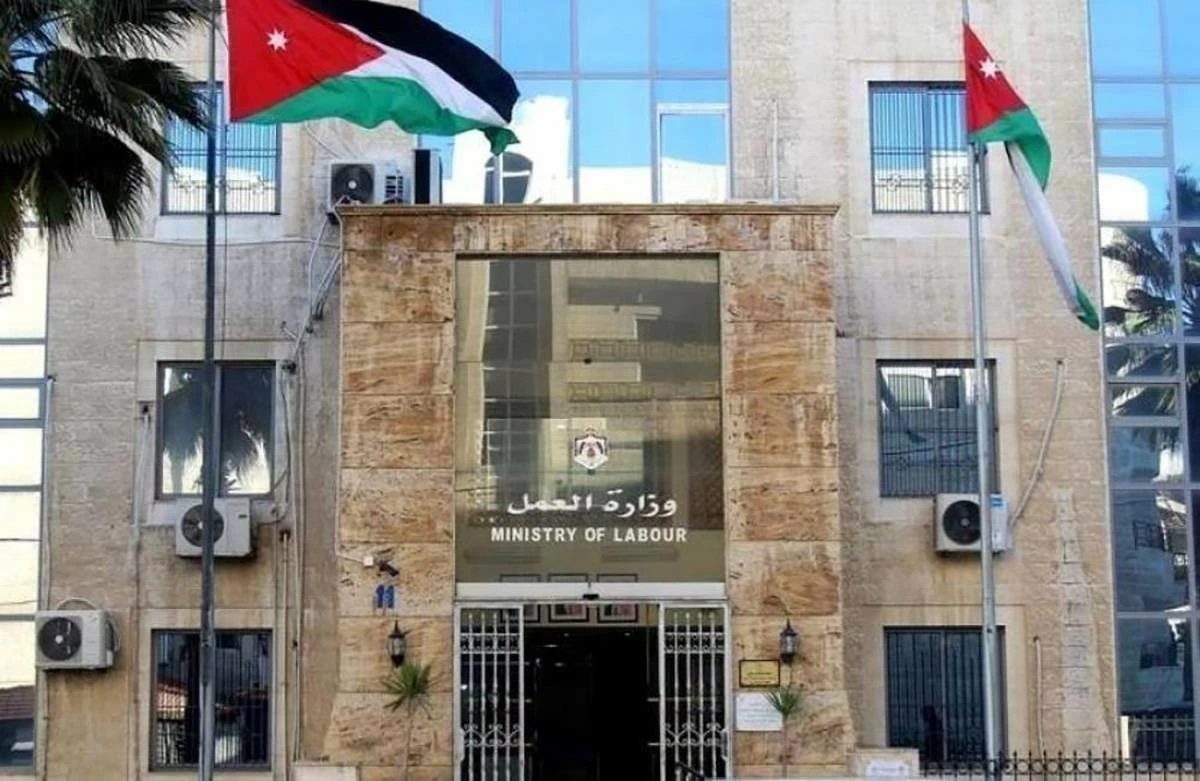
AMMAN — Minister of Labour Khaled Bakkar on Sunday announced details of a Cabinet decision to legalise and regularise the status of non-Jordanian workers of all nationalities in accordance with the Labour Law and related regulations and instructions, effective from Monday through September 30.
Bakkar said the decision is part of the government’s ongoing efforts to regulate the labour market, address existing distortions, and encourage employers to rectify the status of non-Jordanian workers who failed to obtain or renew work permits during previous periods.
He said the measures aim to reduce the financial burden on employers while ensuring compliance with labour regulations and improving labour market governance, the Jordan News Agency, Petra, reported.
The minister noted that the decision excludes non-Jordanian workers employed in the garment and knitwear manufacturing sector and complementary production-input industries operating in development zones, Qualified Industrial Zones (QIZs) and free zones, as well as workers holding permits in specialised skills professions.
Bakkar urged employers to take advantage of the exemption period to regularise the status of non-Jordanian workers and ensure their employment remains lawful.
He said the Ministry of Labour, in cooperation with the Ministry of Interior and the Public Security Directorate, will carry out a comprehensive inspection campaign during the regularisation period to identify labour violations across all sectors.
He added that, following the end of the grace period, deportation measures will be taken against any non-Jordanian worker whose work permit has expired for three months or more and who fails to regularise their status.
Under the Cabinet decision, employers and non-Jordanian workers across all economic sectors, including domestic workers, will be exempted from 50 per cent of accumulated work permit fees for previous periods.
The decision also grants a full exemption from late-payment penalties associated with renewing expired work permits or transferring workers between employers.
In addition, non-Jordanian workers covered under the Residence and Foreigners Affairs Law No. 24 of 1973 and its amendments will receive a full exemption from overstay fines if they regularise their status during the specified period.
The decision stipulates that only the work permit fee for one year, or part of a year, related to the worker’s most recent valid permit will be collected.
For workers wishing to permanently leave the Kingdom under a “departure without return” arrangement, all previous work permit fees and fines will be waived. They will also be exempted from residency overstay penalties, provided their files are settled before departure.
The measures further allow departing workers to receive their social security entitlements directly from the Social Security Corporation.
The Cabinet decision also permits employers to hire non-Jordanian workers who previously benefited from exemption programmes or who opted for permanent departure but remain in the Kingdom, enabling them to obtain work permits and benefit from the new exemptions.
In addition, non-Jordanian nationals who entered Jordan in previous years for non-work-related reasons will be allowed to obtain work permits for the first time.
The decision permits the transfer of non-Jordanian workers between economic sectors and activities, subject to specific conditions.
Workers holding permits in specialised skills professions will not be allowed to move to other occupations, while recruited workers who entered Jordan after 25 February 2025 will not be eligible for transfers.
Workers holding permits as specialised skills workers will not be allowed to transfer to other professions, except under self-employment permits.
The decision allows holders of self-employment permits to transfer to building services occupations. It also permits garment and knitwear workers whose permits expired or were cancelled for two years or more to transfer to any employer and work in permitted, restricted, or specialised skills occupations without clearance from a previous employer.
It also allows workers in all sectors to transfer to self-employment permits, while maintaining self-employment as a closed category from which transfers are not permitted.
Among the general provisions, the decision removes the requirement for a clearance certificate from a previous employer when a worker transfers after a permit expires or is cancelled.
Workers reported as absconding by previous employers may also benefit from the decision without obtaining employer approval, provided they remain in the Kingdom and their work permit expired more than one year ago.
The decision further allows workers whose recruitment contracts expired before completing work permit procedures to obtain permits, and permits the employment of workers already present in the Kingdom who were recruited as replacements for other workers.
Regarding domestic workers, the decision introduces a number of measures to facilitate transfers and regularisation procedures.
Domestic workers previously reported absent and subsequently replaced may transfer to a new employer without obtaining approval from the former employer, provided the absence report is withdrawn before submitting the application.
Domestic workers reported absent but not replaced may also transfer to a new employer after two years have elapsed from the date of the report, subject to the withdrawal of the absence notification.
The decision also allows female domestic workers who married a Jordanian citizen and changed their residency status to obtain new work permits following divorce, widowhood, or if they wish to return to employment.
In addition, individuals who entered Jordan for employment purposes may obtain domestic worker permits, subject to Ministry of Interior approval.
Domestic workers whose permits have expired or been cancelled may transfer to another economic sector if more than two years have passed since the expiry of their last permit, without requiring approval from a previous employer, Petra reported.
