






 Share
Share


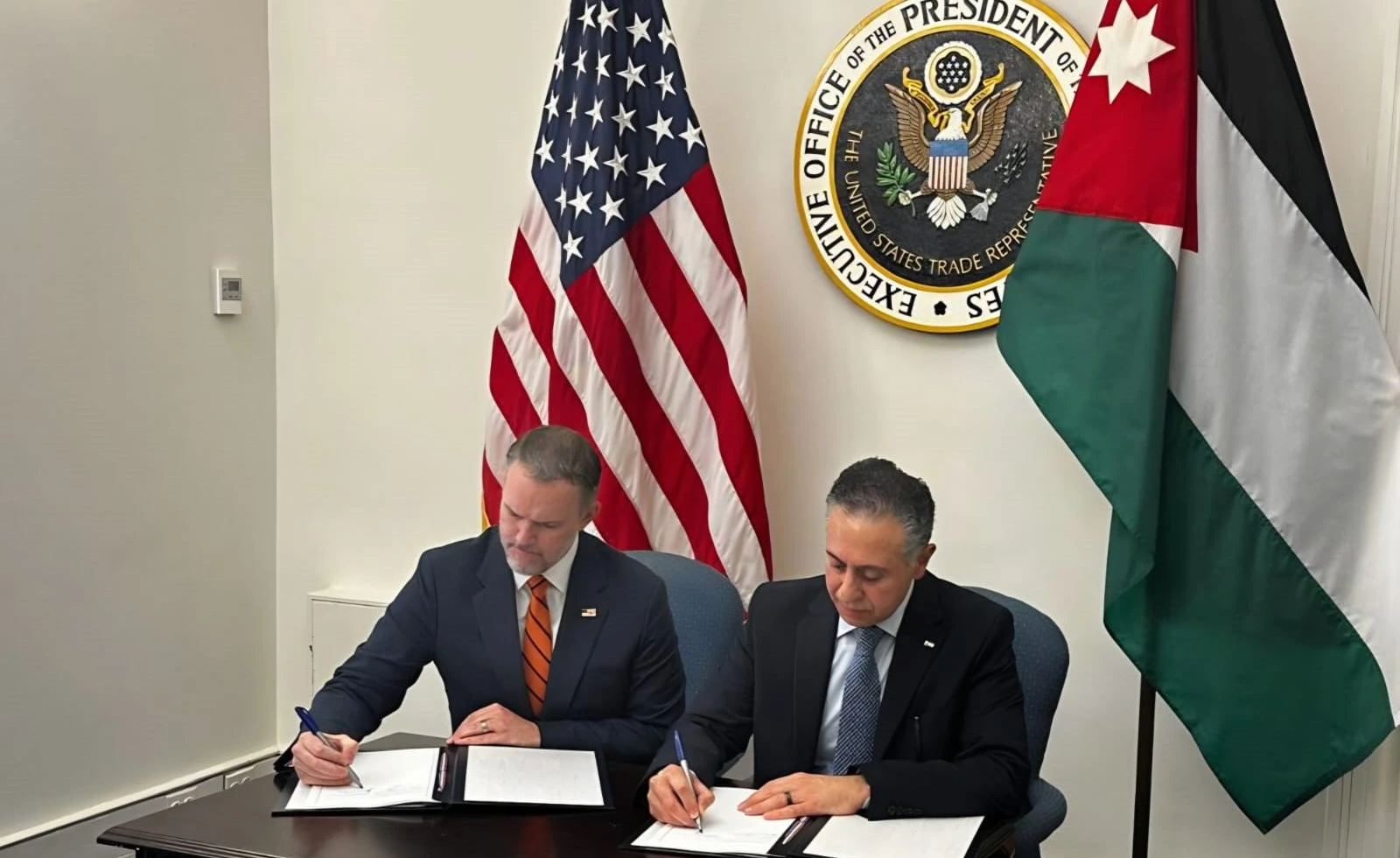
AMMAN — The newly signed Reciprocal Trade Agreement between Jordan and the United States marks a "significant" step in strengthening bilateral economic ties beyond tariff adjustments, creating new opportunities for trade, investment and long-term business partnerships, the Chairman of American Chamber of Commerce in Jordan (AmCham-Jordan) Samer Judeh, said Wednesday.
Judeh stated that the agreement builds on the two countries' "longstanding" economic partnership by expanding frameworks for trade and investment, creating new opportunities for Jordanian and US companies, and strengthening cooperation in services, digital trade, innovation and supply chains, the Jordan News Agency, Petra, reported.
He said the agreement "goes beyond" improving market access by giving the business community greater confidence to establish long-term commercial partnerships, explore new investment opportunities and expand operations in both markets.
On its future vision, Judeh said AmCham looks forward to working with public and private sector partners to translate the agreement into "tangible" opportunities for economic growth, investment, job creation and higher bilateral trade.
He noted the agreement builds on the Jordan-US Free Trade Agreement, which entered into force in 2001 after Jordan became the first Arab country to sign such a pact with the United States, providing Jordanian exports with tariff and tax privileges.
Judeh said the new agreement is designed to benefit both countries by facilitating Jordanian exports and entry of US products, technology and expertise into Jordan.
The pact, he stated, also spurs American companies to invest locally and partner with Jordanian businesses to expand into regional markets, as well as supporting Jordanian companies seeking to establish a commercial presence in the United States.
Jordan's exports to the US around reached $3 billion in 2025, while imports totalled about $2 billion, reflecting the "depth" of bilateral economic interests and the importance of maintaining a clear and predictable framework for businesses and investors, he said.
Judeh called for expanding the number of sectors and companies benefiting from the agreement, adding that "its success should be measured not by tariff rates alone but by the volume of new trade it generates across all sectors."
As for its scope, the agreement is projected to streamline movement of goods between the two countries, supporting increased Jordanian exports to the US market, including apparel and garments, while easing access for American products, including agricultural goods and vehicles, to Jordan.
The US based on the agreement will cut reciprocal tariffs on Jordanian goods to 10 per cent and grant the apparel and garments sector more preferential access to the US market, supporting Jordanian exports.
Noting that the exports totalled JD595 million during the first four months of 2026, led by apparel, jewellery, electrical machinery and pharmaceutical products. Jordan will continue providing tariff exemptions for US exports under the 2001 Free Trade Agreement.
The agreement also features measures to facilitate bilateral trade by enforcing environmental laws, protecting labour rights, launching stronger intellectual property safeguards, fair trade practices, improving customs procedures, removing trade barriers and enhancing market access for US goods, including agricultural products and vehicles.
Jordanian Exporters Association
Jordan Exportes Association (JEA) President Ahmad Khudari stated that US customs duties on Jordanian exports have been reduced from 20 per cent to 10 per cent, positioning Jordan among nations subject to the lowest tariff tiers and granting local manufacturers a distinct competitive edge globally.
The tariff reductions will directly benefit several key industries, including the food, medical supplies, and pharmaceutical sectors, while granting the garment and textile industry an immediate advantage over regional competitors.
The JEA is considering organising a dedicated national trade delegation to an upcoming US medical supplies exhibition, building on more than two decades of promotional participation in major trade expos in New York, San Diego and Las Vegas.
Beyond manufacturing growth, the accord is anticipated to improve Jordan's trade balance, boost foreign currency inflows, and create new employment opportunities.
However, Khudari noted that fully realising these advantages will require addressing ongoing maritime shipping disruptions, specifically scheduled vessel cancellations affecting international trade lanes.
The bilateral agreement, finalised on Tuesday following nearly a year of consultations, builds upon the foundational US Jordan Free Trade Agreement enacted in December 2001.
In addition to expanding market access for Jordanian goods, the agreement facilitates the entry of US imports into the Jordanian market, including agricultural products and motor vehicles, Petra reported.
