






 Share Story


AMMAN — Experts and government officials on Sunday stressed that adopting circular economy principles is essential to strengthening Jordan's resource security, reducing dependence on imported raw materials and building a more resilient economy.
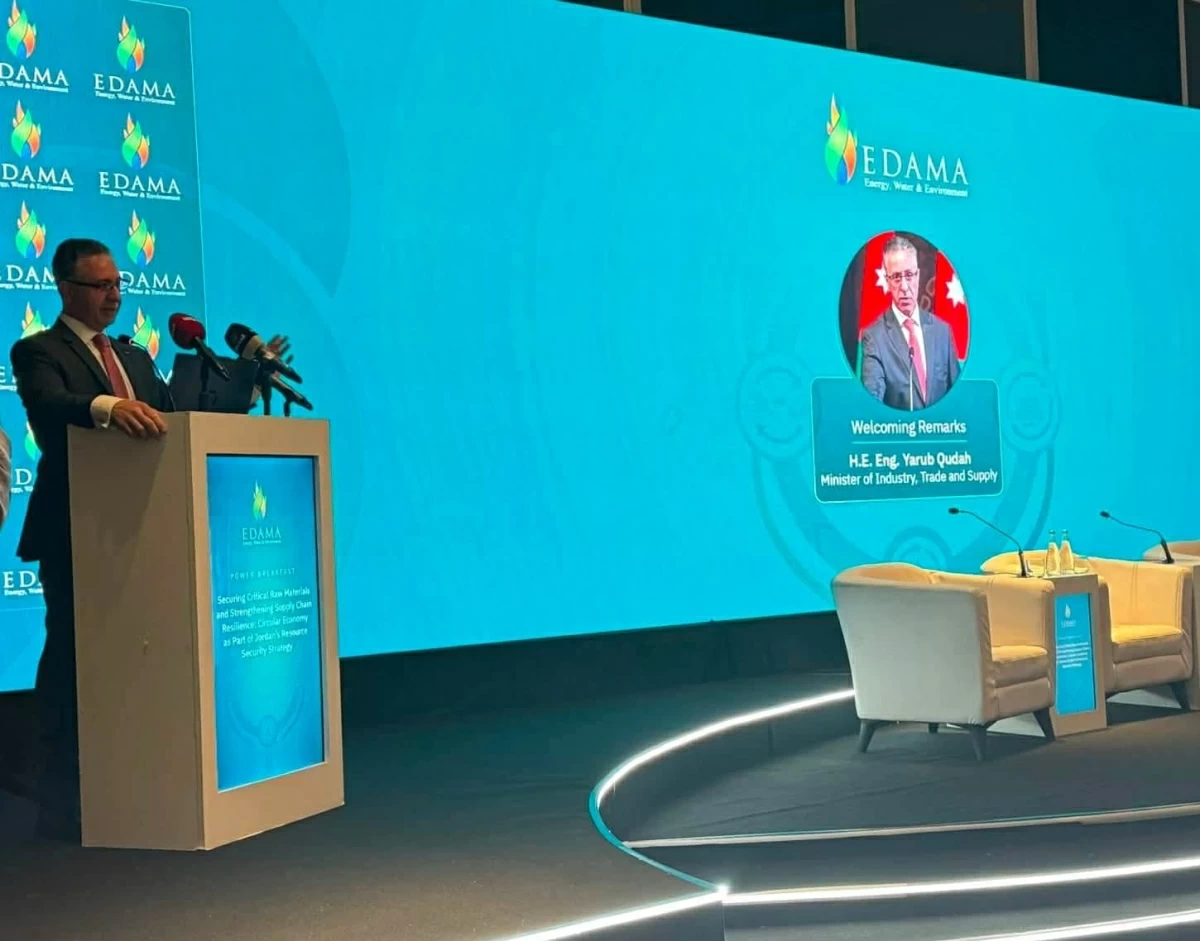
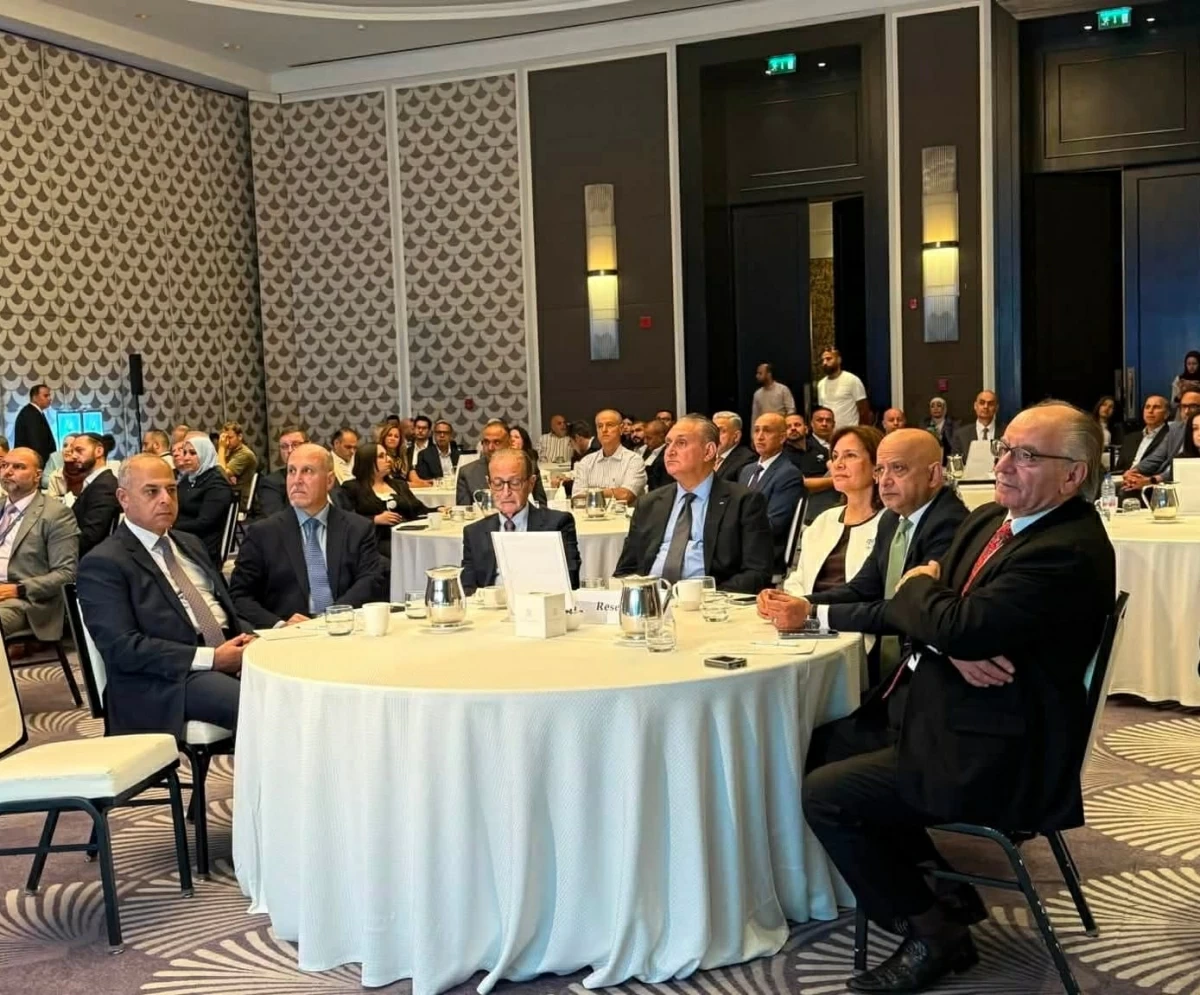
The remarks came during an "Energy Breakfast" organised by EDAMA Association for Energy, Water and Environment in partnership with the German Agency for International Cooperation (GIZ). The event, titled "Securing Critical Raw Materials and Strengthening Supply Chain Resilience: Circular Economy as Part of Jordan's Resource Security Strategy," was attended by Minister of Industry, Trade and Supply Yarub Qudah, Minister of Environment Ayman Suleiman, policymakers, private-sector representatives, international organisations and experts in sustainability and the circular economy.
Participants discussed the role of the circular economy in improving resource security, mitigating risks associated with raw material supplies and global supply chains, and advancing policies and practical solutions to support a more sustainable and resilient economy, the Jordan News Agency, Petra, reported.
Qudah said that the Ministry of Industry, Trade and Supply has integrated circular and green economy principles into its industrial policy strategy to support the transition towards more environmentally friendly and resource-efficient production.
He added that the Economic Modernisation Vision, particularly its high-value and green growth pillars, includes pioneering projects designed to serve as models for other industrial enterprises.
Qudah also stressed that circular economy principles should extend beyond economic growth to strengthen national resilience through closer cooperation between the public and private sectors.
EDAMA Chairperson Dureid Mahasneh said that the circular economy should be viewed not only as an environmental approach but also as a strategic tool for enhancing resource security and economic resilience.
He called for stronger public-private partnerships to accelerate the adoption of circular economy practices across different sectors.
Sustain MENA Chief Executive Officer Shada Sharif, co-author of the policy paper "Closing the Loop through the Circular Economy: Key Recommendations for a More Resilient Economy," presented the paper's main recommendations, describing the circular economy as a strategic response to Jordan's vulnerability to disruptions in critical raw material supplies.
Sharif said adopting circular economy principles would diversify supply sources, create greater local value and enhance competitiveness by reducing reliance on imports.
Participants also emphasised the importance of strengthening institutional coordination, securing sustainable financing, implementing existing policies and shifting from donor-funded pilot initiatives to commercially viable business models.
They noted that the circular economy offers significant economic and development opportunities by creating jobs, improving competitiveness and increasing resource efficiency, rather than serving solely as a waste management approach.
Speakers added that circular economy practices can strengthen value chains, support local manufacturing and maximise the use of national resources, enhancing Jordan's competitiveness in regional and international markets.
They also highlighted the government's role in supporting the energy and mining sectors, maximising the value of natural resources and addressing technical challenges associated with expanding renewable energy projects through infrastructure upgrades and electricity grid modernisation as part of Jordan's transition to a green economy.
The "Energy Breakfast" is part of a series of events organised by EDAMA to promote dialogue between the public and private sectors, bring together decision-makers and stakeholders, and foster partnerships that support sustainable development and green growth in Jordan, according to Petra.
